
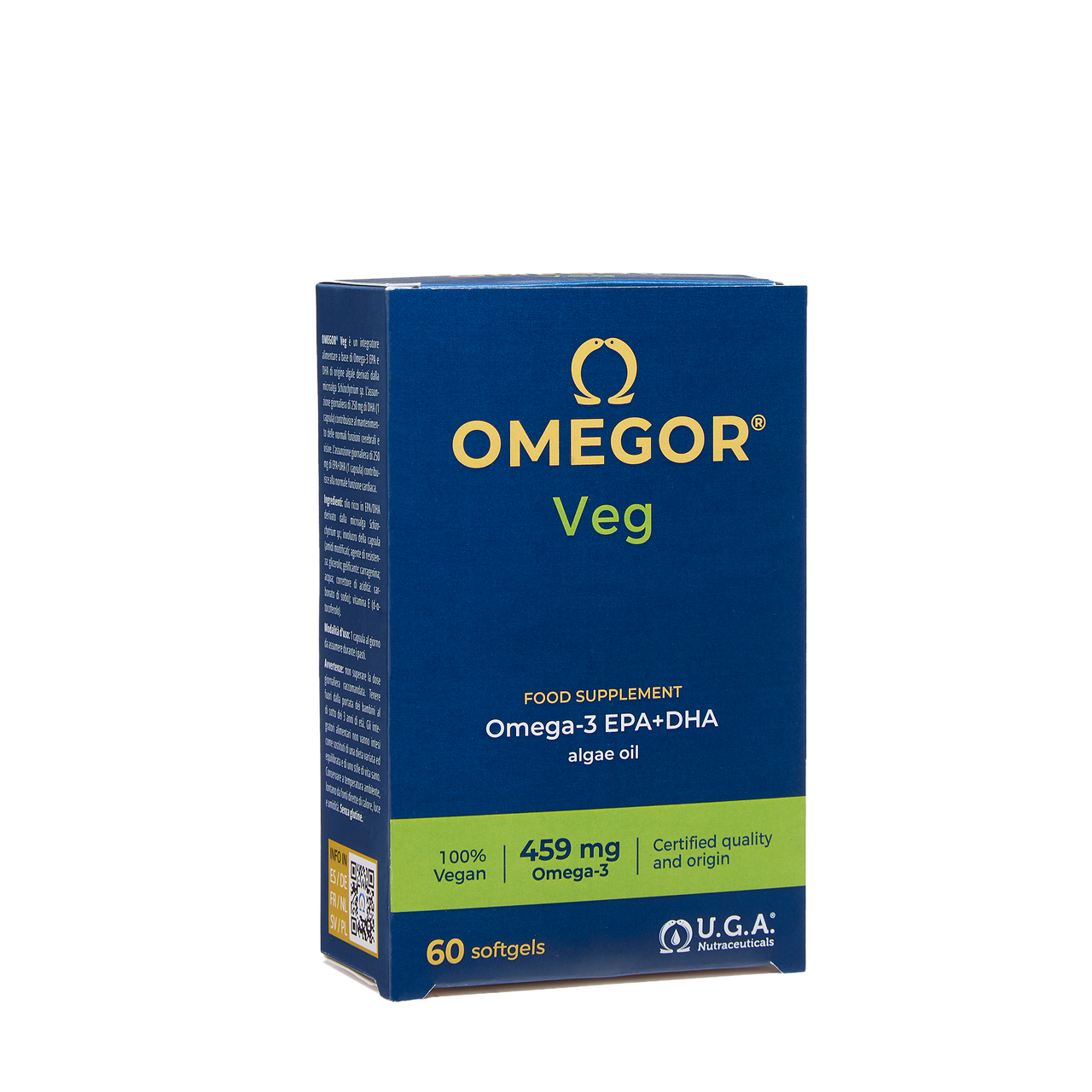
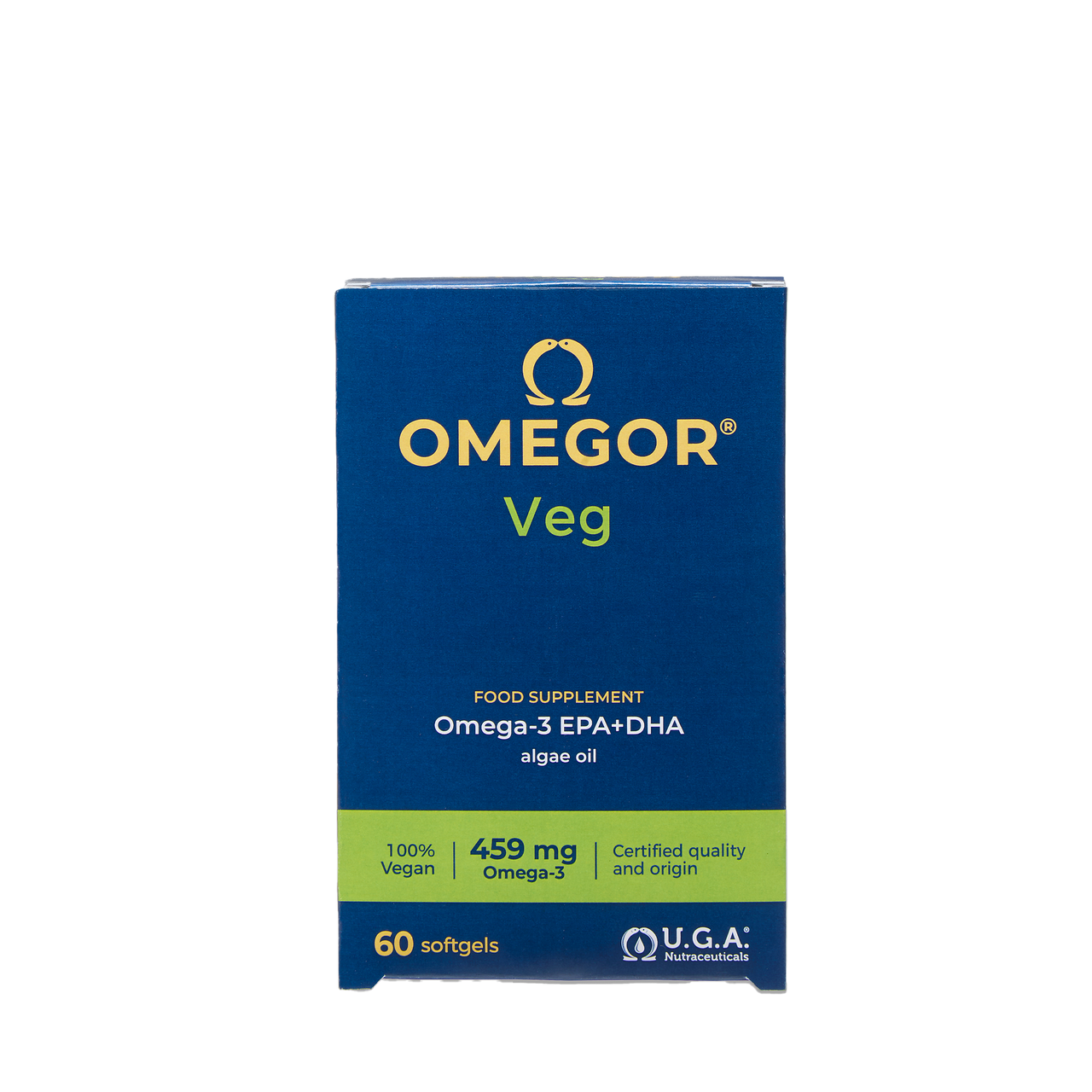
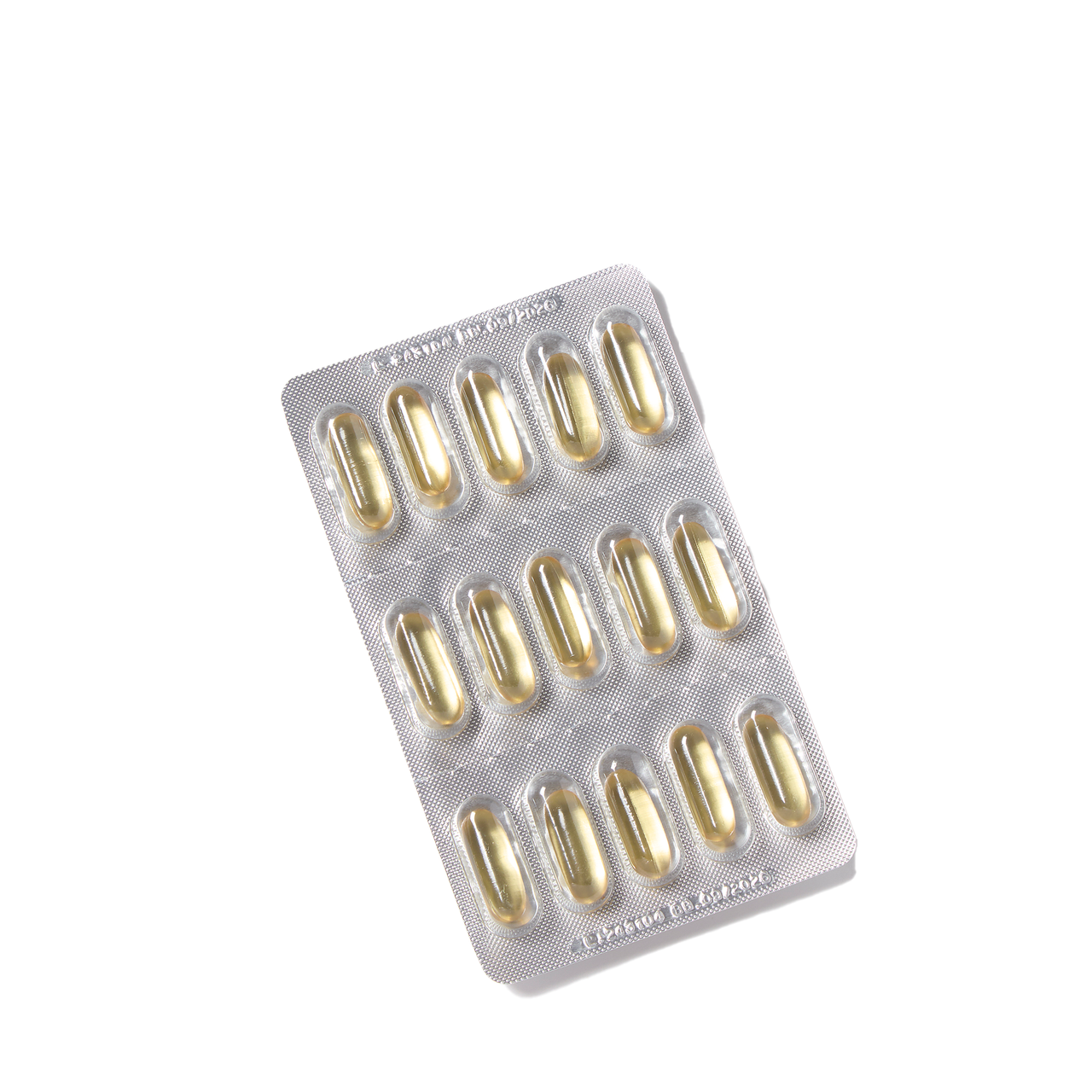
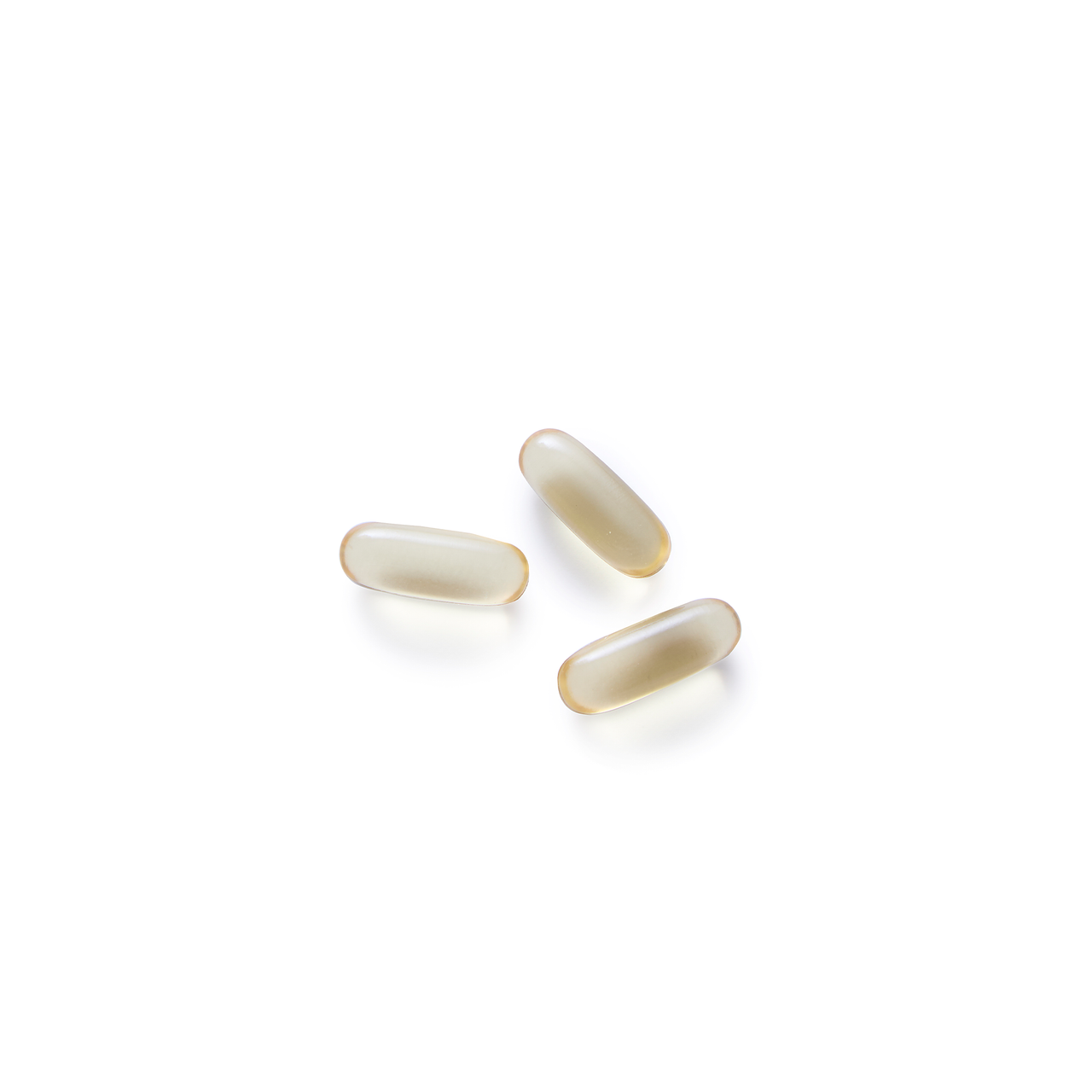


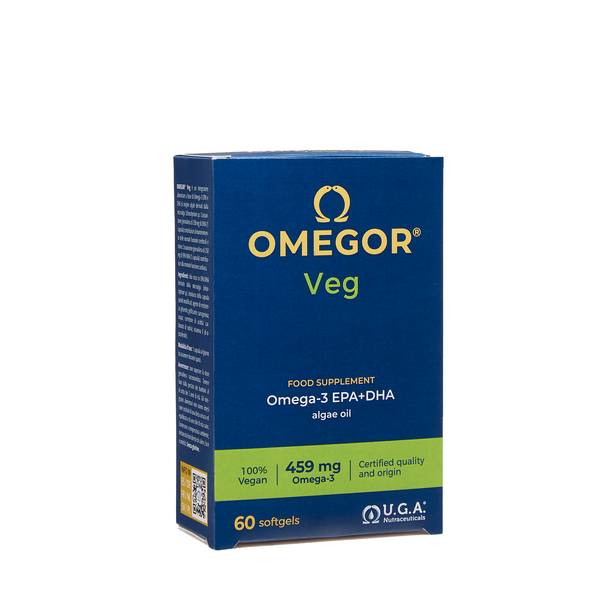
OMEGOR Veg
Or order the product now and receive it at a pharmacy near you.
Order at the pharmacyOmega-3 is not only found in fish, did you know? Nature offers us a precious alternative: the microalgae Schizochytrium sp, a natural source of DHA (docosahexaenoic acid) and EPA (eicosapentaenoic acid). Omegor® Veg contains and concentrates these Omega-3 in capsules certified by the Vegan Society and with IFOS 5 stars certification (the maximum), very rare in products of algal origin.
Serving Size: 1
Number of servings: 60
Lot and expiry: 246810/A - January 2027
PRODUCT DESCRIPTION
Omegor® Veg represents an important milestone: an Omega-3 supplement that combines purity and efficacy with respect for vegan principles. The Vegan Society certification, the oldest and most prestigious, guarantees that every stage of the production process is free from ingredients or practices involving animals.
The quality of the product is also certified by the highest IFOS rating (5 stars), a recognition that certifies the concentration, purity, and freshness of Omega-3s. The same rigorous standards applied to fish oils are therefore also available for those who choose a vegan diet.
BENEFITS
Omega-3 DHA and EPA are structural components of cell membranes. DHA, in particular, concentrates in the retina and nervous system structures, where it plays a key role in signal transmission between nerve cells.
With just one capsule of Omegor® Veg per day, you provide your body with the 250 mg of EPA and DHA needed to support heart function and maintain normal brain and visual functions. We have also completed the formula with the addition of vitamin E, which acts as a free radical neutralizer, thus protecting your cells from oxidative stress.
INGREDIENTS
Here are all the ingredients that make our product so special.
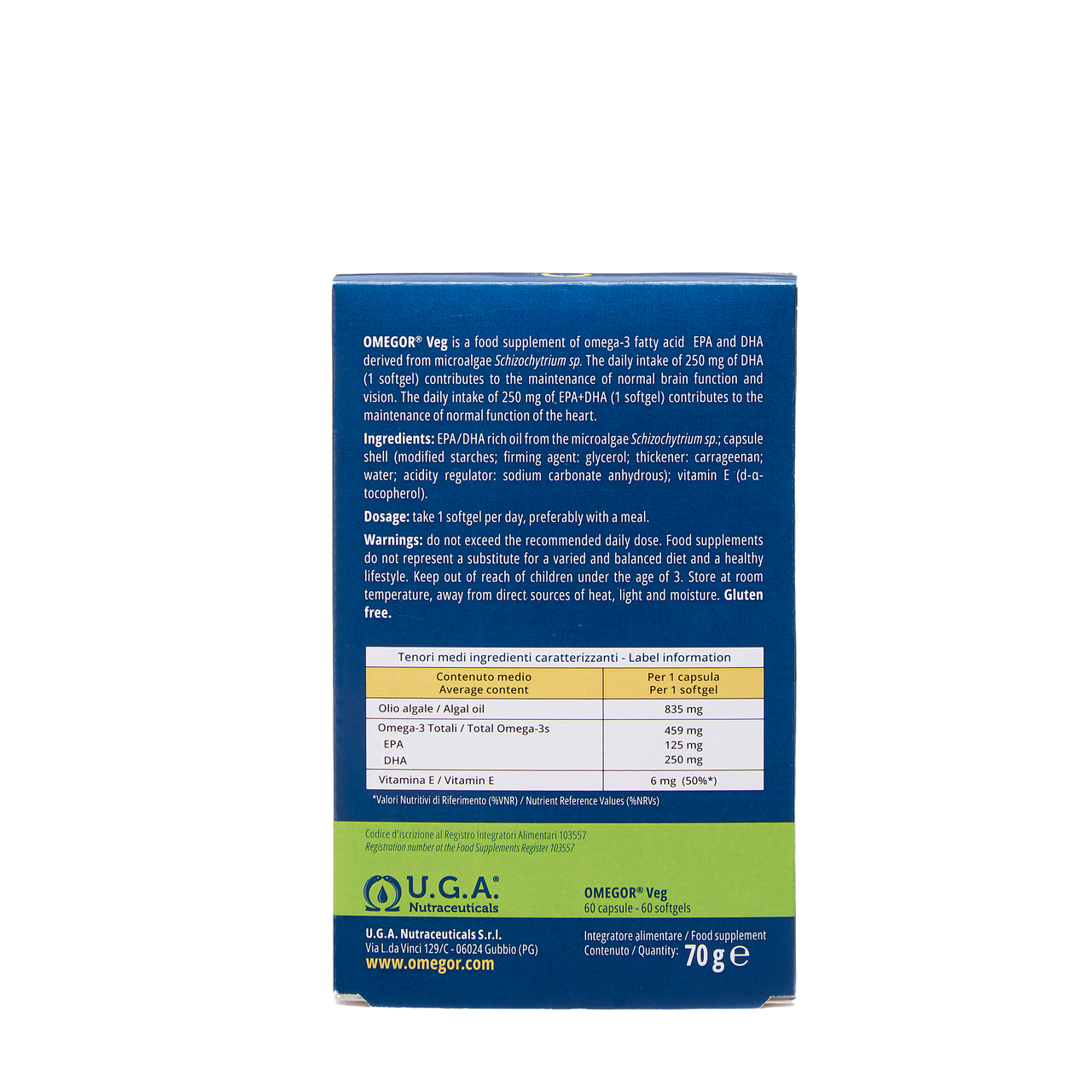
| Content of Characterizing Ingredients | 1 capsule |
|---|---|
| Algal oil | 835 mg |
| Total Omega-3 | 459 mg |
| of which EPA | 125 mg |
| of which DHA | 250 mg |
| Vitamin E | 6 mg (50% NRV*) |
| *NRV: Nutrient Reference Values (Reg. EC 1169/2011). | |
Ingredients:
oil rich in DHA and EPA derived from the microalga Schizochytrium sp. (contains: sunflower oil, rosemary extract, tocopherol-rich extract and ascorbyl palmitate); capsule shell (corn starch; plasticizer: glycerol; thickener: carrageenan; acidity regulator: sodium bicarbonate); vitamin E (d-alpha-tocopherol).
Allergens:
None.
The product is gluten-free.
How can you distinguish the quality of an omega-3 supplement?
 For optimal health, we all need the omega-3 fatty acids EPA and DHA every day. At U.G.A. Nutraceuticals, we formulate our omega-3 supplements focusing on a high concentration of EPA and DHA and purification through multiple molecular distillations.
Our products are next-generation omega-3s certified five-star IFOS, the highest quality standard currently available worldwide for omega-3 supplements. This certification translates into greater safety for consumers, who can be certain they are consuming a pure product—an important fact for adults. Our omega-3s meet not only the quality standards set by national and EU regulations for all dietary supplements but also the more stringent standards specifically for omega-3 supplements set by the GOED Omega-3, of which U.G.A. Nutraceuticals is one of the first members.
 The GOED or Global Organization for EPA and DHA Omega-3 is an entity whose mission is to globally spread knowledge about this type of supplement, promote ethical and quality standards, and support various organizations regarding information and safety.
Constant attention and monitoring throughout the entire production cycle have enabled the achievement of IFOS and ISO 9001 certifications*.
You can view our ISO 9001 certificate here or look up the IFOS certificates for currently marketed batches by consulting the IFOS Program dedicated site, searching by:
- product name
- company name
- batch number
The Omegor product line supplements comply with GMP rules (Good Manufacturing Practices), a set of regulations governing the methods, equipment, resources, and management of productions to ensure quality standards. These rules are mainly used in the pharmaceutical and food fields.
Constant attention and monitoring throughout the entire production cycle have enabled the achievement of ISO 9001 certification (a certification that attests to the quality of a company's system).
Shipping in Italy
Shipping costs within the national border are calculated as follows:
- FREE for orders over €20.00 via TNT courier;
- €3 for orders under €20.00 via TNT courier;
- €5 for orders managed via DHL;
Average delivery times are 24-48 business hours from the day of shipment.
Shipping abroad
We ship worldwide by express courier via UPS, DHL, or FedEx. Delivery usually takes 72-96 hours. We normally process all orders within 24 hours.
Shipping costs in Europe are calculated as follows:
- €20 for orders up to €149.99
- €30 for orders up to €249.99;
- €40 for orders of €250.00 and above.
For the rest of the world:
- €30 for orders up to €149.99
- €40 for orders up to €249.99;
- €50 for orders of €250.00 and above.
For shipments outside the European Union, import taxes or customs duties may apply. These charges are separate from shipping costs.
To get an idea of the final cost, you can consult the following website.
Temperature-controlled shipping
Temperature-controlled shipping is done using refrigerated vans from Eurodifarm, the same used by pharmaceutical distributors.
We are the first in Italy to adopt this distribution system also for dietary supplements. All for the benefit of the customer with a small additional cost:
- €15 for orders from 0 to 5 kg
- €30 for orders over 5 kg
Delivery times are longer than those of a normal courier, especially for islands, because it is necessary to ensure the cold chain and product freshness at every step.
The customer is contacted by phone before delivery to agree on a delivery time with the courier.
Average delivery times: 4-10 business days.
Attention!
To ensure fast delivery it is important to provide an address where someone is always available during the day to receive the package, e.g. the concierge, the office, etc.
RELATED PRODUCTS
The Benefits of Omega-3
The properties of Omega-3 are useful from the time of pregnancy, when they help the correct development of the cardiovascular system, brain and eyes of the child. And to protect the heart, arteries, nervous system and eyesight it is important to ensure adequate levels also during the rest of life. Of all the possible benefits of Omega-3 that have been studied the most, the best known concern the heart:
- to reduce the levels of triglycerides in the blood after meals and on an empty stomach;
- to the increase in the so-called “good” cholesterol (HDL, High Density Lipoproteins);
- to antithrombotic properties that may help reduce the risk of serious cardiovascular events (such as heart attack and stroke);
- to an antiarrhythmic effect;
- has an anti-inflammatory action that, by influencing the dilation of the arteries, could help fight hypertension, especially during old age.
FAQ
-
At what age can you start taking Omegor supplements?+
Generally speaking, there are no age limits for starting or stopping omega-3 fatty acid supplementation. In any case, the capsules and therefore the recommended doses have been designed for healthy men of approximately 70 kg but can be adjusted individually based on weight, specific functional needs and any pathological conditions of the subject.
-
How can the effects of Omega-3 be measured?+
The main purpose of supplementation with OMEGOR Omega-3 is to prevent a dietary deficit of essential fatty acids by restoring the physiological levels of these indispensable substances in our cells. Our body is very greedy for these vital fatty acids. To evaluate the effects produced by Omega-3 OMEGOR, in addition to interpreting the beneficial signals sent by our body, you can measure the improvement of the so-called "cardiac coherence" or even monitor the presence of these fatty acids in the blood. First, you could do a normal fasting plasma lipid test, to be repeated after two to three months of treatment, and calculate the ratio between triglycerides and "good" cholesterol (HDL) or (TG/HDL): it is sufficient to take the value of triglycerides and divide it by that of HDL cholesterol. In some studies it has been observed that a ratio between triglycerides and HDL less than 2 is an indicator of a lower relative risk of heart disease. It would be useful to evaluate the evolution of this value before and after the integration period by consulting with your doctor. There is also a new blood test that measures the ratio of arachidonic acid to eicosapentaenoic acid (AA/EPA). It is advisable to perform this test two to three months after starting treatment. Studies on the Japanese population, which has the highest life expectancy among industrialized countries, have shown that a value of this ratio ranging approximately between 1 and 3 is correlated with excellent functional balance and state of health. It has recently been highlighted by the works of Harris WS and von Schacky C that measuring the quantity of EPA+DHA, as a percentage of total fatty acids present in the membranes of red blood cells ("Omega-3 Index") can provide important predictive information of clinical relevance regarding the risk of death from cardiovascular diseases.
-
Can Omega-3s Help with Multiple Sclerosis?+
The results of studies that specifically measured the effect of Omega-3 on multiple sclerosis have shown that Omega-3 improves the symptoms of patients with this condition. In general, this applies to all autoimmune diseases, contributing to a better balance of the immune system. While there are no particular side effects to fear in the use of Omega-3 for multiple sclerosis, it should be emphasized that the results could be moderate but still potentially significant such as the reduction of the necessary doses of anti-inflammatory or immunosuppressant drugs after a few months of treatment; all obviously under the supervision of the attending physician.
-
What are the effects of Omega-3s on cholesterol and triglycerides?+
At high doses, EPA and DHA have a powerful and well-demonstrated triglyceride-lowering effect. Supplementation with EPA/DHA of 1 to 3 grams per day allows a quantifiable reduction in serum triglycerides. There is a dose-response relationship, meaning the greater the amount of EPA/DHA taken, the greater the triglyceride-lowering effect. In some studies, it has been observed that a quantity of 1 gram of EPA+DHA taken regularly produces a reduction in triglycerides of about 20% in some subjects. With a higher dose (>4 grams) a reduction of the order of 25-30% was obtained. EPA and DHA simultaneously modify other lipid parameters (LDL, VLDL, HDL). In particular, the intake of about 3 grams produces an increase in HDL values (the "good" cholesterol) and a reduction, but in a more modest way, of the values of total "bad" cholesterol (VLDL + LDL).
-
Can You Become Addicted to Omega-3 Supplements?+
EPA and DHA supplements are not drugs or artificial molecules, but rather food supplements that replenish the body's reserves of essential fatty acids in cases of dietary deficiency and/or increased need for these nutrients. Abruptly stopping treatment has no negative effects except the risk of letting physiological reserves progressively decrease again in the absence of a diet sufficiently rich in Omega-3.
-
Do Omega-3s have a preventive role?+
First of all, it is important to differentiate the concept of primary prevention from that of secondary prevention. The latter refers to those patients who have already had a first cardiovascular "alert". Most of the clinical studies conducted using Omega-3 fatty acids have taken into consideration precisely this type of patients. In this regard, it has been widely demonstrated that Omega-3 reduce the risk of cardiovascular mortality, even sudden (GISSI Prevention). Further studies, conducted on healthy patients with no previous history of cardiac phenomena (primary prevention studies), have demonstrated a beneficial influence of Omega-3 on normal cardiovascular function.
-
Does taking Omega-3 supplements from Omegor make you gain weight?+
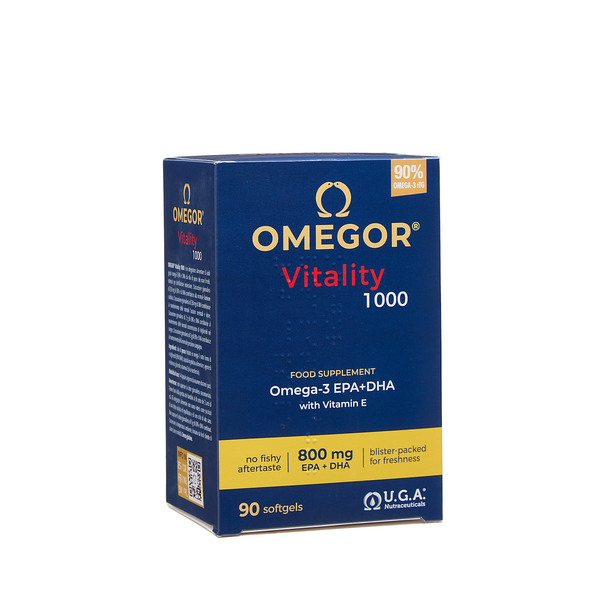
The short answer is no. In fact, each 1 gram capsule of OMEGOR Vitality has just over 10 calories. Three 1 gram capsules of OMEGOR Vitality therefore contain approximately 32 calories, which is the equivalent of half an apple. Several studies on rats suggest that Omega-3s actually reduce the formation and size of fat cells (adipocytes). Omega-3s are also used mainly as constituents of cell membranes, not for energy purposes. For these reasons, taking OMEGOR Vitality does not make you gain weight, in fact the opposite is true.
-
What can be the side effects of Omega-3?+
The most common side effect of Omega-3 supplements is the possible fishy aftertaste; however, it can be easily eliminated by using small measures such as taking the capsules just before a meal and/or possibly dividing the doses. For example, if you take three capsules a day, it is advisable to take one immediately before each main meal. In some people, Omega-3 can accelerate intestinal transit. During the first week of treatment, it is rare but possible that the stools are soft and there are diarrheal episodes; in this case, it is sufficient to reduce the doses for one or two weeks depending on the case and then try the initial dose again to test the greater tolerability. In other, rarer cases, Omega-3s can facilitate the appearance of bruises since, like aspirin, they interfere with certain mechanisms of blood clotting (platelet aggregation). This is generally considered one of their main beneficial effects which translates into reducing the risk of heart attack or cerebrovascular complications. It could, however, represent a problem for those people who are prone to bruising or who use anti-coagulant drugs whose effect Omega-3 could enhance. In these cases it is advisable to consult your doctor before starting the supplementation with Omega-3.
-
Can you take Omega-3 during pregnancy?+
A Danish study suggests that women who eat a diet rich in Omega-3 during pregnancy give birth to babies with "healthier" birth weights and are less likely to give birth prematurely. Omega-3 is known to play an important role in the development of the nervous system of the fetus and infant, and women who eat a diet lacking Omega-3 during pregnancy are at increased risk of postpartum depression. Authoritative confirmation of the need to ensure an adequate intake of docosahexaenoic acid (DHA) during this delicate phase has recently arrived (September 2005) from the European Consensus Conference on Recommendations for Polyunsaturated Fatty Acids for Pregnant and Breastfeeding Women (PERILIP), which aims to improve nutritional guidelines during pregnancy and during the growth of the newborn. Experts in nutrition, placental development and function, obstetrics and neonatology, led by Dr. Berthold Koletzko and Dr. Irene Cetin, concluded their work by recommending a minimum daily intake of 200 mg of DHA for pregnant and breastfeeding women. PERILIP highlighted the fact that intakes of up to 1g DHA or 2.7g omega-3 long-chain polyunsaturated fatty acids (n-3 LCPUFA) have been shown to be free of significant side effects in several clinical studies. This recommendation could soon become part of the new official EU guidelines, which also funded the work of the above-mentioned PERILIP conference.
-
Could excessive consumption of Omega-3 be dangerous?+
Starting from the fact that excessive consumption of Omega-3 is considered to be those who have a diet already rich in Omega-3 combined with appropriate food supplementation. In this situation there is no risk of overdose. Just think that the Eskimos living in Northern Quebec in Canada consume up to 16 grams of fish oil per day and to date no negative effects have been observed from such a dose of Omega-3.
