
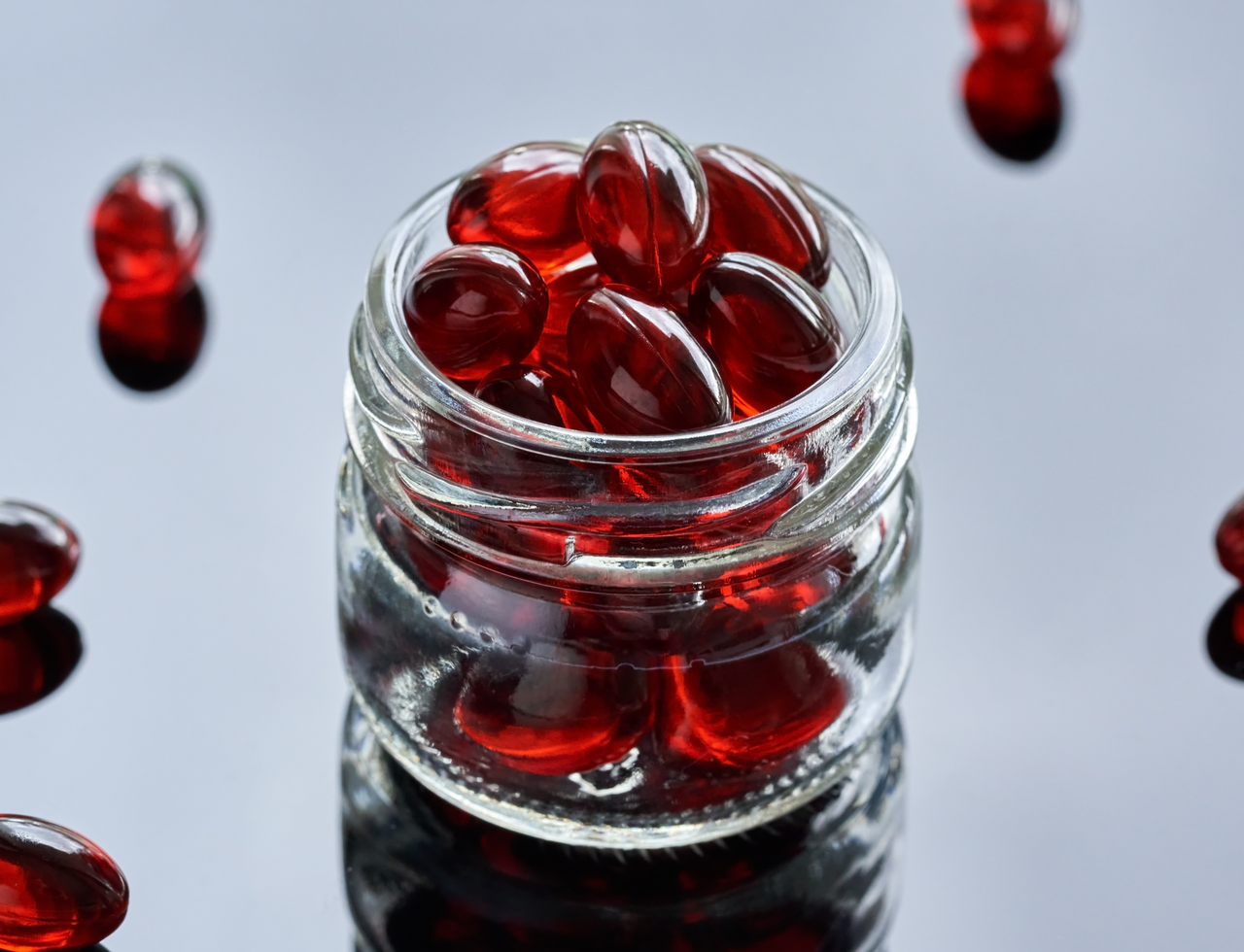
All the information about Krill Oil?
Dear Sir,
The Krill oil is classified in Europe as a "novel food", meaning a new food ingredient considered of uncommon use. The novel food status means that characteristics of krill oil such as extraction methods and possible concentrations of omega-3 EPA and DHA are regulated in Europe by a European Commission Decision of October 12, 2009.
Within the text, you will also find the characteristics that the raw material krill oil must have: the maximum EPA+DHA intake from krill oil approved by the European Commission in the 2009 decision for the dietary supplements category was initially 200 mg of EPA+DHA - while at the end of 2012 it was raised to 250 mg.
We purchase the raw material Krill Oil from one of the two main producers in the world. The oil is then encapsulated in hard gelatin capsules made from vegetable gelatin. The choice to use hard capsule encapsulation technology for liquids rather than softgel encapsulation is due to the fact that the hard capsules of the product Omegor Krill have a particular closing system that preserves the quality of the krill oil over time better than the soft gelatin shell. Furthermore, the hard capsules reduce the perception of the intense odor characteristic of krill oil on the outside of the capsule.
Krill Oil and VitaDHA 1000
In addition to what has just been said, I wanted to inform you, if you are not already aware, that the product VitaDHA 1000 is available - the capsule version of the VitaDHA liquid product. VitaDHA is IFOS certified.
It comes in 1000 mg capsules providing per capsule 470 mg of DHA and 100 mg of EPA.
The recommended dosage for this product ranges from 1 to 3 capsules per day to be taken close to a main meal.
I remain available for further information.
Best regards,
Dr. Rosaria Ramondino Pharmacist and Pharmaceutical Chemist


