

Pregnancy: Here's How Folic Acid Fights Malformations, Pregender and Postpartum Depression

Folic Acid in Pregnancy: Here’s How It Fights Malformations, Preeclampsia, and Postpartum Depression
Following a diet rich in folates during the pre-conception period, pregnancy, and breastfeeding is very important for the health of both the woman and her baby. However, a proper diet is often not enough to guarantee the right intake of these substances. This is why taking supplements containing the active form of folic acid (L-methylfolate) can help expectant mothers reduce the risk of preeclampsia or severe malformations for the baby such as Spina Bifida.
What is Folic Acid?
Folic acid is a vitamin (vitamin B9) and as such performs essential functions in the human body. The American Mitchell, in the 1940s, was the first to use the term "folic acid" (from the Latin folium, leaf) to indicate certain substances extracted from spinach leaves, able to counteract particular types of anemia. Currently, the term folic acid refers to the synthetic chemical molecule found in vitamin supplements or used in the food industry to enrich certain foods.
The term folates refers to a group of substances similar to folic acid present in certain foods, and therefore represent the "natural" form of vitamin B9. Although the terms "folates" and "folic acid" refer to molecules with similar structures and nutritional properties, they should not be confused. Besides the chemical formula, folates and folic acid also differ in their absorption (bioavailability) and utilization by the body. More precisely, folic acid has greater bioavailability compared to the natural forms of the vitamin. Both folic acid and folates are biologically inactive and therefore, once ingested, must both be converted in the body into the metabolically active form: methyl tetrahydrofolate (or 5-MTHF) or L-methylfolate.
In Which Foods Are Folates Found?
Folates must necessarily be introduced through the diet as our body cannot produce them. The intestinal bacterial flora can form a small amount of folates but absolutely not enough to cover the body's needs. Folates are mainly found in green leafy vegetables and citrus fruits, but also in other foods such as offal, legumes, cereals, and eggs. Common foods used in our diet that contain folates, in rather variable amounts, include:
- asparagus
- broccoli
- artichokes
- cauliflower
- oranges, clementines, mandarins
- kiwi
- walnuts, almonds, hazelnuts
- chard
- beans, chickpeas, lentils, peas
- endive
- lettuce
- wholegrain bread and pasta
- spinach
- liver and offal
- eggs
Besides including folate-rich foods in your diet, it is important to cook them using methods such as steaming that do not excessively disperse their content. Folates are indeed very sensitive to high temperatures and light and can be lost in cooking water during preparation.
What is Folic Acid For?
Within our body, folic acid performs several important functions, particularly being involved in DNA synthesis, a fundamental step to ensure correct cell division. Folic acid is therefore indispensable for all those cells that undergo rapid division and constant renewal, such as skin, hair, nails, and blood cells. There are also particular life phases characterized by a high rate of cell division, such as rapid tissue growth in newborns, children, and adolescents, or in pregnancy when organs develop and form during embryo development. In this developmental phase in the womb, the mother’s diet alone is not enough to guarantee the right amount of folic acid, and such insufficiency can be dangerous for the fetus. Folate deficiency in pregnant women is frequent and constitutes a risk factor for the occurrence of malformations in the newborn, such as Spina Bifida.
The Importance of Folic Acid in Pregnancy
Although folates are very important for health at all stages of life, numerous studies have demonstrated their fundamental role especially in preventing serious embryonic defects. Folate deficiency in pregnant women can increase the risk of congenital malformations in the fetus such as neural tube defects (NTDs) and other anomalies including cardiovascular, urinary tract, limb defects and cleft lip and palate (harelip). NTDs are anomalies due to altered formation of the central nervous system that occurs in the embryo in the first 28 days after conception.
Spina Bifida is certainly the most severe among the NTDs, being a malformation of the spinal cord. In Italy, the disease affects about 1 newborn in 1300 and causes very serious disabilities. A diet rich in fruits, vegetables and legumes containing folates can help reduce the probability of congenital malformations; some research has observed that populations following a Mediterranean diet have a reduced incidence of NTDs. Diet alone is almost never enough to cover the daily folate requirements and, if planning a pregnancy, it is necessary to take folic acid supplements.Scientific studies have shown that regular use of folic acid (400 mcg per day), started before conception, reduces the risk of developing congenital malformations such as NTDs by up to 70%.Use of folic acid supplements also reduces the probability by 20% of developing other congenital defects such as heart defects and cleft lip.
The prevention of congenital malformations can therefore be achieved through folic acid supplementation in women of childbearing age, before pregnancy and during the first 3 months of gestation. According to current recommendations from LARN (Reference Intake Levels of Nutrients and Energy for the Italian population), all women, but especially those planning to have a child, need 400 micrograms (mcg) of folic acid daily. During pregnancy, the recommended amount of folic acid increases to 600 mcg, and to 500 mcg during breastfeeding. It is important to take supplements before pregnancy, as women usually realize they are pregnant when the neural tube in the embryo has already formed.
Does Folic Acid Reduce the Risk of Preeclampsia?
The protective role of folic acid in pregnancy is not limited to the risk of congenital malformations. Recent research has shown that supplementation before conception and throughout pregnancy can reduce the risk of preeclampsia, a syndrome affecting women during pregnancy causing very serious damage to the fetus and future mother, sometimes even fatal.
Using data collected from a large hospital in Gansu province, China, researchers examined the relationship between the use of folic acid supplements, a folate-rich diet, and preeclampsia risk in 10,041 pregnant women. The results showed that women who consumed folic acid supplements had a 40% lower risk of preeclampsia compared to those who did not use them. These results did not change whether supplements were taken during the second or third trimester, nor whether the supplement consisted of folic acid alone or as part of a multivitamin complex.
When the authors estimated folic acid intake from food in relation to the pathology, they found no association. This is probably due to the low amount of folates consumed by the women considered in the study; all of them took daily doses of folates ranging between 152 and 274 mcg, far from the recommended 400 mcg. Considering that the bioavailability of folates from food is very variable, the results of this study suggest continued use of folic acid supplements even after the first 3 months of pregnancy.
Folates: Excellent for Cardiovascular Health and Nervous System Function
The importance of folic acid is not limited to maternal and infant health but can contribute to reducing the probability of other harmful conditions for populations of all ages. Folic acid and folates, as mentioned earlier, were initially studied for their role in preventing certain types of anemia, such as megaloblastic anemia characterized by larger than normal red blood cells that are malformed, short-lived, and produced in lower quantities.
Folates are also essential for the synthesis of neurotransmitters, molecules that transmit signals between neurons, and for carrying out important reactions such as reducing homocysteine levels, a substance that in excess represents a risk factor for cardiovascular diseases. Some studies have shown that folate deficiency can impair neurotransmitter production and be one of the causes of depressed mood, especially in women who have just given birth, in postmenopausal women, and generally in the elderly.The latter often present folate deficiency as they rarely follow a proper diet.
During aging, numerous physical changes occur such as alterations in gastrointestinal function that could further influence the absorption of various folate forms. This deficiency can promote cognitive function deficits, dementia, and Alzheimer’s disease. According to a study by some researchers at Columbia University in New York (USA), published in the Journal of the Academy of Nutrition and Dietetics, folate and other B-vitamin deficiencies are very common among postmenopausal women due to poor diet. This deficiency was associated with an increased risk of dementia and mild cognitive impairment, suggesting the use of folic acid supplements even in late age.
Folic Acid Supplements: Sometimes Not Enough
Folic acid and folates contained in foods, as ingested, are inactive, so to perform their biological functions they must undergo transformations at the level of intestinal cells and the liver, and be converted into the active form: L-methylfolate, (or 5-MTHF), through a multi-step process. Conversion to the bioactive form occurs thanks to the intervention of some enzymes, including methylenetetrahydrofolate reductase. The ability to convert folic acid is not the same for everyone, but varies from person to person due to normal genetic differences.
Some individuals, for example, possess forms of methylenetetrahydrofolate reductase incapable or inefficient at converting folic acid into L-methylfolate. The administration of simple folic acid can also present other drawbacks: some enzymes involved in the reaction chain appear to saturate and therefore “block” when too much folic acid is taken. Moreover, while intestinal cells can adequately convert folates from foods into L-methylfolate, synthetic folic acid from supplements is transformed less efficiently. According to research, reduced bioavailability and accumulation of unmetabolized folic acid affect a large portion of the population.
The gene frequency in Europe of the mutation is 3-3.7% and involves a heterozygous condition (i.e., when at least half of the enzyme is synthesized correctly) in about 42-46% of the Italian population and homozygous (when the entire enzyme is synthesized incorrectly) in 15-18%. Those who carry the mutation may therefore show symptoms of folic acid deficiency even if they take supplements. To address these issues, in recent years a new generation of folic acid supplements has been developed that already contain the biologically active form.L-methylfolate is up to 3 times more bioavailable than folic acid taken as such, and its concentration in the blood is up to 7 times higher compared to the inactive form.This greater bioavailability is especially important in people who have genetic deficits that hinder the transformations the vitamin undergoes after ingestion. Clinical studies have shown that supplementation with L-methylfolate, if properly followed, can drastically increase folate concentrations in red blood cells, an indicator of folate levels, and is the best supplementation alternative and therefore prevention of NTDs.
VitaDHA Materna
VitaDHA Materna is a dietary supplement produced by U.G.A. Nutraceuticals based on DHA and L-methylfolate (Quatrefolic®), ideal during the pre-conception period, pregnancy, and breastfeeding. Each capsule contains: 250 mg of omega-3 DHA in its best absorbed form, that is, triglyceride form, and 400 mcg of L-methylfolate glucosamine salt (Quatrefolic®) the active and more bioavailable form of folic acid that does not require conversion once absorbed.Taking 1 pearl per day, before or during a main meal, is enough to contribute to the proper development of the fetus and the maintenance of the mother's health. This product combines the action of folate, a vitamin now known for its ability to reduce the risk of congenital malformations, and DHA, the most important omega-3 in the development of the nervous system and vision, being a structural and functional molecule of neurons and the retina.
The efficacy of a product combining two fundamental components has been confirmed by some scientific studies, such as the one published in 2007 in the American Journal of Clinical Nutrition that demonstrated how maternal supplementation with fish oil rich in EPA and DHA and L-methylfolate increased the blood concentration of these substances without causing adverse reactions.
Sources: Wang Y, Zhao N, Qiu J, He X, Zhou M, Cui H, Lv L, Lin X, Zhang C, et al. Folic acid supplementation and dietary folate intake, and risk of preeclampsia. Eur J Clin Nutr 2015;69:1145-50. McNulty H, Pentieva K. Folate bioavailability. Proc Nutr Soc. 2004 Nov;63(4):529-6. LARN: Livelli di Assunzione di Riferimento di Nutrienti ed energia per la popolazione italiana.IV Revisione
Need more information? Contact us.
Recommended products
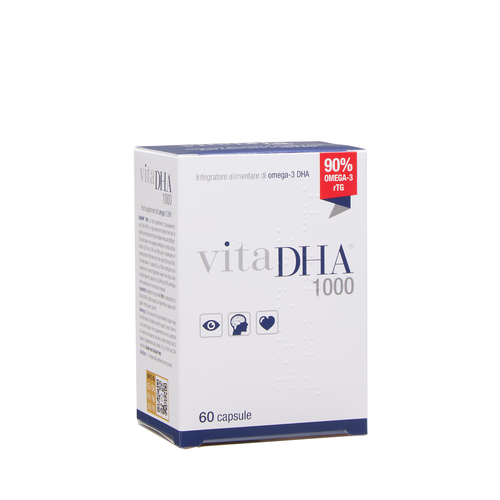
VitaDHA 1000 - 60 capsules
Innovation has a new face: VitaDHA® 1000 combines the power of DHA Plus® with a formula designed for the whole family.
IFOS 5-star certified, our purified and deodorized fish oil supplement is ideal for supporting the well-being of adults and children alike.
Serving size: 1-6
Number of servings: 10-60
Lot and expiry: 2515909 - January 2029
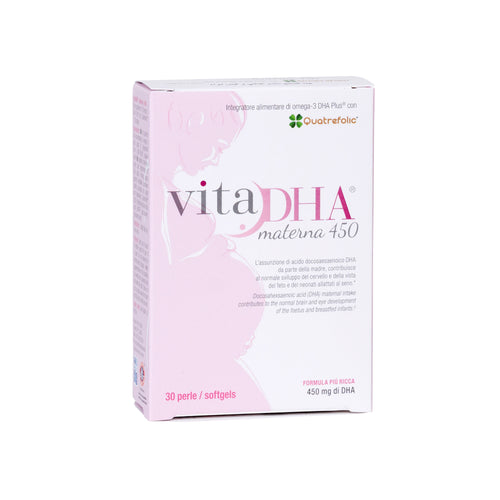
VitaDHA Maternal
The most beautiful journey deserves the best possible ally. VitaDHA® Materna is the supplement specifically designed for the most important experience of your life: each pearl contains 450 mg of DHA Plus® for the development of your baby's brain and vision, combined with Quatrefolic®, a new generation folate three times more absorbable than traditional folic acid. From pre -conception to breastfeeding, a superior formula that combines maximum bioavailability with ease of intake.
Serving size : 1
Number of servings : 30
Lot and expiry : 5983255 - September 2027

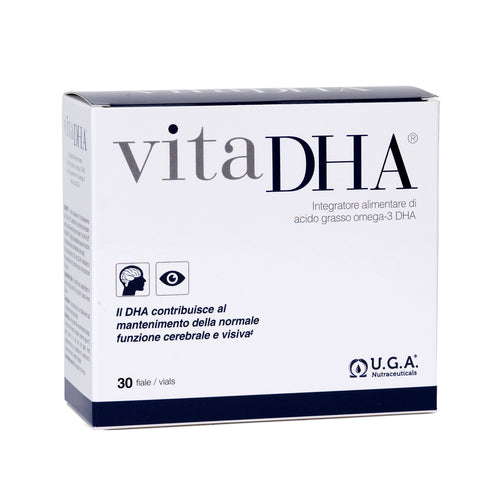
VitaDHA liquid in vials
Having trouble with capsules? Children reluctant to take them? VitaDHA® is the answer you were waiting for. A DHA Plus® supplement in liquid form, with a delicious lemon flavor. Convenient to dose, easy to take and highly absorbable thanks to its triglyceride form: it is the perfect solution for the whole family.
Serving size: 1
Number of servings: 30
Lot and expiry: 25000070 - January 2028
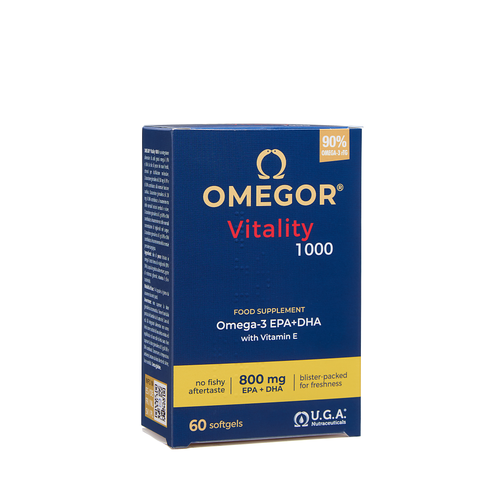
OMEGOR Vitality 1000 - 60 capsules
Just 3 words: power, freshness, purity. And always 5 stars. OMEGOR® Vitality is a concentrate of Omega-3 evaluated by IFOS (International Fish Oil Standards), the most famous quality certification in the field of Omega-3 supplements, always with the maximum score since 2005, the year of its commercialization. It is the top of the range.
Serving Size: 1-4 capsules
Number of servings: 15-60
Lot and expiry: 243306B - October 2027
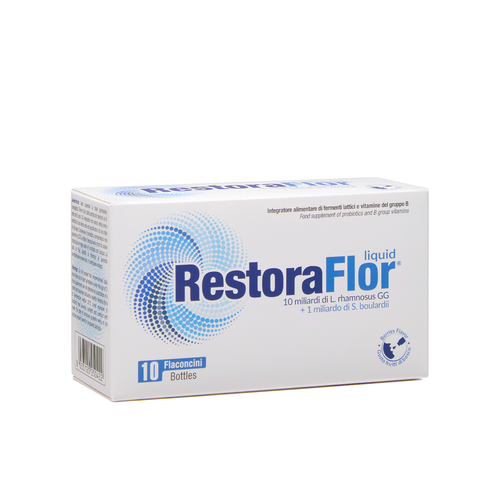
RestoraFlor™ Liquid
11 Billion Reasons to Smile: Meet RestoraFlor™ Liquid. We’ve combined the world’s two most studied probiotic strains - Lactobacillus rhamnosus GG and Saccharomyces boulardii - in a berry-flavored liquid formula. With the strategic addition of B vitamins and prebiotic fibers (special fibers that nourish probiotics), it is the evolved answer for those looking for an effective probiotic supplement to maintain a balanced intestinal bacterial flora.
Serving Size: 1
Number of servings: 10
Lot and expiry: V40454 - June 2026


