
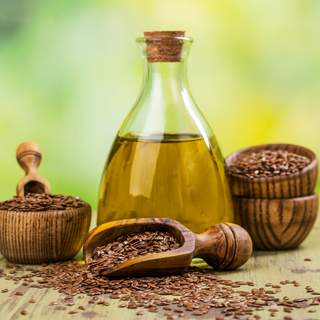
Polyphenols protect flaxseed oil from rancidity

Flax Seeds: Polyphenols Prevent Rancidity
Polyphenols, natural antioxidants, help stabilize flaxseed oil rich in Omega 3. Mónica Rubilar and her colleagues from the Universidad de La Frontera in Temuco (Chile) demonstrated this in a study published in the European Journal of Lipid Science and Technology. The discovery could help solve the problem of preserving this oil, allowing the addition of Omega-3 to various food products without fear of rancidity and without the need to add other antioxidants.
Omega-3 yes, but not oxidized
Flaxseed oil is one of the main plant sources of Omega-3 fatty acids. It contains abundant amounts of alpha-linolenic acid, a molecule that the human body converts into the two most important Omega-3s:
- EPA (eicosapentaenoic acid)
- DHA (docosahexaenoic acid)
Like all sources of unsaturated fatty acids, flaxseed oil tends to become rancid. The oxidation of these fats is the basis of this process and compromises both the quality of the oil and that of the food products to which it might be added. Practically, this results in a worsening of:
- taste
- color
- texture
- nutritional value of the food
Microencapsulation of the oil is one possible solution to delay rancidity as much as possible. The process hinders the oxidation of unsaturated fatty acids by inserting the oil inside a kind of shell that protects it from external agents. Rubilar and colleagues tried to further delay rancidity by adding to the oil a plant extract rich in polyphenols, natural molecules known for their antioxidant power. Ugni molinae, a small myrtle plant that grows spontaneously on the coasts and pre-Andean mountains of southern Chile, was chosen as a source of polyphenols. The researchers added it to samples of already microencapsulated flaxseed oil after carefully selecting the myrtle leaf extract richest in polyphenols. The oxidation state of the unsaturated fatty acids, as well as of the other lipids present in the oil to which the extract was added, was then compared with that of the simply microencapsulated oil or oil to which commercial antioxidants were added.
Polyphenols also protect other fats
Analysis of the samples showed that microencapsulation can inhibit or at least delay oxidation of unsaturated fatty acids. The addition of natural polyphenols has a similar effect to that of synthetic antioxidants, and prevents other fats present in the oil from deteriorating as well. According to the researchers, this dual effect should increase the stability of flaxseed oil, making it possible to add it even to freeze-dried foods such as instant preparations.
An alternative source of Omega-3
This discovery opens a new way for the use of flaxseed oil as an alternative to fish oil, a source of Omega-3 already used in the food industry. Its use could be of particular interest for those who, being strict vegetarians or vegans, do not consume animal products.
Source
1. Rubilar M, Morales E, Sáez R, Acevedo F, Palma B, Villarroel M, Shene C, “Polyphenolic fractions improve the oxidative stability of microencapsulated linseed oil”, Eur J Lipid Sci Technol, Article first published online: 12 MAR 2012, doi: 10.1002/ejlt.201100230


