

Autism: Do Pregnancy Supplements Reduce the Risk of Having a Child with Autism Spectrum Disorder?

Supplementation with folic acid and other vitamins during the first month of pregnancy can reduce by about 50% the likelihood of giving birth to children affected by autism, especially in families at higher risk for this disorder. This result highlights the importance of proper nutrient intake through a healthy diet and the use of supplements in the prenatal phase, particularly for women who have already had a child with autism.
This emerges from research conducted by the Department of Psychiatry and Behavioral Sciences at the University of California (USA), published in the journal JAMA Psychiatry.
Autism and maternal nutrition
Autism spectrum disorders (ASD) encompass a group of developmental neurological conditions characterized by deficits in social communication, repetitive behaviors, and restricted interests. Autism, first described in the 1930s, represents the primary form among these disorders.
It typically manifests within the first three years of life, with difficulties in social interaction, communication of ideas and feelings, and the ability to form relationships. Although a universal disorder, its prevalence is higher in males.
Currently, the estimated risk for a woman to have a child with autism is about 1.7% in the general population, rising to 18.7% among mothers who already have a child with autism.
In the 1970s, the diagnosed prevalence was 1 in 2500 children; the sharp increase observed may be due either to a real rise in cases or to improved diagnosis and greater social awareness.
The causes of autism remain under study, but environmental factors, including the uterine environment, seem to play a significant role in the rising prevalence of ASD. Prenatal and perinatal risks include chemical exposures, perinatal hypoxia, premature birth, and advanced maternal and paternal age.
The interaction between genetic and environmental factors is also important, with evidence emphasizing the role of lifestyle, including diet, in the risk of anomalies and diseases in offspring.
Among risk factors, alcohol consumption and low intake of folates (vitamin B9) stand out. Intake of these nutrients during the peri-conception period is associated with protection against the development of ASD. Additionally, numerous studies highlight a link between vitamin D deficiency and autism (read here).
Are multivitamin supplements associated with a reduced risk of autism?
A recent American study, conducted by Rebecca Schmidt at the University of California, examined the association between autism spectrum disorders and supplement use during pregnancy in women with previous autistic children, who are at higher risk of having a second child with the same disorder.
Among 241 younger siblings of children with autism, ASD prevalence was 14% in mothers who took vitamins during the first month of pregnancy, compared to 33% in mothers who did not take supplements during that period.
Children of mothers who consumed vitamin supplements also showed significantly higher cognitive scores.
The association between prenatal vitamin use and reduced autism risk may depend on specific nutrients contained in the supplements, particularly iron and folic acid, which are essential for neurological development.
Although it is not possible to state with certainty that any supplement reduces autism risk, these findings confirm the positive role of proper nutrition and prenatal vitamin supplementation for a healthy pregnancy and child.
Folic acid, present in most prenatal supplements, is essential for preventing many congenital defects.
For this reason, the US government and authoritative bodies such as the American College of Obstetricians and Gynecologists, the American Academy of Family Physicians, and the American Academy of Pediatrics recommend that women of childbearing age take folic acid supplements, preferably enriched with iodine, choline, omega-3, and iron, which are vital for the health and well-being of mother and child, especially in cases of dietary deficiencies.
Study details
The study involved 322 children and their mothers, who had previously had a child diagnosed with autism. The mothers were interviewed regarding their vitamin supplement use during pregnancy, while the younger high-risk siblings were evaluated by age three.
The final sample included 241 younger siblings (140 males and 101 females), with an average age of 36.5 months. Most mothers (231) had taken supplements during pregnancy, but only 87 had correctly followed recommendations in the peri-conception period.
ASD prevalence was 14.1% among children whose mothers took prenatal vitamins in the first month of pregnancy, compared to 32.7% among children whose mothers did not take vitamins during that period.
Vitamins to prevent autism: a link yet to be clarified
Results suggest that vitamin intake during the first month of pregnancy may reduce the risk of autism spectrum disorders in siblings of children with ASD in high-risk families. If confirmed, these findings could have significant public health implications.
Further studies are needed to confirm these data, evaluating the specific contributions of nutrients in supplements and the role of overall diet quality.
In any case, the results highlight the value of prenatal supplements as partners in good health and encourage women planning pregnancy to consult their doctors about nutrient intake through foods and supplements.
Which folic acid supplement is recommended for those planning to have a child?
VITA DHA Materna is a dietary supplement containing Quatrefolic®, a form of folate more bioavailable than traditional folic acid. This product also contains DHA, an omega-3 essential for the proper neurological development of the fetus.
VITA DHA Materna is suitable not only in the pre-conception period but also during pregnancy and breastfeeding to ensure the well-being of mother and child.
Source: RJ Schmidt, et al. “Association of Maternal Prenatal Vitamin Use With Risk for Autism Spectrum Disorder Recurrence in Young Siblings”. JAMA Psychiatry, 2019;76(4):391-398
Recommended products
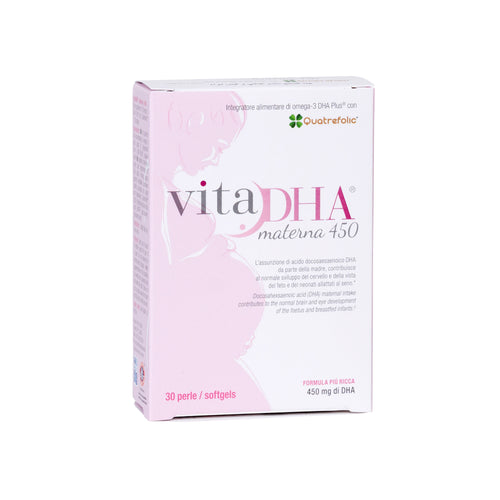
VitaDHA Maternal
The most beautiful journey deserves the best possible ally. VitaDHA® Materna is the supplement specifically designed for the most important experience of your life: each pearl contains 450 mg of DHA Plus® for the development of your baby's brain and vision, combined with Quatrefolic®, a new generation folate three times more absorbable than traditional folic acid. From pre -conception to breastfeeding, a superior formula that combines maximum bioavailability with ease of intake.
Serving size : 1
Number of servings : 30
Lot and expiry : D132V - 01/2029
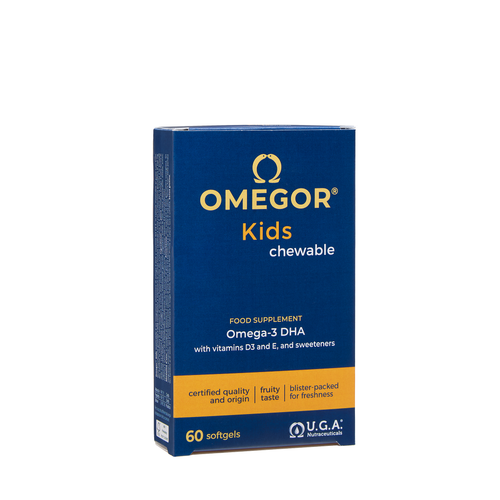
OMEGOR Kids - 60 capsules
“I like it!”. This is the exclamation that no parent expects to hear when talking about Omega-3 supplements. And yet, OMEGOR® Kids is rewriting the rules of the game with its tutti frutti-flavored chewable capsules, where goodness meets IFOS 5-star certified excellence. A concentrate of DHA and EPA, enriched with vitamins D3 and E, designed to support the brain, vision, bones and immune system of the little ones.
Serving Size: 2
Number of servings: 30
Lot and expiry: 256204 - 09/2027
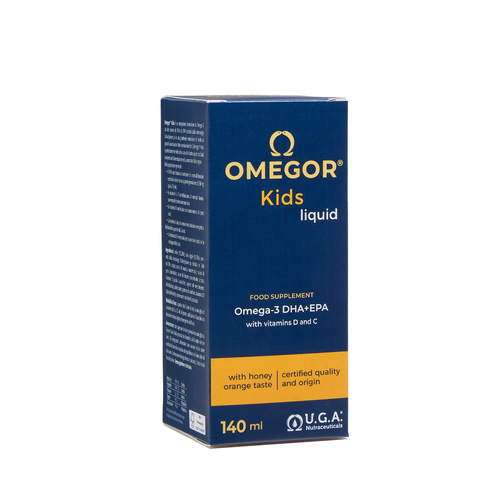
OMEGOR Kids - liquid
Vision, brain, bones, immune system: children's growth is a complex symphony. OMEGOR® Kids orchestrates it with Omega-3 DHA and EPA extracted from marine algae through the patented life's™OMEGA process (a registered trademark of DSM) . In a practical and pleasant liquid emulsion with a honey and orange flavour, precious fatty acids meet vitamins C and D3 to offer complete support.
Serving size: 5-7.5 ml
Number of servings: 18-28
Lot and expiry: 261046 - 04/2028
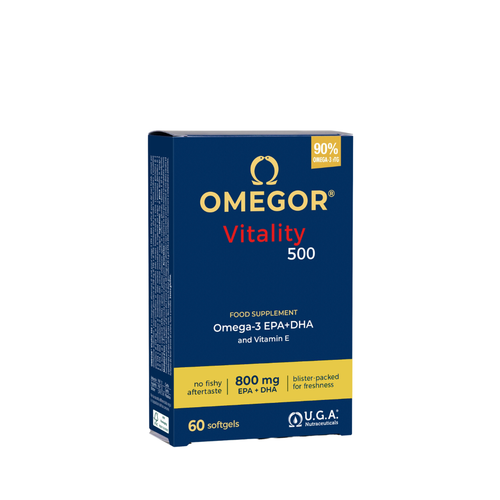
OMEGOR Vitality 500 - 60 capsules
Just 3 words: power, freshness, purity. And always 5 stars. OMEGOR® Vitality is a concentrate of Omega-3 evaluated by IFOS (International Fish Oil Standards) , the most famous quality certification in the field of Omega-3 supplements, always with the maximum score since 2005, the year of its commercialization. It is the top of the range.
Serving Size: 2-8 capsules
Number of servings: 7- 30
Lot and expiry: 2506011 - 06/2029
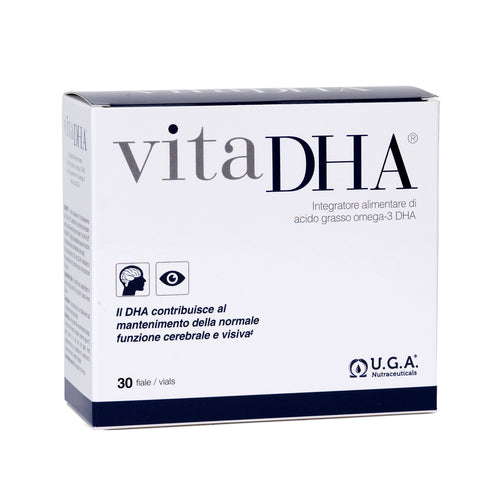
VitaDHA liquid in vials
Having trouble with capsules? Children reluctant to take them? VitaDHA® is the answer you were waiting for. A DHA Plus® supplement in liquid form, with a delicious lemon flavor. Convenient to dose, easy to take and highly absorbable thanks to its triglyceride form: it is the perfect solution for the whole family.
Serving size: 1
Number of servings: 30
Lot and expiry: 26002389 - 05/2029
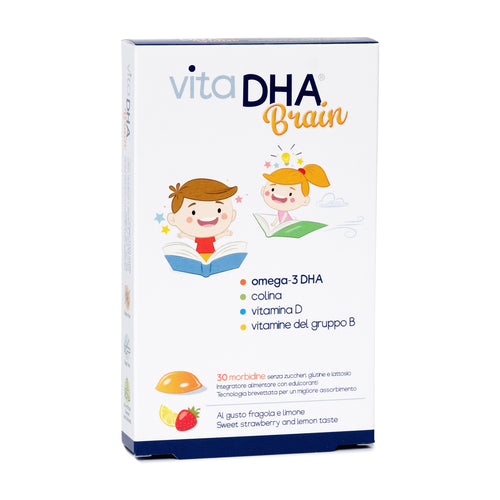
VitaDHA Brain
“Is it time for my little softie yet ?” It doesn’t sound like a supplement, does it? We’ve transformed DHA, choline and vitamins into delicious strawberry and lemon gummies that look like delicious candies. Candies that hide a secret: a patented technology that guarantees 44% higher absorption of Omega-3 compared to common capsules. For the first time, supporting brain development, memory and the immune system of school-age children becomes a moment of pure joy.
Serving Size: 1
Number of servings: 30
Lot and expiry: 44005137 - 04/2027


