
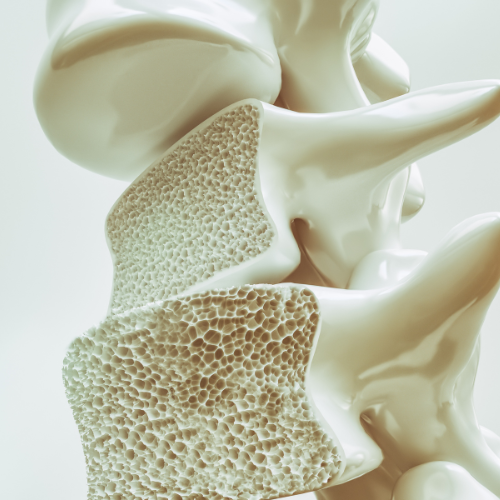
Osteoporosis, Omega-3 Increases Bone Mass
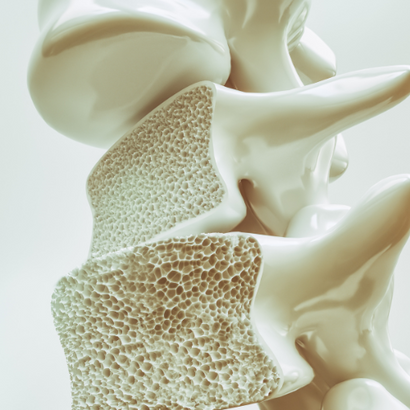
Omega-3 fight osteoporosis by promoting bone mass growth
Omega-3 fatty acids can increase bone mass and protect against osteoporosis. The intake of EPA (eicosapentaenoic acid), DHA (docosahexaenoic acid), and ALA (alpha-linolenic acid) in high amounts, and the reduction of the Omega-6 to Omega-3 ratio, seem able to preserve bone density and reduce fracture risk.
This emerges from an article published in the journal Food and Science Technology, which collected the results of the main scientific studies that in recent years have investigated the relationship between Omega-3 and bone fragility.
Osteoporosis and lifestyle
Osteoporosis is a skeletal disease characterized by deterioration of bone tissue, resulting in increased fragility and susceptibility to fractures. It is estimated that in Italy, about 110,000 wrist fractures and about 70,000 femur fractures each year are due to osteoporosis. In the United States, due to this pathology, over 56% of women and 20% of men over 60 years old suffer fractures, mainly involving the hip.
To prevent osteoporosis, it is important to adopt a correct lifestyle, characterized by physical activity and adequate nutrition. In particular, it is necessary to take the right amounts of calcium and vitamin D, which contribute to maintaining bone health. Some studies have revealed that the intake of supplements or foods rich in Omega-3 may help combat bone fragility and osteoporosis. Among the first studies to investigate this direction is that of Borland and Jackson who, in 1939, discovered how in laboratory animals low concentrations of essential fatty acids were associated with osteoporosis and kidney calcification.
Omega-3 against osteoporosis
Among epidemiological works, the National Health and Nutrition Examination Survey III (NHANES III) was one of the main studies on the relationship between fatty acid intake and hip bone density. This study, conducted in 2006, involved 14,850 participants, men and women of different ages, and confirmed the relationship between intake of polyunsaturated fatty acids and bone density. In 2010, Orchard and colleagues gathered the results of 24 studies on the subject, revealing how the intake of polyunsaturated fatty acids could benefit the treatment of senile osteoporosis. One of the analyzed works showed that in women over 80 years old, with low calcium intake, daily supplementation with 6 grams of fish oil and 600 mg of calcium carbonate maintained spinal bone density stable, while in the control group, after 18 months, bone density decreased by 3.2%.
A similar study was conducted by Jarvinen in 2012, on 554 women over 60 years old. The results showed a positive correlation between spinal bone density and Omega-3 intake. It appears that Omega-3 are especially effective in the absence of hormone replacement therapy (a treatment to counter menopausal symptoms). The reduction of the Omega-6 to Omega-3 intake ratio could compensate for the effects of estrogen deficiency in post-menopause.
How polyunsaturated fatty acids work
According to researchers, a diet rich in polyunsaturated fatty acids can regulate calcium absorption by the intestine. They also seem to modulate the action of cells responsible for bone maturation and resorption; osteoclasts and osteoblasts. In particular, it is likely that Omega-3, by reducing the production of prostaglandins and inflammatory cytokines, counteract bone resorption. Based on these positive indications, it will now be necessary to confirm the link between Omega-3 and bone density with longer-term studies, involving both elderly and growing children. To stay always updated on the latest scientific research news about Omega-3 subscribe to our newsletter.
Source: Kruger MC, 2013, “Long chain polynsatured fatty acids and bone health”. Food and Science Technology, 27 (3):34-37


