

Can DHA Fight Insulin Resistance in Muscle?

Muscles and Sports Activity: Can DHA Combat Insulin Resistance?
Supplementation with omega-3 DHA (docosahexaenoic acid) helps counteract poor insulin sensitivity in skeletal muscle by blocking inflammation and lipotoxicity.
This was discovered by a team of researchers from INRA, the French National Institute for Agricultural Research, and published in the journal The Journal of Nutritional Biochemistry.
Insulin resistance: a risk factor for type 2 diabetes
Insulin resistance is a clinical condition characterized by the need to use higher than normal amounts of insulin to maintain blood glucose levels within normal limits, because the body's cells become less sensitive to the hormone's action. If the insulin response is insufficient for the demand, a state of hyperglycemia develops that can last for years and progress into type 2 diabetes mellitus. Skeletal muscle plays an important role in controlling glucose disposal in response to insulin stimuli. Excessive fatty acid intake triggers cellular and molecular mechanisms in muscles that lead to inflammation, mitochondrial dysfunction, impaired insulin response, reduced glucose uptake, and lipotoxicity—the harmful effects caused by continuous exposure of the body to high levels of fatty acids in the blood.
DHA reduces the effects of palmitate
To test the impact of DHA on inflammation, lipotoxicity, and its potential use as a nutritional prevention strategy, researchers used both in vitro and in vivo tests. C2C12 myotubes, a mouse cell line used as a muscle model, were exposed to high doses of palmitic acid (a saturated fatty acid). The same was done on muscles from lab animals given different doses of nutritional DHA supplements.
Results showed that 30 micromoles of DHA prevented insulin resistance in C2C12 myotubes exposed to 50 micromoles of palmitic acid by reducing the activity of an enzyme known as protein kinase C theta and restoring glucose uptake. Additionally, DHA appeared to protect myotubes from the increase of inflammatory signaling molecules induced by palmitic acid, including IL-6 and TNF-alpha, likely through inhibition of specific enzymes. Beyond anti-inflammatory actions, the benefits seem related to DHA’s ability to counteract the impairment of mitochondrial fatty acid oxidation caused by palmitic acid.
An in vivo study was also conducted in mice fed a diet rich in sucrose, cholesterol, and nutritional doses of DHA. This intervention led to a significant reduction in plasma triglycerides and prevented progression of atherosclerosis.
In vivo and in vitro studies confirm the protective role of DHA
According to the INRA researchers, the in vitro and in vivo results suggest that DHA, at physiological doses, may play a role in regulating lipid and glucose metabolism in muscle, preventing lipotoxicity and inflammation. Although further studies will need to be conducted on human skeletal muscle under supplementation, the results reported by the scientists suggest that DHA supplements could represent an effective strategy against metabolic muscle disorders. To stay updated on the latest scientific research about Omega-3, subscribe to our newsletter.
Source: F. Capel, et al. “DHA at nutritional doses restores insulin sensitivity in skeletal muscle by preventing lipotoxicity and inflammation” The Journal of Nutritional Biochemistry. Published online ahead of print, doi: 10.1016/j.jnutbio.2015.04.003
Recommended products
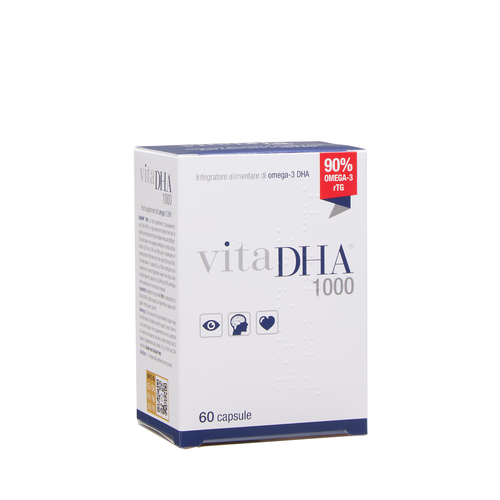
VitaDHA 1000 - 60 capsules
Innovation has a new face: VitaDHA® 1000 combines the power of DHA Plus® with a formula designed for the whole family.
IFOS 5-star certified, our purified and deodorized fish oil supplement is ideal for supporting the well-being of adults and children alike.
Serving size: 1-6
Number of servings: 10-60
Lot and expiry: 2515909 - January 2029


