
Atherosclerosis: Meaning, Causes, Symptoms and Treatment

What is the meaning of the term “atherosclerosis”? Let’s explore it together with its causes, symptoms, and treatments. We often hear about atherosclerosis, and for good reason: according to the latest data from the Cuore Project of the Italian National Institute of Health, 7.3% of Italians suffer from angina pectoris, 3.7% have intermittent claudication, 3.4% have left ventricular hypertrophy, and 2.4% have experienced a myocardial infarction—all problems of arteriosclerotic origin. But what exactly is atherosclerosis? And how is it different from arteriosclerosis?
Atherosclerosis: Meaning
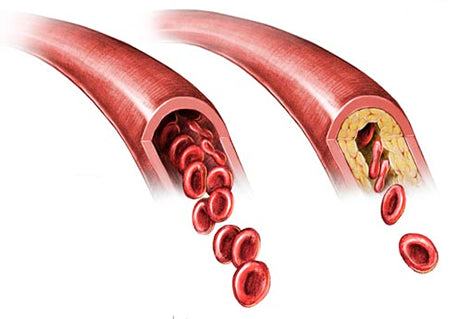
The term atherosclerosis refers to the most common form of arteriosclerosis, a condition characterized by the loss of elasticity of the arterial walls. In atherosclerosis, this loss of elasticity is caused by the formation of specific thickenings (atherosclerotic plaques, or atheromas) composed of cholesterol, fat, calcium, and other substances circulating in the blood. As atherosclerotic plaques grow, they narrow the internal diameter of arteries and can significantly reduce blood flow, increasing the risk of angina, heart attack, stroke, and peripheral artery disease.
Atherosclerosis: Causes
The formation of atherosclerotic plaques is a phenomenon associated with aging. However, some factors can promote its development even in younger individuals. Its main cause is elevated cholesterol concentrations in the blood—especially the so-called LDL (Low Density Lipoproteins). In many cases, this is due to a diet high in saturated fats or trans fats, but not only. Sometimes, a genetic condition called familial hypercholesterolemia underlies elevated blood cholesterol levels. Additionally, several risk factors can contribute to plaque formation, including:
- diabetes;
- hypertension;
- overweight and obesity;
- insufficient physical activity;
- smoking;
- heredity.
Atherosclerosis: Symptoms
Unfortunately, atherosclerosis does not cause symptoms until the effect on blood flow becomes significant. As a result, one might only realize they have this condition when it triggers a medical emergency such as a heart attack or stroke. In other cases, it can be noticed earlier by the onset of chest pain (angina) and shortness of breath caused by reduced blood flow. Additionally, numbness, pain, and even infections may occur in the arms, legs, and pelvis where peripheral arteries may be affected by atherosclerosis. Finally, the formation of atherosclerotic plaques can also be associated with problems in the intestines and kidneys.
Atherosclerosis: Treatment
Appropriate tests (such as angiography) can confirm the presence of atherosclerotic plaques. Once diagnosed, the doctor may consider a procedure to widen the arteries at the site of the atheroma to allow blood to flow more freely (angioplasty) or proceed with surgery on the coronary or carotid arteries affected by atherosclerosis. In less severe cases, medications (statins, bile acid sequestrants, niacin, or fibrates) may be prescribed to control blood cholesterol levels and slow plaque growth. In any case, lifestyle changes are important. In particular, it is advisable to:
- avoid smoking;
- limit the intake of saturated fats (typical of meats, butter, dairy products, shellfish, and eggs), preferring unsaturated fats such as the monounsaturated fats in olive oil and the omega-3s from fish (whose consumption can also be increased by taking fish oil supplements);
- avoid trans fats (present in some margarines, products containing them, and some fried foods);
- limit alcohol consumption (no more than two small glasses of wine – 125 ml each – per day for men and no more than one for women and all adults over 65);
- engage in regular physical activity suited to one’s capabilities.
Sources: . CuoreData, Il Progetto Cuore, Istituto Superiore di Sanità. Period 2008-2012. https://goo.gl/yyMtzU, 20/04/18 . Epicentro. Cholesterol and hypercholesterolemia. https://goo.gl/uhWPGi, 20/04/18 . MedlinePlus. Atherosclerosis. https://goo.gl/GY8xnh, 20/04/18 . MedlinePlus. Cholesterol. https://goo.gl/7QUWGr, 20/04/18 . MedlinePlus. Hardening of the arteries. https://goo.gl/ER6kGK, 20/04/18 . Italian Ministry of Health. Alcohol. https://goo.gl/U3d3P6, 20/04/18 . Progetto Medusa. Your health. https://goo.gl/G2nSB5, 20/04/18 Image: By Irfansevket2905 [CC BY-SA 4.0 (https://creativecommons.org/licenses/by-sa/4.0)], from Wikimedia Commons


