

Omega 3 and Diabetes, the ASCEND Study Reveals Benefits and Useful Dosages

Omega-3 fatty acids, allies of cardiovascular health, may protect against diabetes risks. A new study helps understand when and in what doses to take them, and what benefits are worth expecting.
Is it worth taking Omega-3 to protect the heart and arteries from the risks inherent in diabetes? Years of research have shown the importance of these fats for heart health; a new study helps understand when and in what doses they should be taken and what benefits can be expected from this supplementation.
Published in the New England Journal of Medicine and conducted at the University of Oxford in the United Kingdom, the study involved over 15,000 patients with diabetes, monitoring their health for an average of 7.4 years. About half of the patients were asked to take a daily capsule of Omega-3; the other half were given olive oil.
Data published suggest that, in the absence of cardiovascular problems for those living with diabetes, taking Omega-3 or olive oil makes no difference. However, a deeper analysis reveals benefits in terms of reduction in vascular-related deaths. Furthermore, the advantages of taking Omega-3 may be more evident with the administration of adequate doses of these essential fatty acids.
- Diabetes and cardiovascular risk
- Omega-3 and cardiovascular risk
- Omega-3 and diabetes: the study
- The importance of patients’ nutritional status
- Omega-3 against diabetes: a feasible path
Diabetes and cardiovascular risk
Cardiovascular diseases are among the leading causes of death for people living with type 1 diabetes, and from this perspective, even the heart of those who develop type 2 diabetes cannot be considered safe: this form of diabetes is also associated with an increased incidence of cardiovascular problems and mortality from heart and artery disorders.
Most studies on the subject have been conducted specifically on patients with type 2 diabetes and estimate an increase in coronary artery disease and ischemic stroke ranging between 2 and 4 times; the increase in mortality is estimated to range between 1.5 and 3.6 times. Additionally, type 2 diabetes is an important risk factor for heart failure, peripheral arterial insufficiency, and microvascular complications – all issues that negatively affect both quality and life expectancy, reducing the latter by 4 to 8 years in the presence of diabetes. The basis for this increased cardiovascular risk lies in well-known problems:
- Hypertension, which is associated with insulin resistance. It is common for diabetes to be associated with hypertension, and this combination doubles the cardiovascular risk;
- Increased levels of triglycerides and LDL (Low Density Lipoproteins, also known as “bad cholesterol”) and decreased levels of HDL (High Density Lipoproteins, “good cholesterol”). This combination of factors is characteristic of a problem linked to insulin resistance, called atherogenic dyslipidemia, which in diabetes is known as diabetic dyslipidemia.
Omega-3 and cardiovascular risk
On their part, Omega-3s have attracted researchers’ interest precisely because of their connection with cardiovascular health. The first studies to reveal their heart-healthy properties date back almost fifty years, when it was observed that among the Greenlandic Inuit populations, heavy consumers of fish rich in these fatty acids, the incidence of atherosclerosis was significantly reduced. The large body of scientific work since then has allowed the European Food Safety Authority (EFSA) to conclude that Omega-3s legitimately possess several health benefits, including:
- The ability to contribute to the normal functioning of the heart and to maintaining blood pressure and triglyceride levels within the normal range, attributable to the two Omega-3s found in fish: eicosapentaenoic acid (EPA) and docosahexaenoic acid (DHA);
- The ability to contribute to maintaining normal cholesterol levels, attributable to the precursor of EPA and DHA, alpha-linolenic acid (ALA).
For these reasons, the prospect of protecting the heart and arteries of those living with diabetes through an approach based on Omega-3 intake appears entirely reasonable.
Omega-3 and diabetes: the study
The Oxford researchers’ study is not the first to test the hypothesis that Omega-3 intake may help combat the cardiovascular risk associated with diabetes. For example, in patients with type 2 diabetes, EPA intake (compared to placebo) has been associated with a significant reduction in triglycerides and non-HDL cholesterol.
This new study instead shows a lower incidence of vascular-related deaths among participants who took Omega-3 compared to those who took the olive oil placebo. The difference (196 cases versus 240) is statistically significant. However, the authors of this new trial suggest that additional benefits could be obtained by modifying the dosage of Omega-3 given to patients. In this case, the researchers limited the intake to 840 mg of EPA+DHA per day but noted that “triglyceride levels can be reduced by administration of higher doses of Omega-3 fatty acid supplements than those used in our study (typically, 2 to 4 grams per day).”
In general, randomized clinical trials published in scientific literature have shown that Omega-3 supplementation helps significantly reduce triglyceride levels and that its effect increases both with treatment duration and with increasing Omega-3 dose. Unfortunately, this study did not include measuring participants’ blood triglyceride levels, but its authors emphasize that “a reduction in triglyceride levels may produce beneficial effects in some patients with diabetes.” Additionally, another factor to consider is the ratio of EPA to DHA consumed.
This new study administered 460 mg of EPA and 380 mg of DHA, corresponding to an EPA/DHA ratio of 1.2. However, analyses published in the past have shown that the reduction of triglycerides in patients with type 2 diabetes is more significant when this ratio is at least 1.5; the same seems to apply to cholesterol.
All this suggests that treatments based on higher doses of Omega-3 and characterized by a higher EPA/DHA ratio may be associated with significant cardiovascular benefits for people living with diabetes.
The importance of patients’ nutritional status
When analyzing results, it is also important to consider patients’ nutritional status. Experts involved in the study published in the New England Journal of Medicine stated that participants who took Omega-3 had a rather high Omega-3 Index (an indicator of the amount of EPA and DHA present in the blood), “close to what we would consider a baseline level for a protective effect.” In other words, this study may have involved patients who in reality did not need to take the Omega-3s administered to them because they already had enough. Indeed, most participants, if they had not taken Omega-3, would not have been at high risk of suffering a serious vascular event in the following 5 years: 40.4% were classified as low risk (below 5%), 42.3% as moderate risk (between 5 and 10%), and only a much smaller 17.2% as high risk (at least 10%).
Dietary intake of Omega-6 fatty acids may also have made a difference. Very abundant in modern Western diets, if consumed in excessive amounts these fatty acids can contribute to jeopardizing heart health. For this reason, it is important to also evaluate the ratio between Omega-3 and Omega-6 intake – about which, unfortunately, the Oxford researchers’ study gives no indication.
Omega-3 against diabetes: a feasible path
Available data therefore suggest that Omega-3 supplementation could bring real benefits to people living with diabetes and that what can make a difference in the effect obtained are the health conditions of those taking them, the dose of Omega-3 taken, and the EPA/DHA ratio. In other words, in cases where it may really be necessary, taking appropriate amounts of Omega-3 seems potentially useful even in diabetes. For now, let us remember that according to EFSA, to help the body maintain triglycerides and blood pressure within normal levels, respectively, 2 and 3 grams of EPA+DHA per day are necessary. To help the heart work well, only 250 mg per day are sufficient. Finally, to maintain cholesterol within the normal range, 2 grams of ALA per day are necessary.
Sources: American Heart Association. Cardiovascular Disease and Diabetes. https://goo.gl/mM1NXr. 25/09/18 ASCEND Study Collaborative Group. Effects of n-3 Fatty Acid Supplements in Diabetes Mellitus. N Engl J Med. 2018 Aug 26. doi: 10.1056/NEJMoa1804989 Casaccia Bertoluci M and Zorzanelli Rocha V. Cardiovascular risk assessment in patients with diabetes. Diabetol Metab Syndr. 2017; 9: 25. doi: 10.1186/s13098-017-0225-1 Chen C et al. Effects of Omega-3 Fatty Acid Supplementation on Glucose Control and Lipid Levels in Type 2 Diabetes: A Meta-Analysis. PLoS One. 2015 Oct 2;10(10):e0139565. doi: 10.1371/journal.pone.0139565 Dyerberg J and Bang HO. Haemostatic function and platelet polyunsaturated fatty acids in Eskimos. Lancet. 1979 Sep 1;2(8140):433-5 European Commission. EU Register of nutrition and health claims made on foods. https://goo.gl/faHW7R. 25/09/18 Lee SI et al. Cardiovascular disease and type 1 diabetes: prevalence, prediction and management in an ageing population. Ther Adv Chronic Dis. 2015 Nov; 6(6): 347–374. doi: 10.1177/2040622315598502 Schultz H. Omega-3s fail to prevent heart events in trial on diabetics; experts question baseline levels, dosing. Nutraingredients-usa.com. 28-Aug-2018 Tajuddin N et al. Prescription omega-3 fatty acid products: considerations for patients with diabetes mellitus. Diabetes Metab Syndr Obes. 2016 Apr 19;9:109-18. doi: 10.2147/DMSO.S97036 Tenenbaum A andFisman EZ. Omega-3 polyunsaturated fatty acids supplementation in patients with diabetes and cardiovascular disease risk: does dose really matter? Cardiovasc Diabetol. 2018 Aug 28;17(1):119. doi: 10.1186/s12933-018-0766-0 Image: Pixabay
Recommended products

OMEGOR Classic
Four allies, one goal: your well-being. OMEGOR® Classic combines the power of Omega-3 EPA and DHA with vitamins A, D and E in a purified formula with a pleasant lemon and natural herbal taste. The tradition of cod liver oil meets our innovation.
Serving size: 5 ml
Number of servings: 50
Lot and expiry: 24553 - June 2026
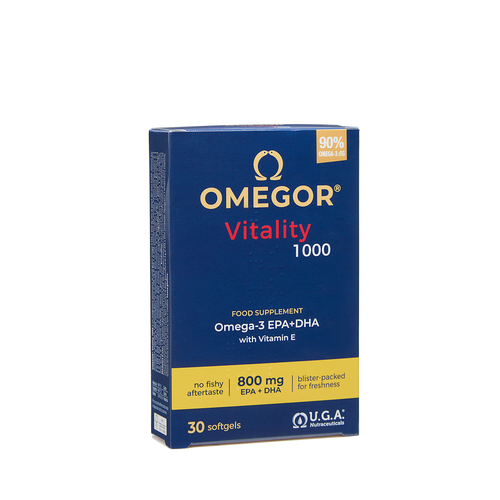
OMEGOR Vitality 1000 - 30 capsules
Just 3 words: power, freshness, purity. And always 5 stars. OMEGOR® Vitality is a concentrate of Omega-3 evaluated by IFOS (International Fish Oil Standards), the most famous quality certification in the field of Omega-3 supplements, always with the maximum score since 2005, the year of its commercialization. It is the top of the range.
Serving Size: 1-4
Number of servings: 7-30
Lot and expiry: 243406 - October 2027
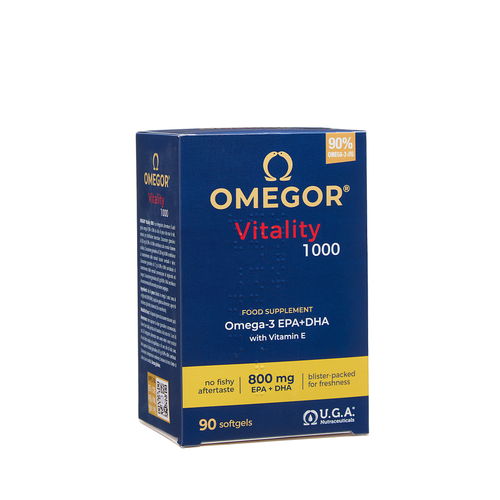
OMEGOR Vitality 1000 - 90 capsules
Just 3 words: power, freshness, purity . And always 5 stars. OMEGOR® Vitality is a concentrate of Omega-3 evaluated by IFOS (International Fish Oil Standards), the most famous quality certification in the field of Omega-3 supplements, always with the maximum score since 2005, the year of its commercialization. It is the top of the range.
Serving Size: 1-4 capsules
Number of servings: 22-90
Lot and expiry: 243406 - October 2027
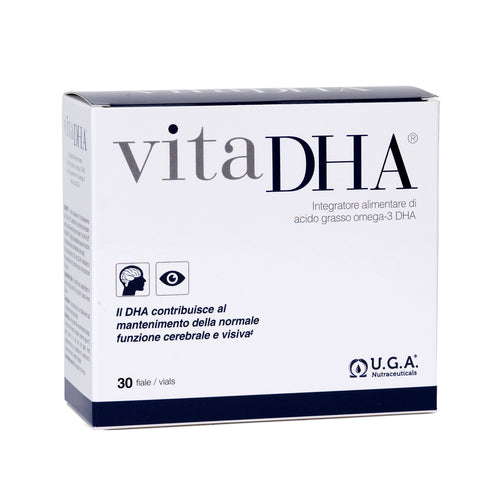
VitaDHA liquid in vials
Having trouble with capsules? Children reluctant to take them? VitaDHA® is the answer you were waiting for. A DHA Plus® supplement in liquid form, with a delicious lemon flavor. Convenient to dose, easy to take and highly absorbable thanks to its triglyceride form: it is the perfect solution for the whole family.
Serving size: 1
Number of servings: 30
Lot and expiry: 25000070 - January 2028
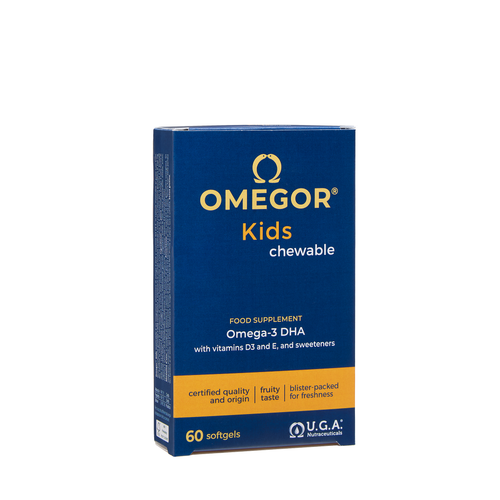
OMEGOR Kids - 60 capsules
“I like it!”. This is the exclamation that no parent expects to hear when talking about Omega-3 supplements. And yet, OMEGOR® Kids is rewriting the rules of the game with its tutti frutti-flavored chewable capsules, where goodness meets IFOS 5-star certified excellence. A concentrate of DHA and EPA, enriched with vitamins D3 and E, designed to support the brain, vision, bones and immune system of the little ones.
Serving Size: 2
Number of servings: 30
Lot and expiry: 232709 - June 2026
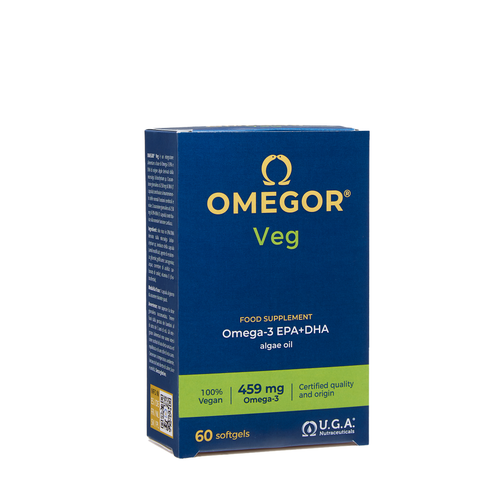
OMEGOR Veg
Omega-3 is not only found in fish, did you know? Nature offers us a precious alternative: the microalgae Schizochytrium sp, a natural source of DHA (docosahexaenoic acid) and EPA (eicosapentaenoic acid). Omegor® Veg contains and concentrates these Omega-3 in capsules certified by the Vegan Society and with IFOS 5 stars certification (the maximum), very rare in products of algal origin.
Serving Size: 1
Number of servings: 60
Lot and expiry: 246810/A - January 2027


