
Red yeast rice helps reduce cardiovascular risk in patients who have already had a heart attack
Red Yeast Rice: Reduces Heart Problems Risk in Patients with Previous Heart Attack
Monacolin K, a component of red yeast rice, benefits the cardiovascular system in patients who have experienced a heart attack. Long-term treatment with this compound appears to lower cholesterol and triglycerides and reduce the risk of recurrence and mortality.
This finding comes from a 2008 study on the Chinese population, conducted through collaboration between researchers at Peking University (China) and Philadelphia (USA), published in The American Journal of Cardiology.
Monacolin K: A Key Component of Red Yeast Rice
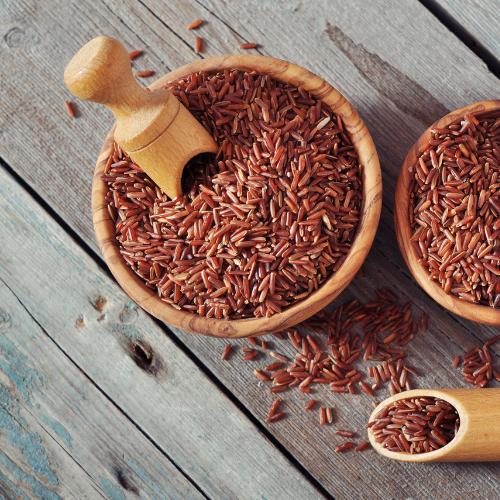
Red yeast rice is produced by fermenting common rice with a specific yeast called Monascus purpureus or red yeast. Extracts of red yeast rice have been used for centuries in China to treat circulatory disorders. It contains several substances known as monacolins, among which monacolin K is the most studied and well-known for regulating cholesterol levels. According to the European Commission, a daily intake of 10 mg of monacolin K helps maintain normal blood cholesterol levels. This extract is also available in supplements such as Cardiol and Cardiol Forte, which contain monacolin K along with CoQ10, vitamins, Omega-3 fatty acids, and polyphenols.
Lower Risk of Cardiovascular Events in the Monacolin K Group
The study involved nearly 5,000 Chinese patients with average cholesterol levels, randomly assigned to receive either a placebo or a supplement containing 5-6 mg of monacolin K plus other natural ingredients (plant sterols and isoflavones) twice daily for 4.5 years. Analysis showed that non-fatal heart attack and coronary death rates were 10.4% in the placebo group and 5.7% in the monacolin K group, reflecting reductions of 4.7% and 45%, respectively. Treatment with monacolin K also significantly reduced overall cardiovascular events and total mortality by 30% and 33%. Additionally, patients taking red yeast rice extract had significantly lower LDL (“bad”) cholesterol, total cholesterol, and triglycerides throughout the study duration, along with increased HDL (“good”) cholesterol.
Better Results Compared to Statins
The researchers concluded that long-term monacolin K therapy significantly reduces new cardiovascular events and deaths. The results appear to surpass those achieved with statins, widely used cholesterol-lowering drugs often associated with harmful side effects. A key strength of this study is the demonstration of beneficial effects on an Asian population using a safe and well-tolerated product.
Source: Zongliang Lu, Wenrong Kou, Baomin Du, Yangfeng Wu, Shuiping Zhao, Osvaldo A. Brusco, John M. Morgan, David M. Capuzzi, Chinese Coronary Secondary Prevention Study Group, Li S. “Effect of Xuezhikang, an Extract From Red Yeast Chinese Rice, on Coronary Events in a Chinese Population With Previous Myocardial Infarction.” Am J Cardiol 2008; 101:1689-1693.


