
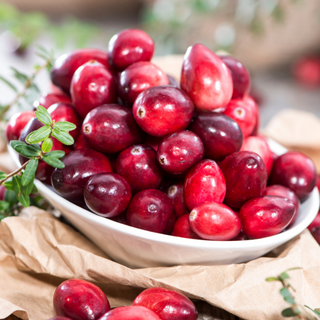
Cranberry, a source of Omega-3 for the skin
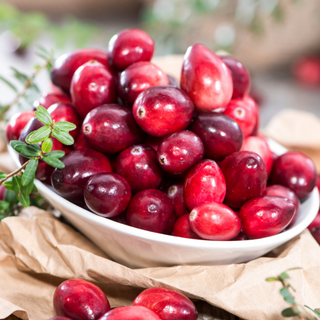
Cranberry: a great source of Omega-3 for beautiful and radiant skin
The cranberry is a fruit rich in Omega-3, the "allied" fatty acids for health. The ability of omega-3 to maintain healthy skin has made cranberry seed oil increasingly important in the skin care cosmetics market.
Cranberry: well-being all around
Cranberry belongs to a genus of shrubs long known for their beneficial health effects1.
A close relative is the better-known blackberry, associated with various properties such as:
- antibacterial
- antioxidant
- anti-inflammatory
- anticancer
- cholesterol-lowering
- anti-obesity
The most studied substances in these fruits are flavonoids and polyphenols, molecules effective at counteracting oxidation. However, these antioxidants are not the only valuable nutrients for health in cranberries. These fruits are also rich in fatty acids: Omega-6 and Omega-3, present in roughly equal amounts2.
Balance between Omega-3 and Omega-6: how important is it?
A proper balance between Omega-3 and Omega-6, ranging from 1:1 to 4:1, is essential to keep the body healthy. Both are essential fatty acids: cells cannot do without them but cannot produce them on their own, so they must be obtained from food. The Western diet is characterized by increasingly high levels of Omega-6, which prevents maintaining an optimal ratio with Omega-3 and thus fully benefiting from all the benefits of Omega-3. The best-known benefits concern the heart and arteries. The first evidence of these nutrients' protective action concerned cardiovascular health. Around the 1970s, it was discovered that a diet rich in fish containing Omega-3 significantly reduces the incidence of cardiovascular diseases. Since then, researchers have discovered more properties:
- control of blood lipid levels (including "bad" cholesterol);
- importance for the development and well-being of the nervous system;
- benefits for joints, eyes, and skin.
Omega-3 from cranberry
Not all Omega-3 sources are the same:
- Animal-derived Omega-3, such as mackerel, tuna, and salmon, contain EPA (eicosapentaenoic acid) and DHA (docosahexaenoic acid);
- Plant-derived Omega-3, like cranberry, contain ALA (alpha-linolenic acid).
The latter is typical of plants and cannot be used directly by cells: it must first be converted into EPA and DHA, the forms of Omega-3 better utilized by the body because they reduce inflammation and the risk of chronic diseases. Plant sources of Omega-3, including cranberries, have shown beneficial health effects. All that is needed is that the body can convert ALA into EPA and DHA.
Hydrating the skin: the primary purpose of cranberry seed oil
The main role of cranberry seed oil is skin hydration. Its components also help to soothe and counteract various skin disorders and irritations such as:
- itching
- eczema
- psoriasis
- acne
Currently, cranberry-based lotions, balms, and creams are available on the market for:
- lips
- abdomen
- body
- face
- hair
Source
1. Johnson BJ, Lin B, Bongard JE, “Genus vaccinium: medicine, cosmetics, and coatings”, Recent Pat Biotechnol. 2010 Jun;4(2):112-24 2. Parry J, Su L, Luther M, Zhou K, Yurawecz MP, Whittaker P, Yu L, “Fatty acid composition and antioxidant properties of cold-pressed marionberry, boysenberry, red raspberry, and blueberry seed oils”, J Agric Food Chem. 2005 Feb 9;53(3):566-73


