
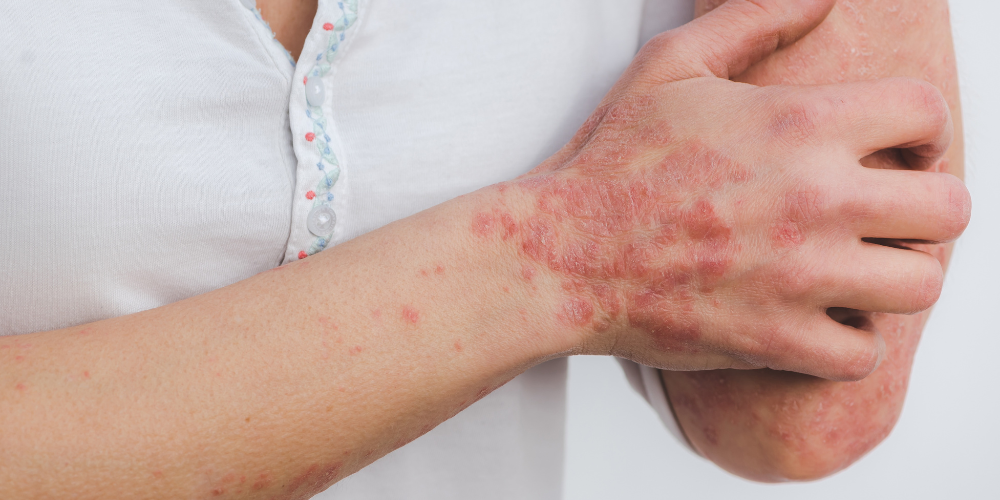
Omega 3, a help to fight psoriasis and dermatitis
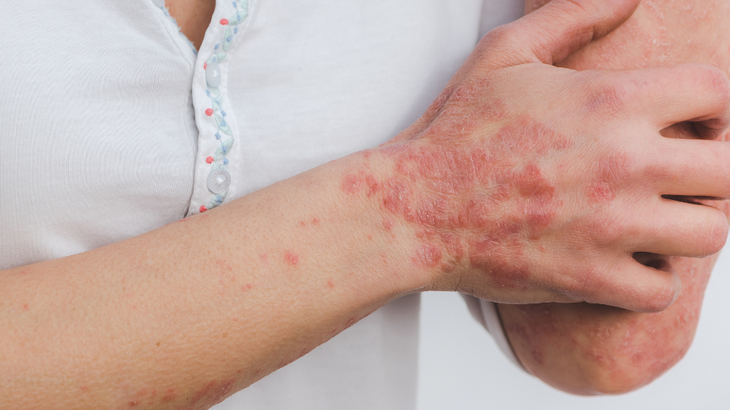
The skin is the body's first line of defense. The protection it offers is not just physical; rather, it serves as a true stage for numerous inflammatory processes that protect health from external threats. Sometimes, however, an excess of inflammation can damage the skin itself; this is what happens in conditions such as psoriasis and atopic dermatitis, where strong activation of immune defenses triggers symptoms that significantly affect the patient's quality of life.
Topical treatments often used to manage these conditions do not target the systemic inflammation that characterizes them, preventing true control; for this reason, new treatment opportunities are highly desirable. Omega-3s, long-chain fatty acids that can be consumed through fatty fish and marine oils (fish, cod liver, krill, and microalgae), could represent an innovative approach to managing these conditions precisely because of their ability to counteract inflammatory phenomena.
Omega-3s and the skin
The importance of dietary fats for skin health has been known for nearly a century. In fact, it was in 1929 that a syndrome caused by a very low-fat diet was first described in scientific literature; its manifestations, primarily cutaneous, included erythema, skin thickening, and itching—all issues familiar to those dealing with psoriasis and dermatitis.
After years of studies, it is now clear that among the various fats that can be consumed through diet, adequate amounts of long-chain polyunsaturated fats, such as Omega-3s, must not be missing. The epidermis is capable of producing only minimal amounts; therefore, providing them through diet is essential.
Once in the skin, Omega-3s support its barrier function, promote the maturation and differentiation of the stratum corneum and the formation of lamellar bodies, and reduce skin inflammation by competing with arachidonic acid (ARA, a derivative of the Omega-6 linoleic acid with strongly inflammatory properties) and inhibiting the production of pro-inflammatory eicosanoids. Additionally, several of their derivatives suppress immune cell migration and promote their apoptosis, while supporting the survival of epithelial cells.
Omega-3s and atopic dermatitis
In the specific case of atopic dermatitis (the most common inflammatory skin disease), the activity of the enzyme responsible for producing anti-inflammatory molecules from dietary fats appears to be reduced. Moreover, among the complex and multifactorial underlying mechanisms, a significant role is played by altered immune defenses characterized by elevated levels of pro-inflammatory molecules—also promoted by a diet with a highly unbalanced ratio of Omega-6 to Omega-3 fats in favor of the former.
Several studies suggest that fish oil, a source of biologically active Omega-3s EPA (eicosapentaenoic acid) and DHA (docosahexaenoic acid), may improve symptoms of this condition and help prevent it through the anti-inflammatory effects of these polyunsaturated fats. Moreover, DHA’s ability to promote normal keratinocyte differentiation and support the structural integrity of the various layers of the epidermis, improving its barrier function, may play a role in managing and preventing atopic dermatitis.
An adequate intake of Omega-3s could help counter the onset of the disease starting in gestation; in fact, fish oil intake during pregnancy has been associated with improvements in the severity of the condition during the first year of life. Additionally, breast milk rich in saturated fats and low in Omega-3s has been associated with increased incidence of the condition, while Omega-3 supplementation has shown beneficial effects even in older children. In particular, a study published in Nutrients in 2024 demonstrated that a 4-month combined intake of EPA, DHA, GLA (gamma-linolenic acid, an anti-inflammatory Omega-6 known for its skin benefits), and vitamin D3 significantly reduced the SCORAD index (SCORing Atopic Dermatitis, used to assess disease severity), the need for topical corticosteroids, and significantly improved itching, sleep quality, and overall quality of life in children with atopic dermatitis.
The hypothesis that DHA in particular can reduce the risk of atopic dermatitis is further supported by a recent Mendelian randomization analysis published by Huang et al. in the European Review for Medical and Pharmacological Sciences. The same analysis suggests that the effect of this Omega-3 fat is mediated by the TNFSF14 gene, which encodes a protein in the Tumor Necrosis Factor (TNF) superfamily involved in regulating immune response and inflammation.
High levels of TNFSF14, a marker of the body’s general inflammatory state, are associated with an increased risk of atopic dermatitis. According to Huang and colleagues, DHA may reduce the risk of developing this skin disease by decreasing its expression and thus inhibiting the inflammatory response. Further studies will help verify this hypothesis.
Omega-3s and psoriasis
Psoriasis is also a dermatological disease with a strong inflammatory component. Those affected face the consequences of chronic skin inflammation associated with increased release of pro-inflammatory cytokines and damage to various organs and tissues.
The excessive proliferation of keratinocytes that characterizes psoriasis seems to be driven by immune system activation, leading to increased ARA production and pro-inflammatory mediators. EPA and DHA could regulate the immune response at the epidermal level, just as they appear to do in the case of atopic dermatitis.
In fact, the low prevalence of psoriasis among Eskimos has been attributed to their high intake of Omega-3-rich foods. Conversely, patients with severe forms of psoriasis have shown significantly reduced levels of Omega-3s in red blood cell membranes (considered reliable indicators of bodily Omega-3 levels). Finally, in psoriasis as well, the role of Omega-3s in disease development is supported by a recent Mendelian randomization analysis. As reported by Huang et al. in the Journal of Cosmetology and Dermatology, only Omega-3s—not other fats—are associated with a lower risk of psoriasis.
Given the lack of therapies that can completely cure the disease, the possibility of supporting existing treatments with natural remedies such as Omega-3 supplements is particularly intriguing. It is known that the production of pro-inflammatory cytokines increased in psoriasis is suppressed by Omega-3s, which, after fish oil intake, are incorporated into cell membranes. Furthermore, animal model experiments suggest that inflammation-resolving Omega-3 derivatives (resolvins) suppress immune cell infiltration and hyperplasia in psoriatic skin.
Good news also comes from clinical studies, which indicate the potential to use Omega-3 supplements to improve erythema, itching, and skin thickening due to psoriasis. In particular, adding fish oil (or more generally, Omega-3s) to conventional treatments significantly reduces the PASI index (Psoriasis Area and Severity Index, used to assess disease severity) and lesion size.
Omega-3 supplements: a valuable aid without serious side effects
Given the severe impact of inflammatory skin conditions on the quality of life of sufferers, improving the effects of available treatments with natural remedies such as Omega-3s—which, except in specific cases like fish allergy, have no serious side effects—is a highly desirable outcome. Moreover, the improvements achieved through Omega-3s could also allow for lower drug dosages, thus reducing the risk of their potential adverse effects.
New studies will help confirm the benefits of this complementary approach and provide more precise guidance on the Omega-3 dosages to be taken for managing psoriasis and dermatitis. Visit the Omegor Blog to discover all the latest updates in the field!
Bibliographic references:
Abdelnour AM, Shareef SJ, Kreuser K, Ashack K. 319 Effects of omega-3 fatty acid supplementation on atopic dermatitis, British Journal of Dermatology, Volume 188, Issue Supplement_2, February 2023, ljac140.015. doi: 10.1093/bjd/ljac140.015
Balić A, Vlašić D, Žužul K, Marinović B, Bukvić Mokos Z. Omega-3 Versus Omega-6 Polyunsaturated Fatty Acids in the Prevention and Treatment of Inflammatory Skin Diseases. Int J Mol Sci. 2020 Jan 23;21(3):741. doi: 10.3390/ijms21030741
Cespedes Zablah A, Lio P. Oral Lipids/Fatty Acids Supplements and Eczema: What Is Known? Dermatitis. 2025 Jan 8. doi: 10.1089/derm.2024.0317
Chen X, Hong S, Sun X, Xu W, Li H, Ma T, Zheng Q, Zhao H, Zhou Y, Qiang Y, Li B, Li X. Efficacy of fish oil and its components in the management of psoriasis: a systematic review of 18 randomized controlled trials. Nutr Rev. 2020 Oct 1;78(10):827-840. doi: 10.1093/nutrit/nuz098
Clark CCT, Taghizadeh M, Nahavandi M, Jafarnejad S. Efficacy of ω-3 supplementation in patients with psoriasis: a meta-analysis of randomized controlled trials. Clin Rheumatol. 2019 Apr;38(4):977-988. doi: 10.1007/s10067-019-04456-x
Huang Y, Chen Z, Wu X, Chen C, Cai L. The effects of fatty acids on psoriasis: A two-sample mendelian randomization study. J Cosmet Dermatol. 2024 Aug;23(8):2716-2725. doi: 10.1111/jocd.16313
Huang XW, Pang SW, Yang LZ, Han T, Chen JM, Huang CW, Liao L, Xie PJ. TNFSF14 mediates the impact of docosahexaenoic acid on atopic dermatitis: a Mendelian randomization study. Eur Rev Med Pharmacol Sci. 2024 Jan;28(1):107-117. doi: 10.26355/eurrev_202401_34896
Marchlewicz M, Polakowska Z, Maciejewska-Markiewicz D, Stachowska E, Jakubiak N, Kiedrowicz M, Rak-Załuska A, Duchnik M, Wajs-Syrenicz A, Duchnik E. Fatty Acid Profile of Erythrocyte Membranes in Patients with Psoriasis. Nutrients. 2024 Jun 7;16(12):1799. doi: 10.3390/nu16121799
Radu A, Tit DM, Endres LM, Radu AF, Vesa CM, Bungau SG. Naturally derived bioactive compounds as precision modulators of immune and inflammatory mechanisms in psoriatic conditions. Inflammopharmacology. 2024 Nov 22. doi: 10.1007/s10787-024-01602-z
Sawada Y, Saito-Sasaki N, Nakamura M. Omega 3 Fatty Acid and Skin Diseases. Front Immunol. 2021 Feb 5;11:623052. doi: 10.3389/fimmu.2020.623052


