
A new ally for your health: krill oil, all the benefits and properties
A new ally for your health: krill oil, all the benefits and properties
In the purest and coldest waters of our Planet lives a small crustacean, similar to a shrimp, which has proven to be a precious nutraceutical food.
We present to you krill, from which an oil rich in Omega-3 is derived, sought after for its numerous benefits for the cardiovascular system (and beyond). Let’s get to know it better.
Krill oil
The hidden treasure of Antarctica that has revolutionized the supplement world. This is, briefly, krill oil. It is a dietary supplement very rich in polyunsaturated fatty acids, particularly EPA (eicosapentaenoic acid) and DHA (docosahexaenoic acid).
But looking closer, krill oil has something more compared to other supplements: it contains Omega-3 fatty acids in the form of phospholipids, a structure much more easily absorbed by our body. This means that even at low doses, its action is ultra effective.
Moreover, it is a natural source of astaxanthin, an antioxidant that preserves the quality of the oil, and of choline, a nutrient responsible for nerve impulse transmission that also protects the liver from fat accumulation.
In short: it is not just any supplement.
But let’s trace its history through the recognitions it has received:
- In 2008, krill oil was authorized as GRAS (Generally Recognized as Safe) by the U.S. Food and Drug Administration (FDA).
- In 2009 it was approved for marketing as a new food ingredient in the European Community, and since 2014 also in China.
- Recently, the European Community extended the authorized uses of krill oil to pregnant and breastfeeding women.
Today, in Europe, krill oil is classified as “Novel food”: a new, uncommon food ingredient. Completely safe.
What is krill?
It is a small crustacean, belonging to the order Euphausiacea, that lives in large quantities in the cold waters of Antarctica – the Antarctic krill biomass is about 379 million tons, with an annual production ranging from 342 to 536 million tons.
Small in size, but huge in its role in the food chain: krill is indeed the food source for many marine organisms, such as whales, seals, and penguins.
Precisely because of this important role, the Commission for the Conservation of Antarctic Marine Living Resources (CCAMLR) set in 2018 a catch limit of 620,000 tons of krill per year – at the end of each year, the total catch counts 250,000 tons of krill, well below the allowed limit.
Krill oil extraction techniques
Fishing and processing krill biomass are costly and far from simple. Why?
- The fishing area is limited and challenging.
- The crustacean must be processed within 2-3 hours of capture.
- The yield is much lower compared to fish oil: large amounts of krill are needed to obtain the oil.
The processing of krill starts on board immediately after capture. Outside its natural habitat, indeed, krill enzymes (active proteolytic enzymes) tend to degrade the organism quickly. Trimethylamine oxide (TMAO), an organic compound present in the muscle tissues of krill, transforms into trimethylamine (TMA), a volatile substance responsible for the unpleasant odor that fish emit once dead. For this reason, the processing must be anticipated as much as possible.
Nutritional composition
What is inside a drop of krill oil? From a nutritional point of view, it contains several essential nutrients, such as n-3 polyunsaturated fatty acids (n-3 PUFA), phospholipids (PL), astaxanthin, and choline.
Unlike common edible oils, krill oil shows a lipid profile (ranging from 0.5% to 3.6%) that includes not only essential fatty acids and phospholipids but also diacylglycerols (DAG), monoacylglycerols (MAG), free fatty acids (FFA), and other lipids.
Seasonal variation, environmental changes, fishing locations, sexual maturity of the crustacean, storage conditions, transport process, and raw material pretreatment are all factors influencing the lipid content of krill oil.
The fatty acids in krill oil
Myristic acid, palmitic acid, palmitoleic acid, vaccenic acid, and oleic acid. These are the fatty acids abundant in krill oil, as reported by the Codex Alimentarius Commission, the body responsible for all issues concerning the implementation of the FAO-WHO Joint Programme on food standards.
However, the two most important fatty acids contained in the oil remain the n-3 polyunsaturated fatty acids (n-3 PUFA), more precisely EPA and DHA.
Choline
Among the phospholipids contained in krill oil, phosphatidylcholine deserves a special mention (present in a percentage ranging from 44.58% to 99.80% of total phospholipids). It is indeed an important source of choline, a nutrient that our body cannot synthesize in sufficient quantities to meet its needs.
But what is choline for?
- It is like a building block for your cells: it enters cellular tissues and helps nerve impulse transmission, improving memory.
- It is rich in phosphorus in a form your body can easily absorb.
- It transports DHA into nerve cells and modulates neurotransmitter activity (dopamine and serotonin), improving memory and mental sharpness while reducing neurodegenerative processes.
- It keeps the heart healthy: choline helps control a substance called homocysteine, which in excess can be harmful to your heart.[1]
- It is good for the liver: it promotes proper liver function, keeping it healthy.
- It helps your body better manage fats, supporting a healthy metabolism.
The European Food Safety Authority (EFSA) has confirmed all these benefits, specifying that only 82.5 mg of choline (found in 2 capsules of Omegor Krill) are sufficient to achieve these positive health effects.
Astaxanthin
A separate paragraph deserves astaxanthin, a powerful antioxidant that makes krill oil a true elixir. It belongs to the xanthophyll family and is the main carotenoid present in some marine animals and algae. Its concentration in krill oil can vary from 40 to 5,000 mg/kg, depending on the type of krill and the extraction method used. It is precisely astaxanthin that gives the oil its characteristic dark red color.
But how powerful is astaxanthin? Here are just a few numbers to give you an idea:
- It is 10 times stronger than other carotenoids such as zeaxanthin, lutein, and β-carotene;
- It is 100 times more potent than vitamin E.
But the most surprising numbers come when we talk about antioxidant potential. On the ORAC scale (used to evaluate the antioxidant potential of a food), krill oil reaches the impressive value of 378. This means it has an antioxidant potential about 300 times[2] greater than that of vitamins A and E alone, and it is almost 50 times more potent than other fish oils in terms of antioxidant capacity. It is truly unbeatable!
Krill oil and fish oils: a comparison
What happens to your body after taking krill oil? And what happens, instead, after supplementation with fish oil? What are the differences? Yes, there are differences.
Studies show that after only 4 weeks of intake, krill oil can reshape the blood lipid profile much more significantly than fish oil. But let’s look at the numbers: over 38% of lipid types increased following supplementation with krill oil, compared to 12% with fish oil.
The secret? It’s in the chemistry
Krill oil has a unique composition: while fish oil transports its Omega-3 mainly in triglyceride form, krill oil is rich instead in Omega-3 fatty acids bound to phospholipids. This difference makes all the difference in absorption: krill oil’s Omega-3s are incorporated into cell membranes much more easily.
Phospholipids are composed of a hydrophilic part (water-loving) and a lipophilic part (fat-loving). This makes them more dispersible in gastric fluids compared to fish oil. The result? Better tolerability, easier digestion, and no more annoying burps.
And for those worried about side effects: good news, toxicity studies confirm that krill oil is safe and very well tolerated by our body.
All the benefits of krill oil: what is it for?
What makes krill oil so special? The answer lies in its key components: Omega-3 fatty acids EPA and DHA. True molecular superheroes ready to protect you from cardiovascular, neurological, and inflammatory diseases and to promote intestinal health.
Heart health: reducing blood lipids
It’s no secret: fish oil is good for the heart. And the credit for its powerful action goes to polyunsaturated fatty acids (n-3 PUFA) that contribute to lowering blood lipid levels (cholesterol and triglycerides), the main risk factors for cardiovascular diseases.
The American Heart Association (AHA) recommends taking at least 1,000 mg of Omega-3 fatty acids per day for this reason. It’s like giving your heart a daily hug!
Looking more specifically at the action exerted by krill oil, preclinical and clinical studies are clear:
- An animal study shows that supplementation with krill oil (1.25%, 2.5%, or 5%)[3] reduces blood lipid levels.
- A study on people with borderline or elevated triglycerides (TG) (150-499 mg/dL) showed that daily doses of krill oil (0.5, 1, 2, or 4 g) reduce TG.
- Another study observed a TG level reduction of 10.2% with the same supplement doses.
Heart health: reducing blood sugar
A silent enemy of your heart health is type 2 diabetes, characterized by high blood glucose levels and insulin resistance. But here is the good news: krill oil is making its way as a potential aid for glycemic control.
An animal study showed that consuming krill oil – at a dose of 600 mg of polyunsaturated fatty acids per day for 60 days – reduces fasting blood sugar and improves glucose tolerance. A significant reduction in fasting blood sugar was also observed in healthy subjects after consuming krill oil (4 g per day) for 8 weeks. This suggests a potential antidiabetic effect.
The secret of this action lies in the activation of a specific enzyme that plays a key role in regulating glucose and lipid metabolism. It is as if krill oil switches on this enzyme in your body, helping it better manage sugars and fats.
Anti-inflammatory effects
An army of little peacemakers ready to calm inflammatory storms. Krill oil does exactly that. How does it do it? It reduces the release of substances that ignite and feed inflammation, such as tumor necrosis factor α (TNF-α) and interleukin-8 (IL-8).
A revealing study: a group of scientists decided to examine the action of krill oil on a sample of 90 patients with cardiovascular diseases, osteoarthritis, or rheumatoid arthritis. The treatment consisted of 300 mg of krill oil per day for 30 days. The results?
- After just 7 days: 20% reduction in C-reactive protein (CRP), an inflammation marker.
- After 30 days: 30% reduction in CRP.
Patients also experienced significant symptom improvements:
- Pain reduced by 29%.
- Stiffness reduced by 20%.
- Functional impairment reduced by 23%.
The study suggests that a daily dose of 300 mg of krill oil could be a great ally in counteracting arthritis symptoms and reducing the inflammation period.
But that’s not all. Krill oil, especially when combined with probiotic bacteria like Lactobacillus reuteri, has proven to be a friend to intestinal health:
- It switches off intestinal inflammation and modulates the intestinal microbiota.
- It helps against inflammatory bowel diseases (IBD), as shown by an in vitro study where krill oil significantly reduced inflammation markers (IL1β and TNFα).
- It speeds up the healing process from inflammation.
- It improves the immune system’s ability to fight harmful bacteria.
- It reduces damage to the intestinal mucosa caused by parasites.
Antioxidant effects
The anti-inflammatory properties of krill oil are complemented by antioxidant ones. And the credit goes to astaxanthin.
Slow and insidious, oxidative stress is at the root of many pathological conditions, as it triggers inflammatory processes that can lead to:
- neurodegenerative diseases;
- cardiovascular problems caused by endothelial dysfunction (blood vessel issues).
Astaxanthin is here to help. Studies have shown how this substance can reduce oxidative stress in nerve cells, increase their vitality, and reduce substances that cause inflammation.
But oxidative stress can also cause blood sugar problems and insulin resistance. Well, astaxanthin has been shown to be effective here as well, as it improves insulin secretion and glucose uptake by our cells, thus helping reduce blood sugar levels.
Brain wellness
Choline + astaxanthin + polyunsaturated fatty acids = powerful neuroprotective effects, benefits on cognitive function and learning and memory processes. The secret lies, therefore, in the composition of krill oil.
You should know that most neurodegenerative diseases, such as Alzheimer’s and Parkinson’s, are characterized by chronic inflammation. In these cases, krill oil use can:
- Protect your neurons from oxidative stress, thanks to astaxanthin’s action.
- Protect you from cognitive decline caused by poor diets (with high fat intake), thanks to the presence of n-3 PUFA fatty acids.
- Enhance learning and memory processes. A study conducted on mice fed high-fat diets with existing cognitive decline showed how krill oil improved spatial memory abilities in just 4 weeks.
Skin wellness
Imagine having a natural sunscreen that works from the inside, protecting your skin not only from UV rays but also repairing DNA and fighting inflammation. The astaxanthin present in krill oil does exactly this.
Clinical evidence confirms it. A systematic review examined numerous studies. The results? They are surprising:
- Improvement in skin structure.
- Visible reduction of wrinkles.
- Increased skin hydration.
Not only that: clinical studies have shown that astaxanthin (at doses from 3 to 6 mg per day) leads to significant improvement in UV-induced skin photoaging.
This means krill oil protects your skin from the inside.
An ally for women
Imagine being able to soften the emotional and physical roller coaster of the menstrual cycle, or to navigate more serenely through symptoms linked to estrogen deficiency during menopause. Krill oil could be a valuable help to achieve this.
Premenstrual syndrome
75%. That is the percentage of women who have to deal with premenstrual syndrome (PMS), an emotional roller coaster that occurs punctually every month, bringing with it a bundle of emotional, behavioral, physical, and psychological symptoms.
But here’s the good news: the polyunsaturated fatty acids contained in krill oil have been recognized as potential allies in fighting the physical and emotional symptoms of PMS.
What do studies say?
- Less pain, more wellness. Women who took krill oil during their cycle reported less use of painkillers and lower scores on PMS self-assessment questionnaires based on the American College of Obstetricians and Gynecologists diagnostic criteria.
- Krill oil has been shown to be much more effective than fish oil in managing both PMS and dysmenorrhea (menstrual pain).
But why is this oil so special? Scientists believe the secret lies in its unique biomolecular profile and the greater bioavailability of its n-3 polyunsaturated fatty acids. It’s as if krill oil speaks a language your body understands better!
Post-menopause period
Menopause is not just about hot flashes and mood swings. With the drop in estrogen, many women also face cerebrovascular dysfunctions (i.e., blood circulation problems in the brain) and bone issues.
Krill could be the key to relieving symptoms and facing menopause challenges.
Studies conducted on ovariectomized rats (surgically deprived of ovaries) show that a dose of 182 mg EPA + 118 mg DHA per day for 2 weeks led to improvements in cerebral blood circulation.
The same studies also demonstrate that krill oil supplementation significantly improved cartilage structure and inhibited the loss of polysaccharides in articular cartilage.
The results obtained are clearly superior compared to those found with flaxseed oil supplementation (a plant-based Omega-3 source).
Frequently Asked Questions
1) Is krill oil suitable for everyone?
Krill oil is a safe product. It is particularly recommended for those who face periods of stress, have memory problems, or mental and physical fatigue. If your day is full of intense professional challenges or you practice sports and want to optimize your performance, krill oil could be a valuable ally.
But that’s not all: this oil also contributes to normal heart function and helps you maintain a balanced lipid profile.
2) In what form is it commercially available?
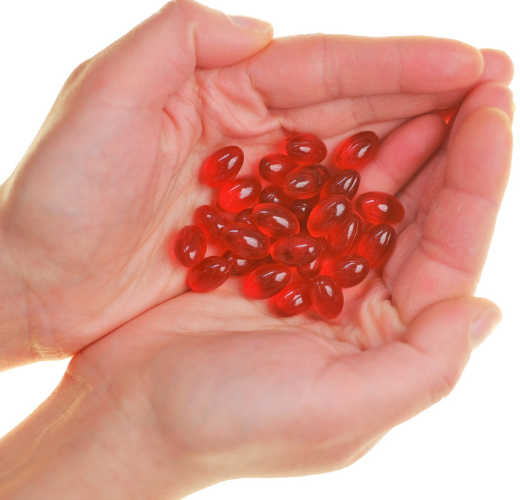
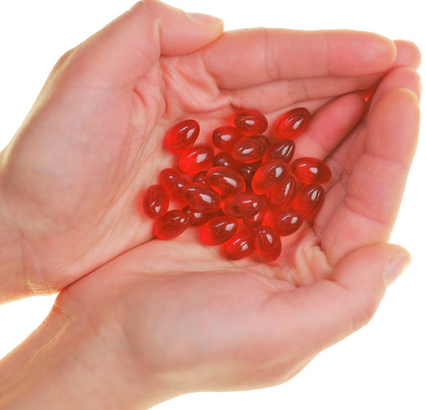
Usually in “softgel” form. Simply put: soft capsules.
3) How much EPA+DHA can krill oil contain?
The European Commission sets the guidelines regarding the maximum amount of EPA+DHA present in krill oil. If in 2009 the maximum intake was 200 mg of EPA+DHA, by the end of 2012 it was raised to 250 mg, then increased again in 2017 to reach levels of:
- 3,000 mg per day;
- 450 mg per day for pregnant and breastfeeding women.
This is because the more we discover, the more we realize it is a prodigious product for well-being and, above all, safe.
4) Is krill oil IFOS certified?
Krill oil follows a different certification path compared to other fish oils. For this reason, it does not have an IFOS certification: this product is a “Novel food,” meaning a new food, and is therefore regulated by European legislation that establishes strict requirements regarding purity, freshness, and EPA and DHA concentration.
Omegor Krill
From the Antarctic ice to a capsule: the journey of OMEGOR® Krill is truly epic. It is not just a supplement: it is the result of an adventure that starts in the coldest waters on Earth and ends in a small capsule that contains the best that marine nature can offer you.
Antarctic krill Euphausia superba is fished in the vast surface banks of area 48, a remote zone that makes fishing and processing a real challenge. It is processed within 2-3 hours of capture, preserving all its precious nutrients and thus guaranteeing us a premium quality raw material. From here to the finished product, we follow a controlled and standardized process that includes a double purification and concentration process: we thus eliminate unpleasant odors and enhance the beneficial components.
The result? A super-concentrated oil in phospholipids, choline, EPA, DHA, and astaxanthin.
OMEGOR® Krill: benefits and features
Concentrated, purified, without aftertaste. Small and easy-to-swallow capsules, with a delicate vanilla aroma. Ideal for athletes and those who live an intense life. These are the main features of the Omegor Krill dietary supplement.
The numbers speak clearly. Two capsules provide:
- 1,180 mg of krill oil;
- 56% total phospholipids;
- 82.6 mg of choline;
- 260 mg of EPA+DHA;
- 100 µg of astaxanthin.
The recommended dose can vary from 2 to 6 capsules per day (3 during pregnancy or breastfeeding), to be taken before the main meal and in the early part of the day (breakfast or lunch).
The benefits? They are recognized by EFSA (the European Food Safety Authority):
- EPA and DHA fatty acids support heart function (2 capsules per day of Omegor Krill).
- DHA contributes to the maintenance of normal brain functions and visual capacity (6 capsules per day of Omegor Krill).
- Choline helps lipid metabolism, regulates homocysteine metabolism, and supports liver function (2 capsules per day of Omegor Krill).
If you want to give extra help to your immune system, you can try OMEGOR® Krill with D3, the krill oil dietary supplement to which we have also added precious vitamin D.
Certifications, quality guarantees, sustainability of Omegor Krill
Quality. For us, it is not just a word: it is a mission that starts from the ocean and goes all the way to the finished product.
Here’s why OMEGOR® Krill is a premium quality product:
- It is Friend of the Sea certified, which guarantees the quality of seafood products and promotes sustainable and responsible fishing activities.
- The packaging is eco-friendly. We use only Forest Stewardship Council (FSC) certified paper, therefore coming from forests managed according to strict environmental, social, and economic standards.
- The packaging is in blister packs. Each capsule is protected from air and moisture, so the product stays fresh and the possibility of fatty acid oxidation is minimized.


