
Why are our supplements packaged in blisters?
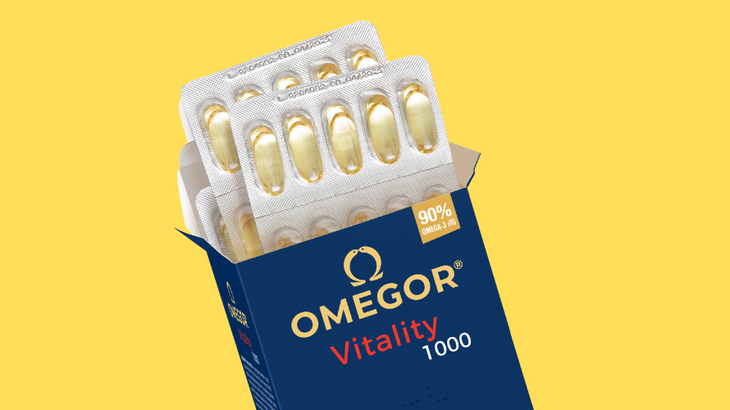
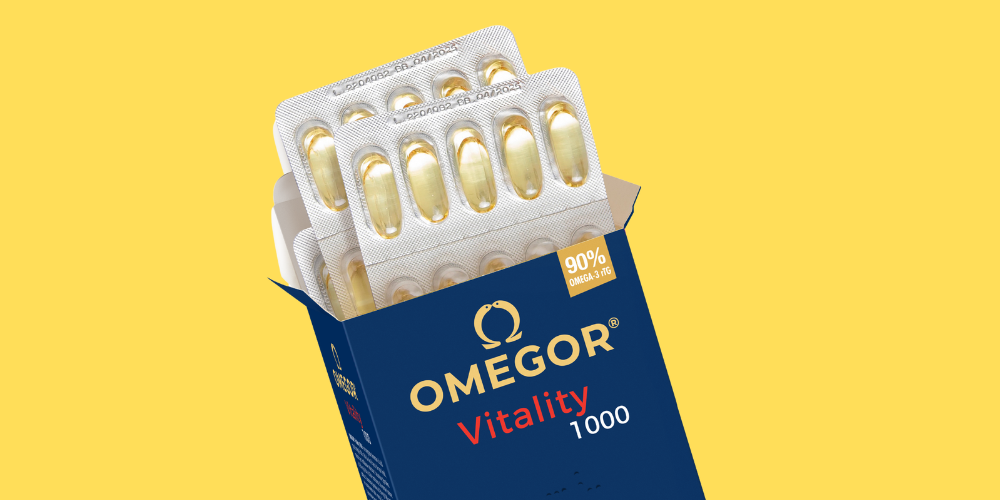
When we buy dietary supplements, we might think we're getting a great deal by bringing home a big jar full of capsules. But the reality might be different, especially if those capsules contain unstable molecules that tend to oxidize easily, such as Omega 3 polyunsaturated fats. That's why Omegor chooses to package its softgels in blister packs: find out what the benefits of this choice are!
What sets Omega 3s apart from other fats and justifies many of their beneficial properties is their structure. This is precisely what is meant when they are called “polyunsaturated fats”: as fats, they consist of chains of varying lengths of carbon atoms, but unlike other fats, the carbon atoms in Omega 3s can be linked by single or double bonds; the adjective “polyunsaturated” indicates the presence of more than one carbon-carbon double bond.
This detail, seemingly purely technical, is actually very important. Fats that have only single bonds between their carbon atoms (so-called “saturated fats”) have a linear structure that allows them to align side by side forming compact and rigid structures (such as cell membranes).
The presence of double bonds, on the other hand, induces bends in the carbon atom chain; the greater the number of double bonds, the more folds there are in the chain. This prevents unsaturated fats from packing tightly and increases the fluidity of the structures in which they are found (such as the aforementioned cell membranes).
Monounsaturated fats, like those in olive oil, have only one double bond, while polyunsaturated fats (like fish Omega 3s) have a variable number depending on the specific fat, and significantly increase the fluidity of the membranes they integrate into, affecting both their functionality and that of the proteins embedded in them.
For example, more fluid membranes in the nervous system are associated with faster nerve impulse transmission.
Unfortunately, however, double bonds make Omega 3s more unstable. In particular, they increase the tendency to oxidize compared to unsaturated and monounsaturated fats.
Both EPA (eicosapentaenoic acid) and DHA (docosahexaenoic acid) – the bioactive Omega 3s found in marine-derived supplements – are highly susceptible to oxidation; the former contains 5 carbon-carbon double bonds, the latter even 6, and each carbon atom that does not have a double bond but is “sandwiched” between two others that do can be easily oxidized by various factors.
Oxidized Omega 3s: the consequences
Oxidized Omega 3s are synonymous with rancid Omega 3s. This term, in itself, evokes something undesirable: no one would gladly consume rancid olive or seed oil! Having the same stance toward rancid fish oil, krill oil, or microalgae oil is entirely justified.
But the reasons not to use oxidized Omega 3s go beyond understandable disgust. The consequences of oxidation include the reduction in the amount of active Omega 3s ingested and the presence of potentially toxic oxidized molecules.
In particular, the oxidation of EPA and DHA can lead to the formation of molecules such as F3-isoprostanes, F4-neuroprostanes, and malondialdehyde (MDA).
By reducing the amount of active Omegas in an oxidized supplement, the transformation of EPA and DHA into these molecules can decrease the effectiveness of the supplement. This concern is backed by the fact that products enriched with vitamin E (an effective antioxidant) have been associated with a greater ability to reduce blood triglycerides (one of the benefits of Omega 3 supplements).
Furthermore, the oxidation of Omega 3s in dietary supplements raises a safety concern. For example, MDA (one of the molecules that can accumulate in oxidized products) induces mutations that have been associated with breast cancer. Moreover, oxidation is a chain reaction that can eventually damage cell membranes and other cell components, causing oxidative stress that may lead to:
- chronic low-grade inflammation, which in turn is linked to many dangerous diseases and health conditions (such as obesity);
- atherosclerosis, which compromises the health and functionality of arteries and increases cardiovascular risk;
- increased risk of Alzheimer’s;
- increased risk of cancer.
Unfortunately, not many studies have been conducted to evaluate the health effects of Omega 3 supplement oxidation; moreover, available data come from short-term investigations, while it would be interesting to examine possible consequences of prolonged consumption of oxidized products.
For these reasons, only future research on the subject can confirm or deny the risks associated with Omega 3 oxidation. In the meantime, it's wise to remain vigilant and, when in doubt, choose supplements that provide greater protection against oxidation, such as those packaged in blister packs.
Omega 3 and oxidation: causes and solutions
The main causes of oxidation from which Omega 3s in dietary supplements must be protected are:
- light;
- oxygen;
- heat.
The first precaution to take is to store Omega 3 supplements in the dark.
Furthermore, it should be noted that light exposure is even more harmful in the presence of impurities. In this respect, products in the form of free capsules or softgels in jars or similar packaging are not recommended for two reasons:
- every time the jar is opened, the light that enters can promote Omega 3 oxidation;
- every time the jar is handled to extract the capsules or softgels, there’s a risk of touching or contaminating the others with impurities.
Products in which capsules or softgels are individually packaged, such as in blister packs, and stored strictly away from light are therefore preferable.
Blister packaging also protects Omega 3s from oxygen. Once again, softgels or capsules in jars are exposed to the pro-oxidant factor (oxygen) each time the jar is opened, while in the case of blister packs, contact with oxygen is limited to the moment the single softgel or capsule is taken.
To protect Omega 3s from the pro-oxidant effect of heat, the first measure is to store them in a cool place (even in the refrigerator!). Moreover, since the oxidation of EPA and DHA can also be promoted by the heat generated during production processes (especially during deodorization, necessary to minimize the often unpleasant fishy odor of the oil used as raw material), it's wise to buy products with certified quality (like those guaranteed by the IFOS label – International Fish Oil Standards).
The advantages of blister packaging and other useful precautions
The oxidation rate of over-the-counter Omega 3 products can be frighteningly high: according to some estimates, it ranges from a minimum of 11% to a maximum of 62%.
Choosing blister packaging, which offers greater protection from contamination by impurities and reduces exposure to oxygen, can be combined with other useful measures to lower the risk of ending up with oxidized products.
In addition to storing Omega 3 supplements in the dark and cool conditions, it's a good idea to:
- choose products that also contain antioxidants, such as the aforementioned vitamin E and astaxanthin (a natural component of krill oil);
- prefer supplements produced through processes that guarantee purity and follow the highest quality standards.
Finally, keep in mind that the chemical form of EPA and DHA may also influence their oxidation. It seems that phospholipids (typical of krill oil) are more easily oxidized than triglycerides (typical of fish oil). Therefore, packaging type, antioxidant content, and storage precautions may be even more important when Omega 3s are consumed in phospholipid form.
Interestingly, some experts suggest that the oxidation of supplements used in clinical trials may be responsible for some conflicting results. By paying attention to all the aspects mentioned, the chances of effective supplementation and the resulting benefits could increase significantly.
References:
Albert BB, Cameron-Smith D, Hofman PL, Cutfield WS. Oxidation of marine omega-3 supplements and human health. Biomed Res Int. 2013;2013:464921. doi: 10.1155/2013/464921
Cameron-Smith D, Albert BB, Cutfield WS. Fishing for answers: is oxidation of fish oil supplements a problem? J Nutr Sci. 2015 Nov 23;4:e36. doi: 10.1017/jns.2015.26


