
Omega-3 EPA and DHA are more effective when in the form of triglycerides

Omega 3 as triglycerides for 6 months? Less lipids in the blood
Taking Omega 3 EPA (eicosapentaenoic acid) and DHA (docosahexaenoic acid) for about 6 months in the form of re-esterified triglycerides is enough to significantly reduce fasting blood lipid levels. The discovery, published in the journal Prostaglandins, Leukotrienes, and Essential Fatty Acids, confirms the greater benefits offered by this form of Omega-3 compared to others available on the market. The study was conducted by a group of researchers led by Jan Schuchardt from Leibniz Universität Hannover (Germany).
Different formulations for different effects
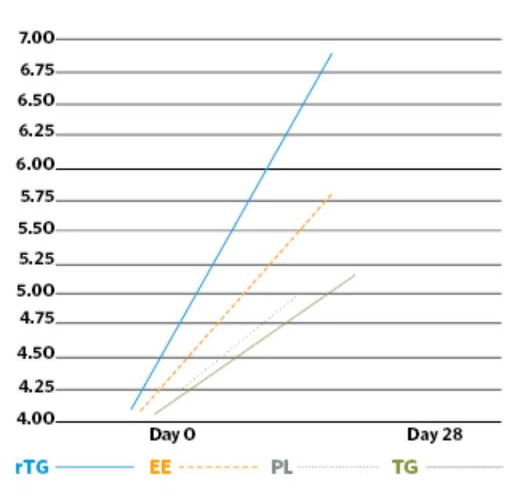
This discovery followed by a few months another study conducted by the same researchers. The results at the time showed that levels of these fatty acids increase more and faster in the body if Omega-3s are taken in the form of triglycerides.
Comparison of omega-3 absorption from triglycerides, ethyl esters, and phospholipids - respectively from omega-3 in the form of rTG, EE, fish oil, and krill oil. The data referred to EPA and DHA, the two Omega-3s present in fish oil. The increase in fatty acids was lower when EPA and DHA were taken in another chemical formulation: ethyl esters. Another study, published in the same journal in September 2010, showed that the amount of Omega-3 detectable in the bloodstream after supplement intake increases by 50% when the nutrients are present as triglycerides.
Triglyceride form is more effective even fasting
Schuchardt and colleagues focused on analyzing differences in fasting blood lipid levels following the intake of EPA and DHA in the form of re-esterified triglycerides or ethyl esters. To do this, the researchers divided more than 150 patients with altered blood lipid levels, who were taking cholesterol-lowering drugs, into 3 groups. Some participants were given only a placebo based on wheat oil, others took fish oil containing Omega-3 as triglycerides or ethyl esters. In these last two groups, the doses of EPA and DHA taken were identical and equal to 1.01 and 0.67 grams. None of the participants showed changes in total cholesterol levels, nor in “good” cholesterol or “bad” cholesterol levels. Compared to patients treated with wheat oil, those who took Omega-3 in triglyceride form showed a significant reduction in blood lipid concentrations under fasting conditions.
An increasingly well-known phenomenon
These new results provide further evidence that not all Omega-3 products are equivalent. Data collected to date demonstrate that EPA and DHA taken as re-esterified triglycerides are more bioavailable. This means that the amount of Omega-3 present in the blood after supplement intake is greater. Furthermore, EPA and DHA accumulate in the body in higher and faster amounts when taken as triglycerides. Finally, in this form Omega-3s help reduce fasting blood lipid levels.
Source
1. Schuchardt JP, Neubronner J, Kressel G, Merkel M, von Schacky C, Hahn A, “Moderate doses of EPA and DHA from re-esterified triacylglycerols but not from ethyl-esters lower fasting serum triacylglycerols in statin-treated dyslipidemic subjects: Results from a six month randomized controlled trial”, Prostaglandins Leukot Essent Fatty Acids. 2011 Dec;85(6):381-6. Epub 2011 Aug 20.
2. Neubronner J, Schuchardt JP, Kressel G, Merkel M, von Schacky C, Hahn A, "Enhanced increase of Omega-3 index in response to long-term n-3 fatty acid supplementation from triacylglycerides versus ethyl esters", Eur J Clin Nutr. 2011 Feb;65(2):247-54
3. Dyerberg J, Madsen P, Møller JM, Aardestrup I, Schmidt EB, “Bioavailability of marine n-3 fatty acid formulations Original Research Article”, Prostaglandins Leukot Essent Fatty Acids. 2010 Sep;83(3):137-4


