
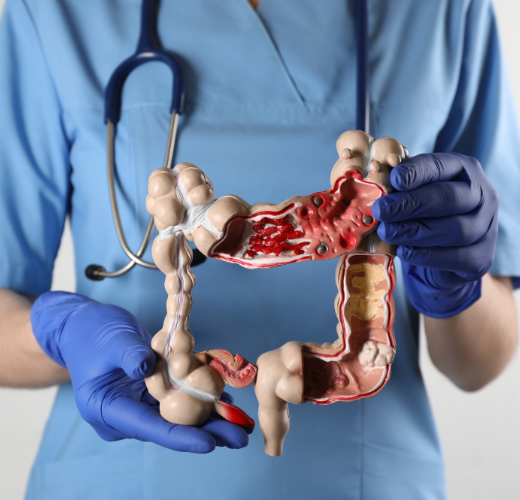
Omega-3s from fish oil reduce colon inflammation
Colon Cancer: Omega-3 Supplements Reduce Inflammation
A low dose of fish oil containing Omega-3 reduces inflammation levels and improves nutritional status in patients suffering from colon cancer. This was demonstrated by researchers at the Universidade Federal de Santa Catarina (Florianópolis, Brazil) in a study published in Nutrition and Cancer. This finding adds new details to the picture of Omega-3 benefits for cancer patients’ health.
Cancer and Inflammation
Tumors are often associated with the presence of inflammation. In premalignant stages, cancer is perceived by the body as a wound, triggering inflammatory processes. In more advanced stages, the tumor mass controls the activity of pro-inflammatory molecules, promoting new blood vessel formation and metastasis generation. The consequences of this chronic inflammatory state include progressive worsening of patients’ nutritional status.
Omega-3 Against Cancer and Inflammation
Studies to date have shown that Omega-3 can counteract inflammation. A crucial role in this effect is played by the balance between Omega-3 and other fatty acids, such as Omega-6, which promote inflammatory processes. Additional benefits of Omega-3 intake concern cancer prevention and treatment. Various studies have demonstrated a relationship between higher levels of these nutrients and reduced incidence of some cancers. Moreover, when used alongside conventional therapies, these fatty acids help effectively treat cancer. The types of cancer most responsive to Omega-3 include breast, prostate, and importantly, colon cancer.
Fighting Inflammation to Prevent Malnutrition
The Brazilian researchers tested whether fish oil intake during chemotherapy modifies inflammation markers or nutritional status in colorectal cancer patients. The study involved 23 patients randomly assigned to two groups: one receiving chemotherapy plus 2 grams per day of fish oil for 9 weeks, equivalent to 600 mg of eicosapentaenoic acid (EPA) and docosahexaenoic acid (DHA) daily; the other receiving chemotherapy alone. Before supplementation, all participants had similar inflammation levels and nutritional status. After 9 weeks, only those who took EPA and DHA showed a reduction in C-reactive protein, a molecule elevated during inflammation. Nutritional indicators like weight and body mass index changed only in patients who did not take Omega-3.
Omega-3 to Improve Cancer Patients’ Health
Based on these results, the researchers concluded that low doses of Omega-3 are sufficient to positively influence the nutritional status of colon cancer patients. This effect is linked to the reduction of inflammatory processes promoted by EPA and DHA.
Source
1. Silva JD, Trindade EB, Fabre ME, Menegotto VM, Gevaerd S, Buss ZD, Frode TS, “Fish Oil Supplement Alters Markers of Inflammatory and Nutritional Status in Colorectal Cancer Patients”, Nutr Cancer. 2012 Feb 1. [Epub ahead of print]


