

DHA Supplements During Pregnancy? Children Will Be More Able to Pay Attention

DHA supplements in pregnancy? Children will have greater attention capacity
Women who consume 400 milligrams of DHA supplements daily during pregnancy promote the cognitive function and attention capacity of their children at preschool age. At 5 years old, children whose mothers took DHA during pregnancy show greater concentration compared to those born to women who did not follow supplementation.
This is reported by research published in the American Journal of Clinical Nutrition, conducted by an international team of researchers led by Usha Ramakrishnan from Emory University in Atlanta (USA).
DHA: essential omega-3 in the nervous system
The central nervous system is rich in omega-3 and omega-6, particularly DHA and, to a lesser extent, arachidonic acid (AA). DHA plays a very important role in the retina and synapses, where it modulates the synthesis, transport, and release of neurotransmitters. This omega-3 is fundamental in neuron growth, membrane fluidity, neuronal survival, and is involved in controlling neurodegeneration.
It has been shown that DHA accumulates in brain areas involved in memory and attention processes, such as the cerebral cortex and hippocampus; animal studies have also shown that DHA deficiency in the brain critically affects neuronal and behavioral development involving learning, memory, hearing, and smell. Despite DHA’s critical role in brain function, the ability to synthesize DHA is very limited in mammals, and only dietary intake ensures sufficient supply for neuronal function. Scientific evidence has shown that DHA and AA concentrations influence fetal neurological development during pregnancy.
It is particularly important that the fetus receives adequate amounts of DHA during the last trimester, as 70% of brain cells develop at this stage. Therefore, maternal fatty acid intake during pregnancy determines the fatty acid status of newborns at birth, with DHA and AA concentrations in umbilical cord blood cells linked to the lipids consumed by the mother.
It has been suggested that polyunsaturated fatty acid levels in cord blood may be associated with cognitive development: low polyunsaturated fat concentrations in cord blood appear related to premature birth, low birth weight, and smaller head circumference of the infant. As also reported in this article, published on the blog.
Furthermore, low maternal consumption of fatty fish, the main source of DHA, during pregnancy has been associated with reduced cognitive development in early childhood and adulthood. Some studies have examined the relationship between fish consumption during pregnancy and child behavior, reporting that children whose mothers consumed adequate amounts of fatty fish early in pregnancy had a reduced risk of hyperactivity at age 9 compared to those whose mothers did not.
A recent meta-analysis of 9 studies also demonstrated that children with ADHD have lower blood omega-3 levels, particularly DHA, compared to controls.
DHA improves attention in 5-year-old children
The study involved over 1,000 Mexican women, some of whom received DHA supplements during pregnancy. Five years later, researchers assessed the cognitive abilities of their children to relate development to maternal supplement consumption. Results showed significantly higher attention levels in children whose mothers received DHA supplementation compared to children of mothers who did not consume supplements. No significant differences were found between the groups for general cognitive function and behavior.
This result aligns with findings from animal and biological model studies linking DHA concentration to prefrontal cortex functions, including reactivity and attention maintenance. Scientists note that often the effects of proper nutrition during the first 1000 days of life on cognitive characteristics are not evident until children start school, when behavior is mainly influenced by the environment. The long-term significance of current results regarding maternal DHA supplementation’s impact on cognitive and behavioral functioning during school years remains to be determined.
Commenting independently on the study’s results, Harry Rice, Vice President of the EPA and DHA organization (GOED), observed that although the data are interesting, researchers did not measure DHA concentrations in mothers and children. This would have provided a greater opportunity to confirm omega-3’s role.
Considering the prevailing opinion that the greatest benefits of supplementation apply to individuals with low omega-3 levels, it would have been interesting in this study to know if offspring of mothers who took supplements had higher DHA levels, and whether better attention test results correlated with children having higher DHA status or not.
Study details
The new study included 1,094 pregnant Mexican women randomly assigned 400 mg of DHA or a placebo from the eighteenth to the twenty-second week of pregnancy until birth.
Five years post-treatment, researchers assessed cognitive development and behavioral and executive functions, including attention, in 797 children (82% of 973 live births). These assessments were possible through specific tests evaluating children’s behavioral skills and cognitive capacities, accounting for home environment quality, maternal intelligence, and socioeconomic status.
DHA supports attention
The data reported by the researchers confirm that prenatal DHA exposure via supplementation by mothers can contribute to better attention in preschool children. The study, however, did not provide evidence of effects in older children.
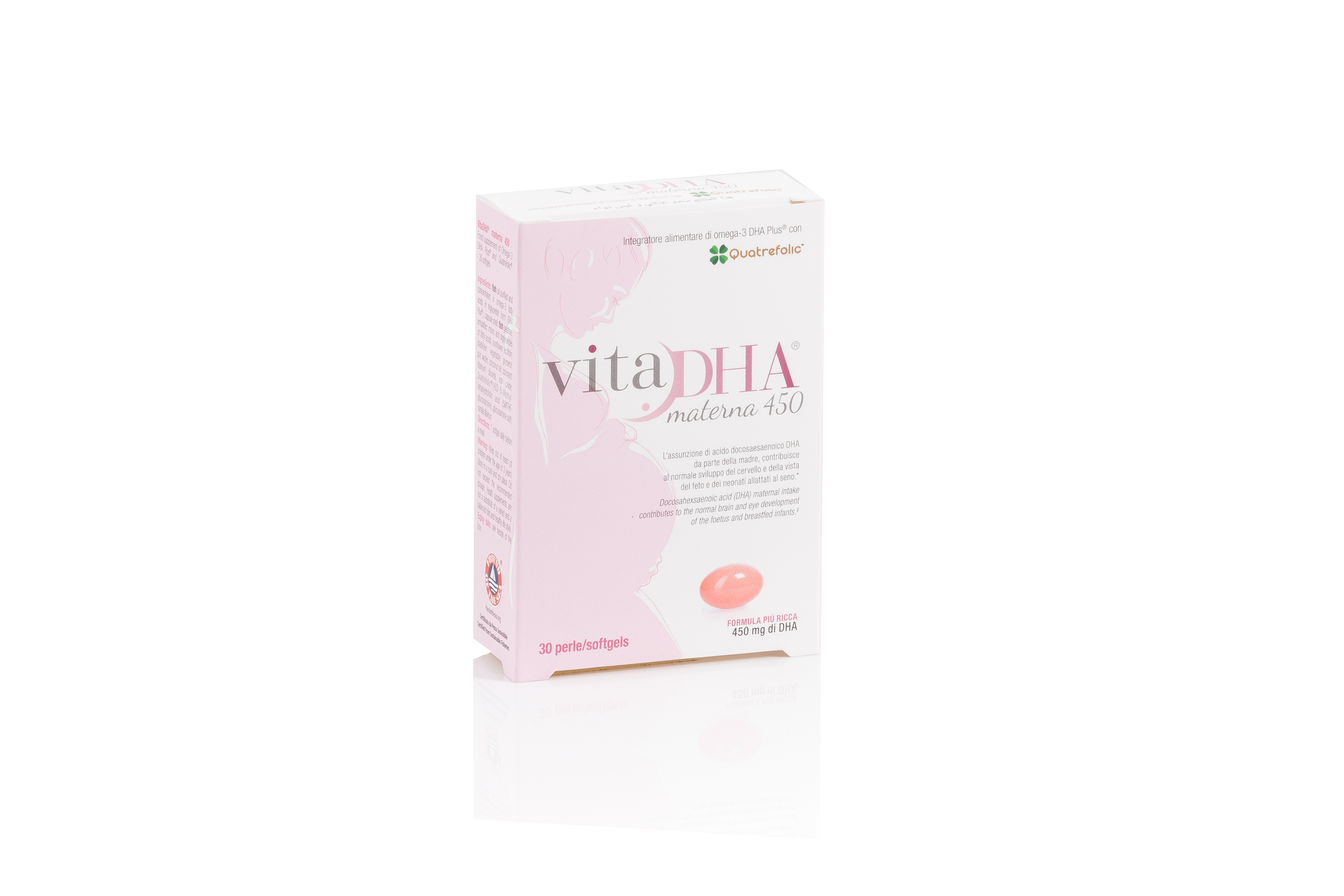
Omegor supplements in pregnancy: VitaDHA Materna
Among the various Omega-3 supplements produced by U.G.A. Nutraceuticals, VitaDHA Materna is particularly indicated to help achieve the right DHA level during the periconceptional period, pregnancy, and breastfeeding, promoting the health of mother and child. Besides 250 milligrams of DHA, this supplement contains 400 micrograms of folic acid in a highly bioavailable form. To stay updated on the latest scientific news on Omega-3, subscribe to our newsletter.
Source: U. Ramakrishnan et al “Prenatal supplementation with DHA improves attention at 5 y of age: a randomized controlled trial” American Journal of Clinical Nutrition


