
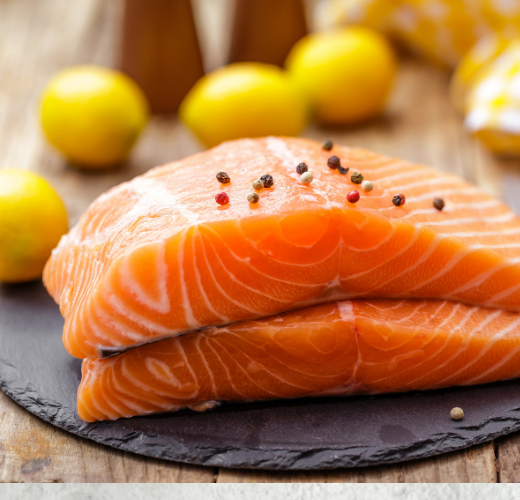
2 servings of salmon provide the amount of Omega-3 necessary during pregnancy
Pregnancy: Eating Salmon Twice a Week Improves Health for Mother and Baby
To ensure the proper intake of Omega 3 during pregnancy, it is sufficient to add 2 servings of salmon per week to your diet. This is demonstrated by a study conducted at the School of Medicine of the University of Southampton (United Kingdom) by a group of researchers involved in the European project "Salmon in Pregnancy Study", concerning the consumption of salmon during pregnancy. The research results were published in the American Journal of Clinical Nutrition.
Omega-3 in Pregnancy: Benefits of Intake
The Omega-3 fatty acids are abundant nutrients in marine fatty fish. Consuming them during pregnancy provides several benefits:
- they reduce the risk of dangerous complications for both mother and baby;
- they facilitate the exchange of oxygen and nutrients;
- they allow proper fetal development;
- they reduce the incidence of some conditions after birth, such as asthma.
A New Approach to Increase Omega-3
The increase in salmon consumption during pregnancy was examined by researchers to determine if it could raise Omega-3 levels in pregnant women and their children. For this reason, 123 pregnant women with a low consumption of fatty fish were recruited. Participants were divided into 2 groups and instructed either to continue their usual diet or to add 2 servings of salmon per week to their menu. Fish intake started at the twentieth week of gestation and continued until delivery.
Results Obtained
Data analysis revealed that the participants who were supposed to introduce salmon into their diet consumed an average of 1.94 servings per week. In total, these women consumed 2.11 servings of fish per week, compared to an average of 0.47 servings eaten by the other participants. This higher fish consumption was associated with a greater intake of the 2 Omega-3s abundant in fish: EPA (eicosapentaenoic acid) and DHA (docosahexaenoic acid). During pregnancy it was found that:
- maternal EPA and DHA levels decreased in the control group;
- they increased in women who had added salmon to their diet.
Likewise, EPA and DHA were more abundant in the umbilical cord blood of these women’s children.
More Omega-3 for Moms Who Don’t Eat Fish
The study results demonstrate that pregnant women who do not regularly eat fatty fish can increase their Omega-3 intake by introducing 2 servings of salmon per week into their diet. In this way, the researchers explain, expectant mothers can ensure their bodies and their babies receive the minimum recommended levels of EPA and DHA suggested by experts.


