

Obesity: To Control Appetite, Better to Choose Omega 3

In Italy, 1 in 10 people is obese. More than half of men and a third of women are overweight. And, according to estimates, overweight rates will increase by 5% in the next decade.
The impact of this outlook on individual and public health should not be underestimated. Indeed, besides being a disease itself, obesity increases the risk of other health problems. Hyperglycemia and diabetes, hypertension, high cholesterol and triglyceride levels, coronary artery disease, heart failure, heart attacks, and strokes are all events and conditions associated with excess weight.
But not only that. Obesity can also impair the proper functioning of other organs and tissues, different from the heart and arteries. It can be associated with problems of bones and joints, strained by excess weight; consequently, joints may ache and stiffen, and one may end up dealing with osteoarthritis. It can lead to the onset of so-called sleep apnea, true interruptions of breathing during sleep; in this case, fatigue and drowsiness could make days difficult to face and could impair concentration and work performance. Finally, it can compromise the proper functioning of the liver and gallbladder and increase the risk of various forms of cancer.
The role of appetite
Losing 5 to 10% of initial weight helps significantly reduce the risks associated with obesity. Unfortunately, however, losing weight is not an easy task whether there are many kilos to shed or only a few. Among those who claim to be perpetually dieting and those who regain most (if not all) of the weight lost with great effort in a short time, it is important to keep in mind that multiple factors influence weight variations.
Appetite also comes into play. Suggested strategies to keep it under control are not lacking; often, for example, fibers are recommended, which, depending on the case, can increase the feeling of satiety and reduce appetite.
Fats can also help precisely in reducing appetite. The situation is somewhat paradoxical: could it be that nutrients often accused of causing weight gain are actually allies of weight loss? In reality, it all depends on the type of fats consumed. And when it comes to feeling more satiated, it seems the best choice are long-chain polyunsaturated fats of the Omega 3 series: EPA (eicosapentaenoic acid) and DHA (docosahexaenoic acid).
Omega 3 in weight loss: why take them?
Although not a miraculous remedy for losing weight, there are many reasons to include an adequate dose of these fats within a dietary plan aimed at weight loss. First, they can help combat or manage cardiometabolic complications of overweight and obesity. Benefits in terms of blood pressure, triglyceride levels, and cardiac activity are beyond doubt; moreover, there is data supporting a role for Omega 3 in preventing the development of insulin resistance that can lead to diabetes.
Secondly, these fats seem particularly useful to prevent further weight gain and regain of lost pounds through dieting. Data on their weight loss effect are at times conflicting, but the effect as an adjunct to weight loss diets seems real and appears to depend precisely on appetite reduction.
Controlling hunger with the right fats
In reality, dietary fats are considered among the causes of loss of control over satiety, associated with the widespread prevalence of overweight and obesity.
In general, the presence and digestion of fats in the intestine slow stomach emptying, stimulate production of gastrointestinal hormones, and reduce appetite and energy intake. However, modern Western diets, rich in fats, compromise the regulation of energy balance and reduce satiety signals normally induced precisely by fats due to the type of fats (saturated and trans) they provide.
Indeed, different types of fats have different satiating effects that depend on structural differences, such as the length of fatty acids and their saturation level. For this reason, long-chain polyunsaturated Omega 3 fats (such as EPA and DHA) would be more efficient in terms of appetite reduction. Among their advantages is a greater stimulation of cholecystokinin release, a gastric hormone that reduces appetite, compared to that promoted by shorter saturated fats. Furthermore, EPA and DHA act on brain mechanisms responsible for reward phenomena that encourage food consumption.
Evidence of these effects is not lacking. It has, for example, been demonstrated that taking 2.8 grams per day of a DHA-rich oil for 12 weeks can help reduce energy intake from food and consumption of carbohydrates and fats. Some participants in the study that detected this effect, all overweight or obese women, also lost significant weight, losing at least 5% of their initial weight. In the control group (which took olive oil, rich in monounsaturated fats, instead of DHA-rich oil), only 7% of participants lost 5%, while 39% of those who took DHA achieved this goal; the difference was not statistically significant, but the weight loss achieved is similar to that obtainable with a 1-year anti-obesity drug treatment.
Other research has shown that diets richer in long-chain Omega 3 are associated with greater fullness and less hunger 2 hours after meals containing fish oil or fatty fish. Others confirm that the intake of polyunsaturated fats reduces energy intake compared to the intake of monounsaturated fats.
Among the various hypotheses to explain these effects, it is thought that Omega 3s can reduce the expression of genes involved in fat synthesis in adipose tissue and increase that of genes that degrade them in the liver, intestine, and skeletal and cardiac muscle fibers.
How to use Omega 3 to reduce appetite
The dose of DHA-rich oil used in the study described above corresponds roughly to the daily consumption of 140 g of fatty fish. In practice, such consumption is difficult to achieve because it requires including fish such as salmon, sardines, tuna, anchovies, or herring at least once a day; for many people – whether following a weight loss regimen or maintaining results – such a diet may be difficult to follow regularly.
Fortunately, everyone can ensure this Omega 3 intake also thanks to dietary supplements based on marine-origin oils, rich in EPA and DHA: fish oil, cod liver oil, krill oil, and algal oil. The latter removes any fear of possible health risks for those allergic to fish and is also compatible with diets excluding fish. In other words, anyone wishing to support their weight loss or help maintain the achieved results by exploiting the properties of Omega 3s can find a supplement suited to their needs.
Bibliographic references
Albracht-Schulte K et al. Omega-3 fatty acids in obesity and metabolic syndrome: a mechanistic update. J Nutr Biochem. 2018 Aug; 58: 1–16. doi: 10.1016/j.jnutbio.2018.02.012
Harden CJ et al. Long-chain polyunsaturated fatty acid supplementation had no effect on body weight but reduced energy intake in overweight and obese women. Nutr Res. 2014 Jan;34(1):17-24. doi: 10.1016/j.nutres.2013.10.004
MedlinePlus. Health risks of obesity. Last viewed April 28, 2023
Recommended products
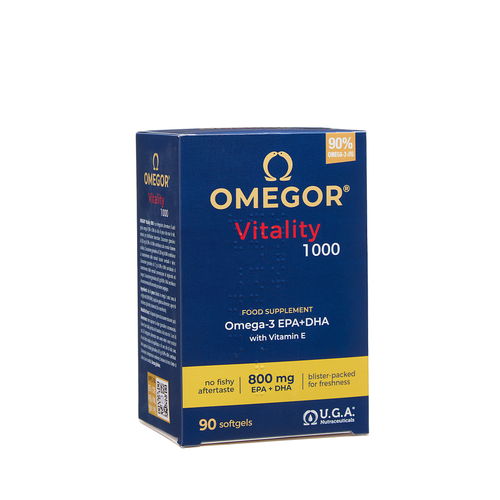
OMEGOR Vitality 1000 - 90 capsules
Just 3 words: power, freshness, purity . And always 5 stars. OMEGOR® Vitality is a concentrate of Omega-3 evaluated by IFOS (International Fish Oil Standards), the most famous quality certification in the field of Omega-3 supplements, always with the maximum score since 2005, the year of its commercialization. It is the top of the range.
Serving Size: 1-4 capsules
Number of servings: 22-90
Lot and expiry: 2605401 - 06/2029

OMEGOR Krill with D3
Omegor Krill with D3 is a food supplement of krill oil that naturally contains phospholipids, choline, omega-3 EPA/DHA and astaxanthin . A generation of krill oil rich in these precious nutrients. The formulation is enriched with Vitamin D 3 .
Serving size: 2 capsules per day
Number of servings: 30
Lot and expiry: 2517311 - 07/2028
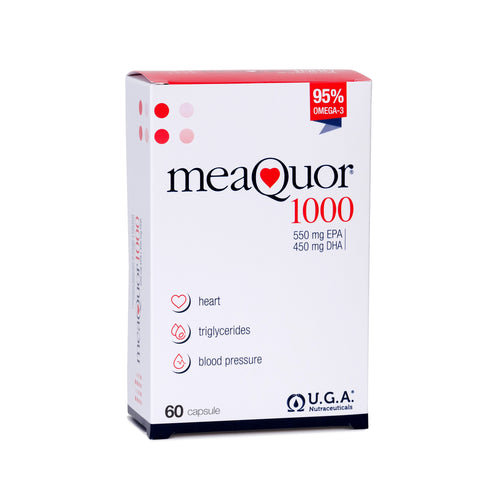
Meaquor 1000 - 60 capsules
There is concentration and Concentration. Meaquor® 1000 belongs to the second category: a concentrate of EPA and DHA so pure and powerful that it deserves 5 IFOS stars (International Fish Oil Standards, the most authoritative certification body for the quality of fish oils) on every single batch. Through multiple molecular distillation, we obtain a fish oil with extraordinary purity and very high concentrations of Omega-3. Meaquor ® 1000 is the choice of those who know that, when it comes to well-being and cardiovascular health, even a milligram can make a difference.
Serving Size: 1-3
Number of servings: 20-60
Lot and expiry: 2513409 - 01/2029


