
Cod liver oil: properties, benefits and contraindications
It is not just a natural supplement: it is a real time capsule that contains centuries of wisdom and nutritional science. Cod liver oil is such a precious and multifaceted product that it deserves more than just a brief overview: it needs a guide.
Cultivate your curiosity, nurture your well-being with cod liver oil.
Cod liver oil: what it is and how it is obtained
It all starts with cod swimming freely in the depths of cold and pure waters. From their liver, an oil rich in Omega-3, vitamin A, and vitamin D is extracted.
To guarantee all the benefits provided by its nutrients, one would need to regularly consume raw cod liver. A food that, for obvious reasons, is rarely found on our tables. For this reason, it is now available in convenient dietary supplements that allow you to integrate well-being into your life with greater practicality and regularity.
Cod liver oil and fish oil: the differences
There is often confusion: cod liver oil and fish oil are two different products. Yes, they are both valuable allies for your well-being because they are rich in Omega-3 fatty acids, but they are not interchangeable.
The main difference lies in the raw material from which they are derived: the first is extracted from the cod’s liver and the second from the muscle of fish. This has a significant impact on the nutritional profile: the liver is rich in vitamin A, whereas fish oil is not.
You should know that in the past, prolonged intake of cod liver oil was discouraged. The reason? Old purification techniques preserved its composition almost intact, and the final product contained large doses of vitamin A and vitamin D. Both vitamins are essential for health, certainly, but should not be consumed in excess.
For this reason, cod liver oil intake was once recommended only in the winter months to stock up on its active ingredients.
Today things have changed. Thanks to modern molecular purification techniques, we can offer you a product suitable for prolonged use. How? By reducing the vitamin A content to optimal levels for your well-being. But not only that: cutting-edge treatments allow us to purify the oil from contaminants and other unwanted components and then add the most precious molecules (such as vitamins) in the desired dosages.
Cod liver oil: nutritional values
If we take a closer look at what cod liver oil contains, we find not only Omega-3 and vitamins inside.
In 100 g of cod liver oil there are approximately:
- 22.6 g of saturated fats;
- 46.7 g of monounsaturated fats;
- 22.5 g of polyunsaturated fats, including Omega-3 EPA (eicosapentaenoic acid, 6.9 g) and DHA (docosahexaenoic acid, 11 g);
- 30 mg of vitamin A;
- vitamin D (250 micrograms);
- trace minerals (sodium, potassium, and iron).
Being a fatty substance (providing about 900 calories per 100 g), cod liver oil facilitates the absorption of vitamins A and D, both fat-soluble.
Now let’s look even more closely at each of the substances contained in a drop of cod liver oil. Let’s start with…
Omega-3 fatty acids: ALA, EPA, and DHA
Among the active ingredients of cod liver oil, Omega-3s stand out, fatty acids associated with more than one beneficial effect recognized by EFSA, the European Food Safety Authority:
- they protect the heart and help control blood pressure (EPA and DHA);
- they help control triglyceride levels (EPA and DHA) and cholesterol (ALA) in the blood;
- they support brain and retina development and health (DHA).
And more! Scientific literature also associates Omega-3s with:
- an antithrombotic action (reducing risk of heart attacks and strokes) and antiarrhythmic effects;
- increased levels of “good” HDL cholesterol;
- an anti-inflammatory action useful for counteracting intestinal diseases and other inflammation-related conditions;
- regulation of the immune response;
- control of cell proliferation, useful against tumors;
- the ability to prevent age-related macular degeneration, one of the leading causes of blindness in old age;
- reduction of symptoms of some neurological and psychiatric disorders.
Nourishing our body with Omega-3s is therefore essential at every stage of life. Unfortunately, although we need them greatly, our body cannot synthesize alpha-linolenic acid (ALA), the precursor of Omega-3 EPA and DHA known for their health benefits.
Moreover, the conversion of alpha-linolenic acid into EPA, which is then converted into DHA, is inefficient: only 5% of ALA is converted into EPA and less than 0.1% is transformed into DHA.
For this reason, not only ALA but also EPA and DHA are considered “essential” nutrients, meaning they must be obtained from the diet. Thus, from a nutritional standpoint, the best strategy is not to take ALA but to consume EPA and DHA “ready to use.”
Where can these precious nutrients be found? Fish such as salmon, mackerel, and herring are among the best dietary sources of EPA and DHA. Of course, it is not easy to include them in the diet in amounts sufficient to meet our needs… but this is precisely why dietary supplements exist!
All the vitamins contained in cod liver oil
Cod liver oil is a natural source of vitamin A. According to EFSA, this vitamin:
- helps metabolize iron;
- promotes the proper functioning of the immune system;
- helps maintain healthy skin (counteracting wrinkles) and mucous membranes;
- maintains healthy teeth;
- promotes eye health (vitamin A deficiencies can impair visual abilities).
Besides cod liver oil, this precious vitamin is also found in dairy products, poultry, red meat, and fish. It can also be consumed as beta-carotene (provitamin A), a precursor abundant in carrots, apricots, and several other fruits and vegetables (such as broccoli, spinach, and most dark leafy greens).
Cod liver oil also contains the valuable vitamin D, which boasts numerous benefits recognized by EFSA.
This vitamin:
- helps absorb and use calcium and phosphorus;
- promotes bone and teeth health (its deficiency can cause growth delays, rickets, bowed legs, and protruding abdomen in children; in adults, it can lead to bone fragility, cramps, and muscle spasms);
- supports proper muscle function and the immune system.
To get enough vitamin D, as you may already know, it is good to expose skin to sunlight: UVB rays allow cholesterol to be used to produce vitamin D. Dietary sources are scarce (found in egg yolk and yellowfin tuna), making cod liver oil products a valuable ally.
How is cod liver oil used?
It seems that already in the 1700s cod liver was fermented, and medicinal use of the oil dates back at least to the 19th century when it was used to treat rickets. Today it is available on the market in the form of dietary supplements used for numerous purposes.
Some use cod liver oil as a restorative or to maintain healthy skin and hair. Others take it to lower cholesterol and triglycerides, to combat kidney problems associated with diabetes, or against high blood pressure, cardiovascular diseases, osteoarthritis, depression, systemic lupus erythematosus, glaucoma, otitis… Some even apply it directly to the skin to speed wound healing.
In short: its benefits are countless.
The benefits of cod liver oil: what it is good for and when to take it
As you already know, there are many uses of cod liver oil. Let’s focus on proven benefits.
Cod liver oil supplements can help promote the healthy functioning of the heart, brain, and eyes, and lower blood triglyceride levels. Excess triglycerides are very dangerous for health because they increase the risk of coronary artery disease (a disease of the arteries supplying blood to the heart). Cod liver oil can help reduce triglycerides by up to 50%.
It is also a valuable ally in cases of mild hypertension, as it promotes a slight but significant reduction. Keeping blood pressure under control is important to protect heart and blood vessel health. Hypertension can damage the inner lining of arteries, promoting cholesterol buildup (atherosclerotic plaques) and leading to atherosclerosis, a condition that narrows arteries and raises blood pressure. This creates a vicious circle that can cause arrhythmias, heart attacks, and strokes.
Besides these certified uses, cod liver oil also seems useful to fight kidney problems associated with type 2 diabetes. Evidence? Its intake corresponds to a reduction of protein levels in urine, a marker of kidney disease severity.
Over the years, this precious oil has also been recommended for treating depression, irregular heartbeat related to cardiovascular disease, ear infections in children, systemic lupus erythematosus (an autoimmune disease affecting multiple organs), and various other health problems.
For now, however, scientific evidence is lacking to guarantee effectiveness of cod liver oil for all these latter uses.[1] In short, despite many years of use, we have not yet finished uncovering the secrets of this complex elixir!
Cod liver oil for dogs, cats, and horses
Did you know that cod liver oil is also a boon for the health of our four-legged friends?
For example, it seems to help dogs grow healthy and strong; it is used during pregnancy to address vitamin deficiencies, as a restorative, and to promote skin and coat health after trauma.
In cats, it is recommended to compensate for vitamin A deficiencies that could impair vision, as well as to promote skin and coat health. Moreover, some recommend it to fight inflammation, promote heart and immune system health, strengthen bones, support proper nervous system and muscle function, and combat cancer.
It is also used in horses to protect vision, bones, coat, and hooves. Furthermore, it seems to help fight lung diseases, promote growth, and increase energy.
As we anticipated: the benefits of cod liver oil are truly surprising!
How to choose a quality cod liver oil supplement
After reviewing all the benefits, let’s move to practical information. Such as…
What type of supplement to buy? On the market, you will find various cod liver oil products in different formulations. For example, you can buy it as capsules (hard or soft), pearls, softgels, oil concentrate-filled caplets, liquid form, or syrup suitable for children.
Where to buy? In herbal shops, pharmacies, parapharmacies, or online. The important thing is to rely on safe sales channels.
How to tell if a supplement is high quality? We recommend, or better yet, insist on choosing a pharmaceutical-grade product, meaning it meets standards suitable for medicinal use. You will notice that supplement prices vary widely: alongside products costing less than 5 euros, you will find others costing 50 euros. So, how to decide?
To select a quality product, read the label very carefully. The first thing to evaluate is the EPA and DHA content per capsule (not per package): multiply it by the number of capsules to get the total EPA+DHA content of the package. Then divide the package price by the total content to find the price per 1,000 mg of Omega-3. Compare this price with other products to identify the best value.
How to take cod liver oil: dosages
Each supplement is a world unto itself. Therefore, the dosage depends on the purchased product.
The primary factor determining dosage is the concentration of active ingredients: the number of capsules taken daily depends on their EPA and DHA content. How many are needed to reach the required dose? The higher the concentration, the fewer capsules are needed.
Dosage also depends on the reason for taking cod liver oil supplements. Scientific literature tells us, for example, that to reduce triglyceride levels and lower blood pressure, 20 ml of cod liver oil per day is necessary. If taken for high cholesterol, doses should reach up to 30 ml per day.
We want to remind you that these dosages are only indicative: the dosage depends on the age of the person taking the supplement and individual needs.
EFSA, for its part, reminds us that:
- to promote healthy heart function, 250 mg of EPA+DHA per day is required;
- to promote healthy brain and eye function, 250 mg of DHA per day is required;
- to maintain normal triglyceride levels, 2 grams per day of DHA combined with EPA, or more simply, 2 grams per day of EPA+DHA, are needed;
- to maintain normal blood pressure, 3 grams per day of EPA+DHA are needed.
Side effects of cod liver oil
Good news: cod liver oil is a safe remedy for most healthy people.
However, some possible side effects include burping, bad breath, heartburn, and nosebleeds — all of which can be alleviated or avoided by taking the supplement with meals. The problem related to the taste of cod liver oil, which can be unpleasant, can be solved by choosing softgel or capsule formulations or opting for a flavored product.
In fact, even the classic spoonful cod liver oil, if obtained through accurate purification processes and properly flavored, can have a surprisingly pleasant taste! This is the case of Omegor® Classic, which precisely for this characteristic won the Superior Taste Award, awarded by the International Taste Institute based on evaluations by a jury of internationally renowned chefs and sommeliers.
In any case, it is important to take cod liver oil following the correct dosage recommended by your doctor, nutritionist, or pharmacist: too high doses of the supplement can cause nausea and loose stools or interfere with blood clotting, increasing the risk of bleeding.
Also, keep in mind that vitamins A and D contained in the supplement, if taken in excess, can have side effects. What are they?
Too much vitamin A can cause symptoms such as nausea, vomiting, loss of appetite, skin problems, fatigue and drowsiness, dizziness, severe headaches, stomach pain, pain behind the eyes, bone or joint pain, menstrual cycle changes, vision problems, growth retardation, hair loss, and jaundice.
Excess vitamin D can cause increased calcium levels in the blood, which can trigger nausea or vomiting, reduce appetite, and promote calcium accumulation in soft tissues (for example, in heart or lung tissues). Side effects of excess vitamin D also include weakness, weight loss, confusion and disorientation, frequent urination, and kidney problems.
Contraindications of cod liver oil
More than contraindications, we talk about interactions. Cod liver oil can interact with some medications, dietary supplements, or herbal products, influencing blood pressure and blood clotting. You can find everything in this table.
Table 1
Possible side effect | Drug/active ingredient | |
Antihypertensive drugs | excessive lowering of blood pressure | captopril enalapril losartan valsartan diltiazem amlodipine hydrochlorothiazide furosemide |
Anticoagulant or antiplatelet drugs | slowed blood clotting, increased risk of bleeding and bruising | aspirin clopidogrel diclofenac ibuprofen naproxen dipyridamole heparin enoxaparin dalteparin ticlopidine warfarin |
Dietary supplements and herbal products | slowed blood clotting | angelica borage seed oil clove Dan Shen (Salvia miltiorrhiza) garlic ginger ginkgo Trifolium pratense turmeric willow |
We also want to remind you that there is insufficient information to guarantee the safety of cod liver oil intake during pregnancy or breastfeeding. In these cases, it is even more important to consult your doctor. Also keep in mind that, by itself, vitamin A intake (present, as we said, also in cod liver oil) is contraindicated during pregnancy.
We are here to make a difference in your life, together.
Bibliographic references:
Averna MR et Al. Omega 3 and cardiovascular risk reduction. PPG Scientific Editions, 2003
Baker EJ et Al. Metabolism and functional effects of plant-derived omega-3 fatty acids in humans. Prog Lipid Res. 2016 Oct;64:30-56. doi: 10.1016/j.plipres.2016.07.002
Berbert AA, Kondo CR, Almendra CL, Matsuo T, Dichi I. Supplementation of fish oil and olive oil in patients with rheumatoid arthritis. Nutrition. 2005 Feb;21(2):131-6. doi: 10.1016/j.nut.2004.03.023
Bourre JM. Roles of unsaturated fatty acids (especially omega-3 fatty acids) in the brain at various ages and during ageing. J Nutr Health Aging. 2004;8(3):163-74. PMID: 15129302
European Commission. Food and Feed Information Portal Database. Last viewed: 07/02/25
Conklin SM, Harris JI, Manuck SB, Yao JK, Hibbeln JR, Muldoon MF. Serum omega-3 fatty acids are associated with variation in mood, personality and behavior in hypercholesterolemic community volunteers. Psychiatry Res. 2007 Jul 30;152(1):1-10. doi: 10.1016/j.psychres.2006.10.006
Crea. AlimentiNUTrizione. Food composition tables. Cod liver oil. Last viewed: 07/02/25
Drugs.com. Vitamin A
Fontani G, Corradeschi F, Felici A, Alfatti F, Migliorini S, Lodi L. Cognitive and physiological effects of Omega-3 polyunsaturated fatty acid supplementation in healthy subjects. Eur J Clin Invest. 2005 Nov;35(11):691-9. doi: 10.1111/j.1365-2362.2005.01570.x
Germano M, Meleleo D, Montorfano G, Adorni L, Negroni M, Berra B, Rizzo AM. Plasma, red blood cells phospholipids and clinical evaluation after long chain omega-3 supplementation in children with attention deficit hyperactivity disorder (ADHD). Nutr Neurosci. 2007 Feb-Apr;10(1-2):1-9. doi: 10.1080/10284150601153801
Grimble RF, Tappia PS. Modulation of pro-inflammatory cytokine biology by unsaturated fatty acids. Z Ernahrungswiss. 1998;37 Suppl 1:57-65. PMID: 9558730
Harris WS. Achieving optimal n-3 fatty acid status: the vegetarian's challenge... or not. Am J Clin Nutr. 2014 Jul;100 Suppl 1:449S-52S. doi: 10.3945/ajcn.113.071324
Hussein N, Ah-Sing E, Wilkinson P, Leach C, Griffin BA, Millward DJ. Long-chain conversion of [13C]linoleic acid and alpha-linolenic acid in response to marked changes in their dietary intake in men. J Lipid Res. 2005 Feb;46(2):269-80. doi: 10.1194/jlr.M400225-JLR200
IFOS – The international fish oil standards program
Johnson EJ, Chung HY, Caldarella SM, Snodderly DM. The influence of supplemental lutein and docosahexaenoic acid on serum, lipoproteins, and macular pigmentation. Am J Clin Nutr. 2008 May;87(5):1521-9. doi: 10.1093/ajcn/87.5.1521
Lauritzen L, Jørgensen MH, Mikkelsen TB, Skovgaard lM, Straarup EM, Olsen SF, Høy CE, Michaelsen KF. Maternal fish oil supplementation in lactation: effect on visual acuity and n-3 fatty acid content of infant erythrocytes. Lipids. 2004 Mar;39(3):195-206. doi: 10.1007/s11745-004-1220-8
Mayo Clinic. Nutrition and healthy eating. What is vitamin D toxicity, and should I worry about it since I take supplements?
MedlinePlus. Cod Liver Oil
MedlinePlus. Vitamin A
MedlinePlus. Vitamin D
MedlinePlus. Vitamin D Deficiency
Miller PE et Al. Long-chain omega-3 fatty acids eicosapentaenoic acid and docosahexaenoic acid and blood pressure: a meta-analysis of randomized controlled trials. Am J Hypertens. 2014 Jul;27(7):885-96. doi: 10.1093/ajh/hpu024
Neuringer M, Reisbick S, Janowsky J. The role of n-3 fatty acids in visual and cognitive development: current evidence and methods of assessment. J Pediatr. 1994 Nov;125(5 Pt 2):S39-47. doi: 10.1016/s0022-3476(06)80735-3
Pawlosky RJ, Hibbeln JR, Novotny JA, Salem N Jr. Physiological compartmental analysis of alpha-linolenic acid metabolism in adult humans. J Lipid Res. 2001 Aug;42(8):1257-65. PMID: 11483627
Poli A. Acidi grassi omega-3 e prevenzione cardiovascolare. Trends in Medicine vol 2 num 3, PPG Edizioni Scientifiche, 2002
Querques G, Souied EH. The role of omega-3 and micronutrients in age-related macular degeneration. Surv Ophthalmol. 2014 Sep-Oct;59(5):532-9. doi: 10.1016/j.survophthal.2014.01.001
Saldeen P, Saldeen T. Women and omega-3 Fatty acids. Obstet Gynecol Surv. 2004 Oct;59(10):722-30; quiz 745-6. doi: 10.1097/01.ogx.0000140038.70473.96
USDA. National Nutrient Database for Standard Reference. 04589, Fish oil, cod liver. Last viewed: 07/02/25
Recommended products

OMEGOR Classic
Four allies, one goal: your well-being. OMEGOR® Classic combines the power of Omega-3 EPA and DHA with vitamins A, D and E in a purified formula with a pleasant lemon and natural herbal taste. The tradition of cod liver oil meets our innovation.
Serving size: 5 ml
Number of servings: 50
Lot and expiry: 24553 - June 2026
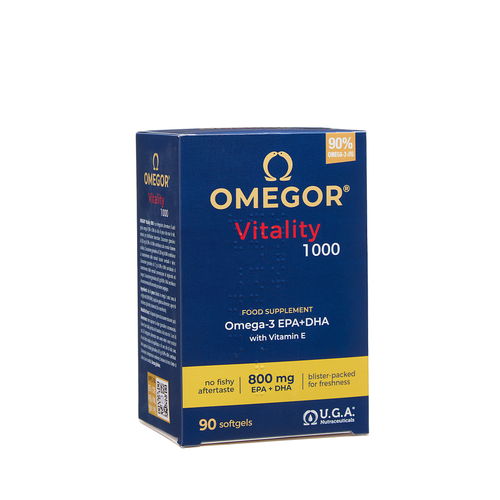
OMEGOR Vitality 1000 - 90 capsules
Just 3 words: power, freshness, purity . And always 5 stars. OMEGOR® Vitality is a concentrate of Omega-3 evaluated by IFOS (International Fish Oil Standards), the most famous quality certification in the field of Omega-3 supplements, always with the maximum score since 2005, the year of its commercialization. It is the top of the range.
Serving Size: 1-4 capsules
Number of servings: 22-90
Lot and expiry: 243406 - October 2027
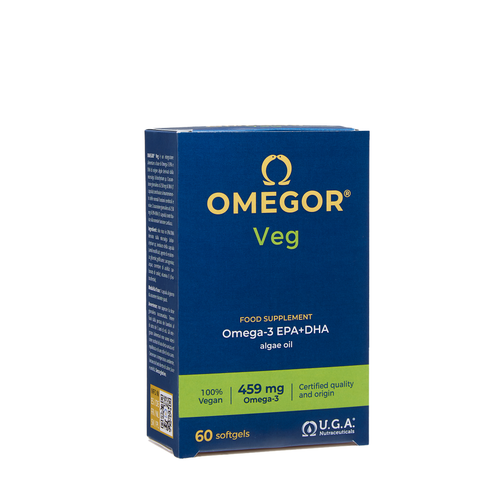
OMEGOR Veg
Omega-3 is not only found in fish, did you know? Nature offers us a precious alternative: the microalgae Schizochytrium sp, a natural source of DHA (docosahexaenoic acid) and EPA (eicosapentaenoic acid). Omegor® Veg contains and concentrates these Omega-3 in capsules certified by the Vegan Society and with IFOS 5 stars certification (the maximum), very rare in products of algal origin.
Serving Size: 1
Number of servings: 60
Lot and expiry: 246810/A - January 2027
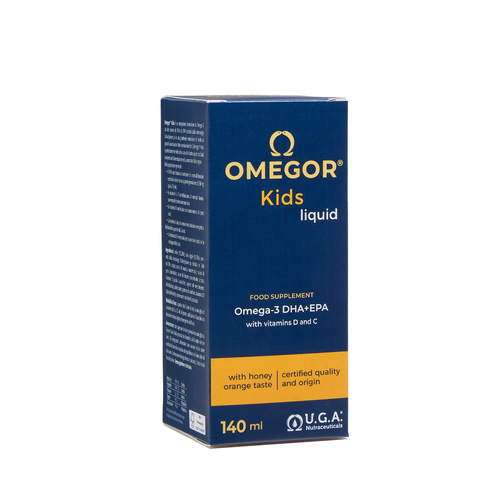
OMEGOR Kids - liquid
Vision, brain, bones, immune system: children's growth is a complex symphony. OMEGOR® Kids orchestrates it with Omega-3 DHA and EPA extracted from marine algae through the patented life's™OMEGA process (a registered trademark of DSM) . In a practical and pleasant liquid emulsion with a honey and orange flavour, precious fatty acids meet vitamins C and D3 to offer complete support.
Serving size: 5-7.5 ml
Number of servings: 18-28
Lot and expiry: 242382 - November 2026
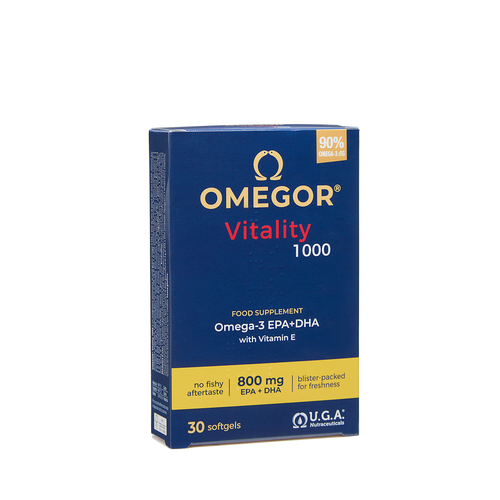
OMEGOR Vitality 1000 - 30 capsules
Just 3 words: power, freshness, purity. And always 5 stars. OMEGOR® Vitality is a concentrate of Omega-3 evaluated by IFOS (International Fish Oil Standards), the most famous quality certification in the field of Omega-3 supplements, always with the maximum score since 2005, the year of its commercialization. It is the top of the range.
Serving Size: 1-4
Number of servings: 7-30
Lot and expiry: 243406 - October 2027
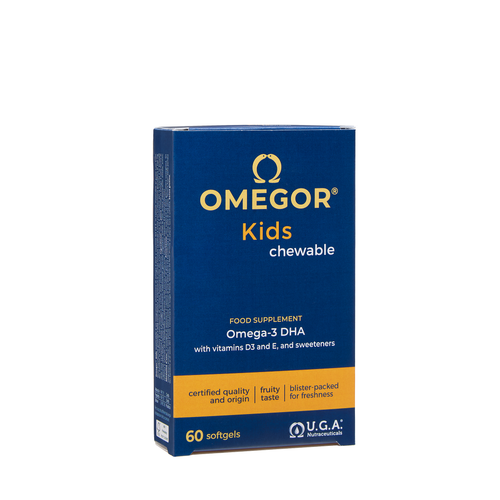
OMEGOR Kids - 60 capsules
“I like it!”. This is the exclamation that no parent expects to hear when talking about Omega-3 supplements. And yet, OMEGOR® Kids is rewriting the rules of the game with its tutti frutti-flavored chewable capsules, where goodness meets IFOS 5-star certified excellence. A concentrate of DHA and EPA, enriched with vitamins D3 and E, designed to support the brain, vision, bones and immune system of the little ones.
Serving Size: 2
Number of servings: 30
Lot and expiry: 232709 - June 2026


