
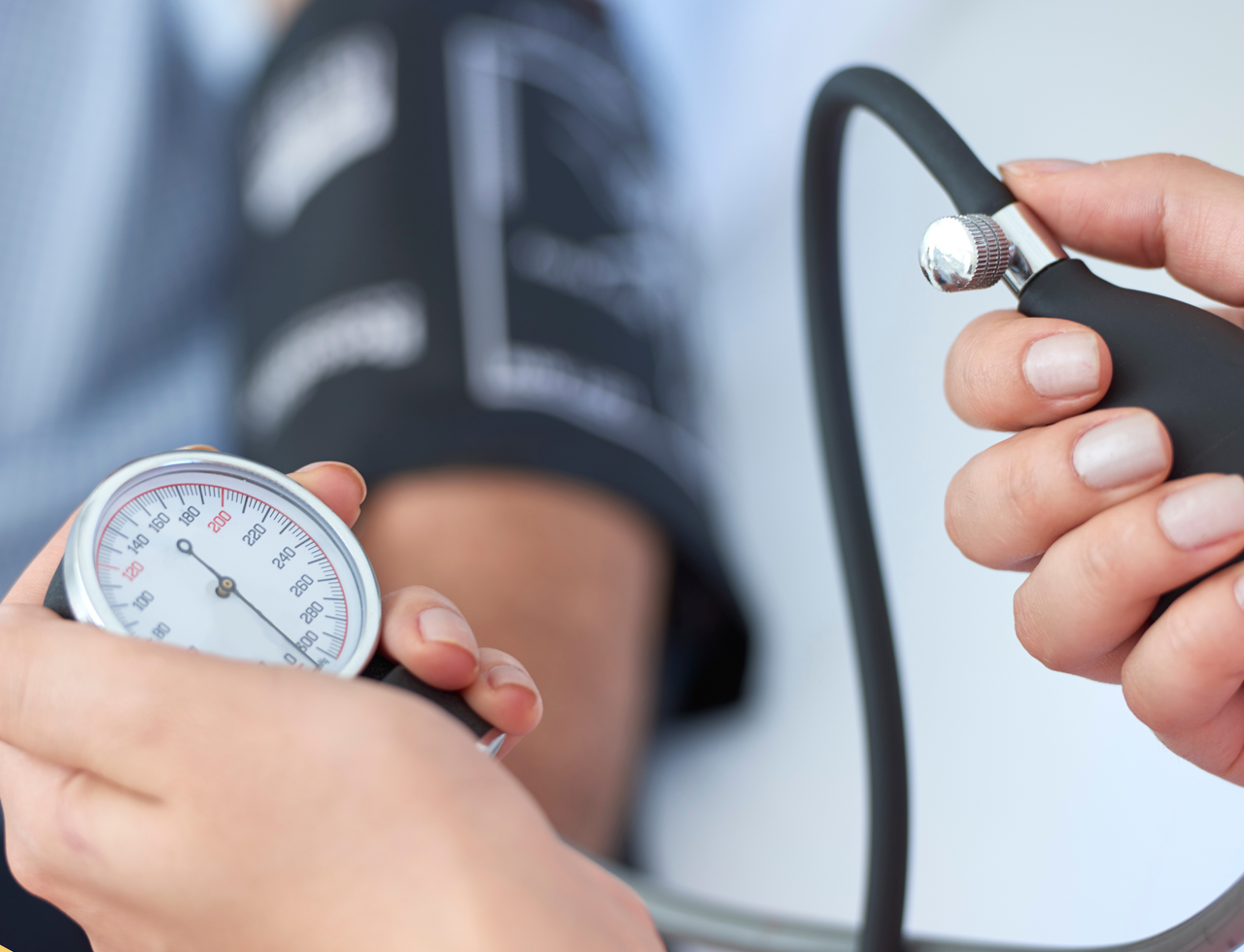
High Blood Pressure: When to Worry? Causes and What to Do Right Away
High blood pressure: when to worry?
Having high blood pressure seriously endangers the health of the heart and blood vessels. Fortunately, many of the factors that can promote it are controllable. Let’s find out when to worry and what to do immediately to bring the values back within acceptable levels.
It is the most widespread cardiovascular problem in the world. Between the ages of 30 and 79, it affects 34% of men and 32% of women, but it does not even spare younger people. We are talking about hypertension, a condition that according to the World Health Organization affects 1.28 billion people and that seems destined to affect more and more, with estimates predicting 1.5 billion hypertensive individuals by 2025.
The problem that all these people are dealing with (and will deal with) is the increased force exerted by the blood on the walls of their arteries. If excessive, this pressure can damage various tissues and organs, triggering problems not only in the heart and vessels but also, for example, in the kidneys and eyes.
Not that every red eye should trigger the alarm bell for high blood pressure, but vision changes could indeed be associated with severe forms of hypertension, as well as severe headaches, confusion, nosebleeds, nausea and vomiting. Some also include among the symptoms of high blood pressure fatigue and a general feeling of weakness, but the truth is that in the vast majority of cases this condition does not cause any symptoms, so much so that it is considered a “silent killer”.
For this reason it is very important to regularly measure blood pressure. We all should have started doing it once a year already from the age of 18. Neglecting this check could cost us dearly, leaving us to face hard-to-manage health problems.
High blood pressure: the causes
Sometimes pressure increases due to factors beyond our control. For example, hypertension is a more frequent problem in older age, because with aging blood vessels lose the elasticity that, in young people, allows them to adequately manage the pressure exerted by blood on their walls. However, it is different to be a young man or a young woman; in fact, even sex hormones influence the risk of high blood pressure, protecting women. Precisely for this reason, before the age of fifty hypertension is more frequent in the male population; the rapid increase in pressure that follows menopause, however, causes the prevalence of hypertension to become higher in women over 65 years of age.
Not even family history is under our control, while we can act on other factors including:
- excess weight;
- diabetes;
- tobacco smoking;
- stress and anxiety;
- excessive consumption of alcoholic beverages;
- excessive salt in the diet.
Finally, hypertension can be due to the presence of other diseases (chronic kidney disease, adrenal disorders, hyperparathyroidism, renal artery stenosis, obstructive sleep apnea) or the use of medications (for example drugs against migraine or colds). High blood pressure can also suddenly appear in pregnancy; when to worry? In this case, it is always important to contact your gynecologist as soon as possible.
When to worry about high blood pressure
However, it is necessary to clarify that the values to be taken into consideration are two:
- the maximum pressure (or systolic), which corresponds to the force exerted by the blood on the wall of the arteries when the heart contracts, pushing it into circulation;
- the minimum pressure (or diastolic), which corresponds instead to the force exerted by the blood on the wall of the arteries when the heart relaxes, between one beat and the next.
According to the European Society of Cardiology (European Society of Cardiology, ESC) pressure is optimal when the maximum is below 120 mmHg and the minimum is below 80 mmHg, otherwise we talk about:
- normal pressure, with maximum between 120 and 129 mmHg and/or minimum between 80 and 84 mmHg;
- high-normal pressure, with maximum between 130 and 139 mmHg and/or minimum between 85 and 89 mmHg;
- grade 1 hypertension, with maximum between 140 and 159 mmHg and/or minimum between 90 and 99 mmHg;
- grade 2 hypertension, with maximum between 160 and 179 mmHg and/or minimum between 100 and 109 mmHg;
- grade 3 hypertension, with maximum > 180 mmHg and/or minimum > 110 mmHg.
The above “and/or” tell us that pressure can be high even if only the maximum or only the minimum are above the reference limits. In particular, the following cases are also possible:
- isolated systolic hypertension, with maximum > 140 mmHg and minimum <90;
- isolated diastolic hypertension, with maximum < 140 and minimum ≥ 90.
In turn, the cases of isolated hypertension, systolic or diastolic, can occur with different grades (1, 2 or 3), depending on the more precise values of altered pressure.
You may have heard that high minimum pressure is more dangerous, but this is not entirely correct. On one hand, it is true that the risk of stroke or fatal coronary diseases doubles every time the maximum increases by 20 mmHg, while to have the same effect just a 10 mmHg increase in the minimum is enough. On the other hand, once past the age of 50, the association with cardiovascular events is stronger for the maximum than for the minimum. Moreover, while in the past some studies suggested that high minimum pressure was associated with an increased cardiovascular risk in young people, more recent research indicates that the risks increase even when the maximum is high. In addition, even the pulse pressure (i.e. the difference between maximum and minimum) is associated with adverse prognosis, as it is an indicator of increased arterial stiffness.
In general, today it is known that the maximum progressively increases with age, while the minimum tends to increase only up to 50–60 years, after which a brief stabilization is observed followed by a slight decrease, with a consequent increase in pulse pressure.
To understand when (or rather how much) to worry due to high (minimum or maximum) pressure, however, one must also look at other aspects beyond the exact values, such as the stage of the disease, determined based on damage and associated pathologies.
- Hypertension in stage 1 is uncomplicated, i.e. it is not associated with organ damage or cardiovascular diseases, but may be associated with kidney problems in stage 1 or 2.
- Stage 2 hypertension is associated with organ damage, diabetes or kidney problems in stage 3.
- Stage 3 hypertension is associated with cardiovascular pathologies or kidney problems in stage 4 or 5.
That said, there is never a good reason to underestimate high blood pressure. In fact, the relationship between pressure and cardiovascular and kidney health is continuous and problems can already occur when the maximum exceeds 115 mmHg or the minimum exceeds 75 mmHg.
High (minimum or maximum) pressure, how to lower it? What to do immediately
In some cases, to bring pressure back to normal it is necessary to take medications. It is the doctor who determines whether or not the use of medicines is necessary; in any case, it is always necessary to immediately intervene on one's lifestyle, acting on the risk factors that may have contributed to the increase in pressure.
Those who smoke should quit; at the same time, it is good to avoid excess alcohol. As for the daily diet, cutting back on excesses, preferably combining the diet with adequate physical activity, allows you to lose any extra pounds that may promote the increase in pressure. Moreover, it is essential to limit the use of table salt and reduce the consumption of foods that could excessively increase the daily intake of sodium.
The list of foods to avoid for high blood pressure (or at least limit) includes many canned foods, industrial products and baked goods, often rich in salt; the best way to identify those that contain too much is to read the labels: the indication of how much is present is mandatory. For the same reason, it is necessary to limit the consumption of processed meats, such as hams; among all, raw ham is particularly rich in salt.
The foods that lower high blood pressure (or rather, that are ideal ingredients for a diet aimed at keeping pressure under control) are instead fresh fruits and vegetables, rich in potassium and fiber, whole grains, legumes and dried fruits. It is better to prefer fish, a source of Omega 3 fats, over meats (rich in saturated fats); in fact, marine Omega 3s (EPA and DHA) are recognized for their ability to help maintain normal blood pressure. And for seasoning foods? Even against high blood pressure, olive oil is preferable.
Supplements for high blood pressure
Finally, an additional help when not yet undergoing drug therapy can come from dietary supplements. What is the best product to buy? Among the natural active ingredients for a supplement against high blood pressure with proven efficacy are the already mentioned EPA and DHA; taken at a dose of 3 grams per day they help bring values back to normal.
Magnesium supplements are also often proposed, but at the moment the European Food Safety Authority (EFSA) does not authorize claiming that this mineral helps control high blood pressure.
Sources:
European Commission. EU Register of Helath Claims. Last viewed 31/05/24
Mancia G et al. 2023 ESH Guidelines for the management of arterial hypertension The Task Force for the management of arterial hypertension of the European Society of Hypertension: Endorsed by the International Society of Hypertension (ISH) and the European Renal Association (ERA). Journal of Hypertension 41(12):p 1874-2071, December 2023. doi: 10.1097/HJH.0000000000003480
MedlinePlus. High blood pressure in adults – hypertension. Last viewed 30/05/24


