

Omega-3 Index Reveals Heart Health

Heart: The Omega-3 Index Indicates Its Health Status
Regular consumption of fatty fish rich in omega-3 (mackerel, salmon, herring, etc.) is associated with a reduced risk of cardiovascular diseases, as demonstrated by numerous studies conducted over the last 30 years. The levels of the two main omega-3s, EPA and DHA, in the blood reflect the intake of unsaturated fatty acids ingested through foods and possibly also from fish oil and algal oil supplements. The blood concentration of DHA and EPA can be measured through the Omega-3 Index, a new tool for assessing cardiac risk.
Therefore, it is no longer only cholesterol and triglyceride levels that indicate cardiovascular risk: today, heart health is also defined by this new factor.
The Omega-3 Index: a Measure of Omega-3 in the Blood
The Omega-3 Index indicates the amount of EPA and DHA relative to the total fatty acids present in red blood cell membranes. The fatty acid composition of red blood cells is thus an indicator of nutritional status and heart risk. The omega-3 index represents an independent factor compared to the estimated dietary intake of omega-3. There are differences related to metabolism or genetic variability of each individual, as well as possible errors in estimating dietary omega-3 intake, for example due to consuming varieties of fish containing different amounts of EPA and DHA.
The Omega-3 Index: The History
The Omega-3 Index was developed in 2004 as a marker for the risk of sudden cardiac death by William Harris, a professor at the University of South Dakota (USA), and Professor Clemens von Schacky, a cardiologist at the University of Munich (Germany). Sudden cardiac death is death due to cardiac arrest that occurs unexpectedly even in individuals who have never shown cardiac dysfunction. Harris and von Schacky discovered that the risk of this fatal event was related to the amount of EPA and DHA in red blood cells. In particular, by reviewing some important epidemiological studies, they found that:
- An Omega-3 Index < 4% indicates a high probability for an individual to experience sudden cardiac death
- An Omega-3 Index between 4 and 8% indicates a moderate risk
- An Omega-3 Index > 8% indicates a low-risk situation
The probability of fatal cardiac events is reduced by up to 90% in subjects who belong to the highest category compared to those with a lower index. How can you achieve an optimal Omega-3 Index? An Omega-3 Index of 8% is achievable through daily consumption of about 500 milligrams of EPA and DHA, obtainable with two or more servings of fatty fish per week, or through supplements. The Omega-3 Index, like other cardiovascular risk factors, can therefore be modified by a healthier lifestyle.
Some Studies Underlying the Discoveries of Harris and von Schacky
The inverse relationship between omega-3 fatty acids and the risk of sudden cardiac death has been investigated by several studies over recent decades. In particular, Harris and von Schacky reviewed numerous scientific publications associating low omega-3 levels with sudden cardiac death risk. Among the most important scientific studies supporting their interpretations is the “Health Study Physicians,” a study conducted on physicians, where subjects with an Omega-3 Index of 6.53% had a 90% lower risk of sudden cardiac death compared to those with an index of 3.75%. Consistently, the “Cardiovascular Health Study” showed that higher levels of EPA and DHA in plasma membranes were strongly associated with a lower risk of fatal ischemic heart disease.
The Italian “GISSI” study was conducted in 172 cardiology centers on more than 11,000 patients who survived myocardial infarction. Subjects were divided to receive four different treatments: an omega-3 group, a vitamin E group, a combined omega-3 and vitamin E group, and a placebo control group. At the end of the study period, omega-3 treatment was the only effective therapy in reducing mortality from infarction by 10-15%, and sudden cardiac death by 40%. Among other studies considered are those conducted in parts of Europe with populations characterized by relatively low blood omega-3 levels, such as Belfast, where the incidence of sudden cardiac death is 122 per 100,000 people per year.
In contrast, the Japanese population, with a high dietary intake of omega-3, has an average sudden cardiac death incidence of only 7.8 per 100,000 people per year.
How is the Omega-3 Index Calculated?
The Omega-3 Index is the sum of the omega-3 fatty acids EPA and DHA in red blood cell membranes and is expressed as the percentage of EPA and DHA over the total fatty acids present in the membrane. The choice to use the concentration in blood cell membranes is due to the fact that polyunsaturated fatty acids in these structures are more biologically stable (they vary little from week to week). Red blood cell membranes are also technically easier to analyze and reflect the long-term intake of EPA and DHA, indicating the real omega-3 status, similarly to measuring glycated hemoglobin in diabetes diagnosis. The effects of EPA and DHA seem to mainly derive from their ability to increase the flexibility of cell membranes, making them more fluid. The alteration of physical properties at the membrane level by EPA and DHA reflects on the functionality of the proteins embedded in it, triggering a series of intracellular reactions culminating in the regulation of numerous genes. These mechanisms lead to benefits such as the reduction of inflammatory molecules, the lowering of blood triglycerides, and the stabilization of plaques responsible for atherosclerosis.
The Omega-3 Index Test
The Omega-3 Index in blood can represent a new diagnostic tool and be used in the routine clinical evaluation of patients. For its determination, the Omega-3 Index test, a blood test that can be performed in laboratories following a strict quality management system, is necessary. The measurement of the Omega-3 Index is highly reproducible, and values can be obtained within a few hours. Quantifying fatty acids in an individual is useful for doctors and patients to estimate the risk of heart disease and to reach adequate omega-3 levels necessary to reduce the risk of heart attack and sudden death.
The HS-Omega-3 Index®
The HS-Omega-3 Index® is a kit provided by U.G.A. Nutraceuticals that allows anyone to easily determine their Omega-3 Index, using the same technique employed in the clinical studies of Harris and von Schacky. The HS-Omega-3 Index® includes everything needed to determine the Omega-3 Index at home. Simply collect 3 drops of blood with a finger prick lancet on a special filter paper that must be sent to a specific laboratory. The result will be communicated to the customer via email a few days later directly from the laboratory in a strictly confidential manner.
Additional Evidence of the Relationship Between the Omega-3 Index and Cardiovascular Health
Omega-3 fatty acids have antiarrhythmic effects; they can reduce heart rate as demonstrated by a study conducted on 402 patients who received 2.6 grams per day of EPA and DHA. After 12 months of treatment, the Omega-3 Index increased from 3.4% to 7.6% in the intervention group, while no change was observed in the placebo group included in the research. Subjects who took omega-3 showed a 28% reduction in the risk of ventricular tachycardia, ventricular fibrillation, or death.
A study published in the prestigious journal Lancet in 2003 showed that in patients diagnosed with coronary artery disease, administration of 1.6 grams per day of EPA and DHA increased the Omega-3 Index from 3.4% to 8.3% and reduced the progression of coronary lesions. These results suggest that increasing the Omega-3 Index above 8% can mitigate the progression of coronary atherosclerosis and reduce the number of unstable plaques, lowering the risk of heart attack.
The Optimal Omega-3 Index: Benefits Also for Diabetics?
The relationships between the Omega-3 Index value and health status seem to also involve other diseases beyond those strictly related to the heart. A study published in Diabetes Care examined the relationship between high levels of non-esterified fatty acids, i.e., circulating free lipids, and the risk of type 2 diabetes, as well as the possible action of omega-3 on this relationship. The values obtained on about 5,700 subjects showed a higher incidence of diabetes in those with the highest concentrations of non-esterified fatty acids and a significant interaction of omega-3. Individuals with an Omega-3 Index of 3.9% showed a higher risk of diabetes compared to those with an Omega-3 Index of 7.5%. The latter group thus showed the greatest benefits, consistent with studies suggesting that an Omega-3 Index of 8% is associated with lower cardiovascular risk.
Postpartum Depression and Low Omega-3 Index: A Relationship Found
A high Omega-3 Index would also be advantageous for mental health, as emerged from a study published in 2013 in the journal Plos One. According to the researchers, a low Omega-3 Index could represent a risk factor for the onset of postpartum depression, a condition commonly occurring in women shortly after childbirth. The study correlated the Omega-3 Index measured during the 28th week of pregnancy with a possible diagnosis of postnatal depression 3 months after delivery. The results showed a link between the condition and the deficiency of EPA and DHA in red blood cells and the need to consume the correct amount of fish during pregnancy. These data align with other research suggesting the protective role of omega-3s against various forms of depression or behavioral disorders in adults, elderly, and youth.
Omega-3 Improve Attention in Adolescents
A recent Dutch study, published in the journal Nutrients, demonstrated that a high Omega-3 Index is positively associated with certain cognitive traits, measured with specific tests in adolescents. In particular, researchers found a significant increase in information processing ability corresponding to a 1% increase in the Omega-3 Index. Moreover, young people with the highest values of this parameter showed more attention and fewer errors when performing the tests themselves.
How Does the Omega-3 Index Vary Among Populations?
Although recommendations for a healthy and balanced diet include consuming fish at least 2 to 3 times a week, omega-3 intake is very low in Western countries. From one of the latest surveys, published in December in Nutrients, conducted using data on the American population regarding omega-3 blood concentrations, it emerged that about 96% of adults have an omega-3 index below 4%. This value is not surprising since the average daily intake of EPA and DHA through diet is, respectively, 8 and 50 milligrams per day.
In the same months of 2015, a study reported the Omega-3 Index and coronary heart disease risk on a representative sample of Canadian adults. Overall, the results show that less than 3% of them have an Omega-3 Index associated with a low risk of cardiovascular diseases. But Americans and Canadians are not the only ones with a low Omega-3 Index; a study published in recent months investigated the status and distribution of omega-3 levels in the Saudi population, discovering that the Omega-3 Index was, on average, 3.8 and that 46% of women and 39% of men had an Omega-3 Index even below 3.5%.
In summary, knowing your Omega-3 Index is important because:
- It can estimate the risk of sudden cardiac death both in the general population and in patients with coronary dysfunction.
- It is easily measurable.
- It is more discriminating than most other known risk factors.
- It can identify individuals who need to increase omega-3 consumption and then evaluate the progress achieved.
Sources Murphy RA, Yu EA, Ciappio ED, Mehta S, McBurney MI. Suboptimal plasma long chain n-3 concentrations are common among adults in the United States, NHANES 2003-2004. 2015 Nutrients Harris WS. The omega-3 index as a risk factor for coronary heart disease. 2008 Am J Clin Nutr 87 (6): 19975-20025 Langlois K, Ratnayake WM. Omega-3 index of Canadian adults. 2015 Health Rep 26(11) 82-003-x Bassam T, Superko HR, Caulfield M. Cardiovascular disease risk attributed to blood fish oil (omega-3 fatty acid) levels differ significantly in Saudi men and women. 2015 J Saudi Heart Asso Weir NL, Tsai MY. n-3 fatty acids attenuate the risk of diabetes associated with elevated serum non-esterified fatty acids: the Multi-Ethnic Study of Atherosclerosis. 2015 Diab Care.
Recommended products
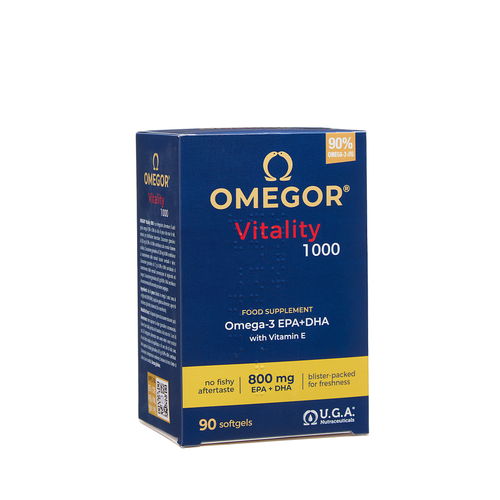
OMEGOR Vitality 1000 - 90 capsules
Just 3 words: power, freshness, purity . And always 5 stars. OMEGOR® Vitality is a concentrate of Omega-3 evaluated by IFOS (International Fish Oil Standards), the most famous quality certification in the field of Omega-3 supplements, always with the maximum score since 2005, the year of its commercialization. It is the top of the range.
Serving Size: 1-4 capsules
Number of servings: 22-90
Lot and expiry: 243406 - October 2027

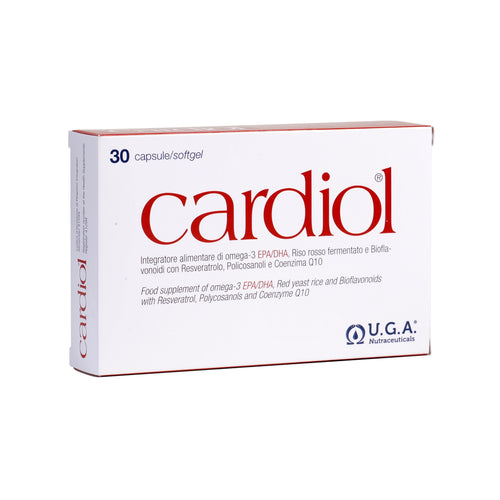
Cardiol
Nature has its aces up its sleeve, science knows how to play them. In Cardiol® we have brought together 8 strategic allies for cardiovascular well-being: from Omega-3 EPA and DHA to monacolin K from red rice, from bioflavonoids with resveratrol to coenzyme Q10, up to B vitamins.
Optimal cardiac function. Regular homocysteine metabolism. Normal cholesterol levels. These three goals are at the heart of Cardiol®, a unique supplement where every milligram is designed to make a difference.
Serving Size: 1
Number of servings: 30
Lot and expiry: 5108230 - July 2025

Endoplaq™
3 is the perfect number, even when it comes to cardiovascular protection. Ultra-purified Omega-3 for cardiac function, hydroxytyrosol from olive for antioxidant protection, coenzyme Q10 for cellular energy optimization. Endoplaq™ is not just a supplement, but a wellness ecosystem designed by the most advanced science.
Serving Size: 1
Number of servings: 30
Lot and expiry: 6185061 - January 2028
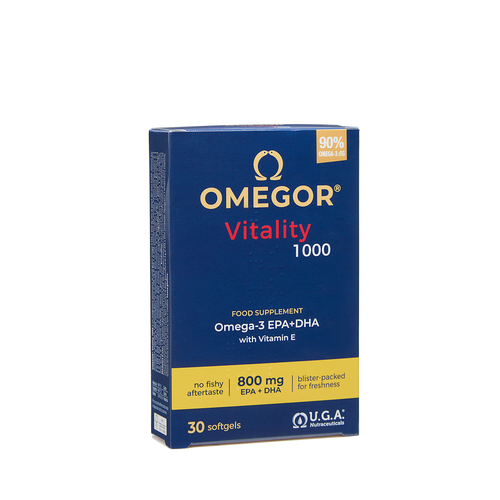
OMEGOR Vitality 1000 - 30 capsules
Just 3 words: power, freshness, purity. And always 5 stars. OMEGOR® Vitality is a concentrate of Omega-3 evaluated by IFOS (International Fish Oil Standards), the most famous quality certification in the field of Omega-3 supplements, always with the maximum score since 2005, the year of its commercialization. It is the top of the range.
Serving Size: 1-4
Number of servings: 7-30
Lot and expiry: 243406 - October 2027
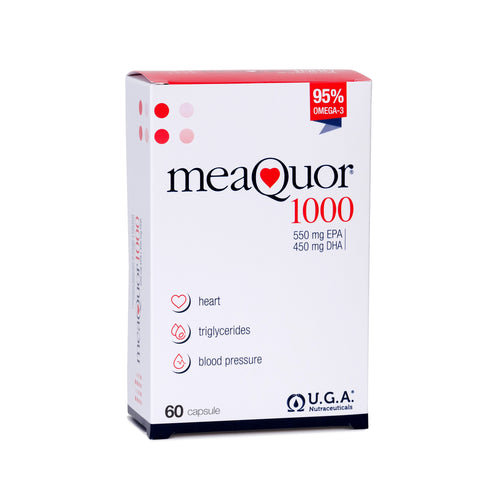
Meaquor 1000 - 60 capsules
There is concentration and Concentration. Meaquor® 1000 belongs to the second category: a concentrate of EPA and DHA so pure and powerful that it deserves 5 IFOS stars (International Fish Oil Standards, the most authoritative certification body for the quality of fish oils) on every single batch. Through multiple molecular distillation, we obtain a fish oil with extraordinary purity and very high concentrations of Omega-3. Meaquor ® 1000 is the choice of those who know that, when it comes to well-being and cardiovascular health, even a milligram can make a difference.
Serving Size: 1-3
Number of servings: 20-60
Lot and expiry: 243907 - October 2027


